Photogrammetric processing as a multi-stage challenge
Many novice operators fall into the trap of thinking that the key to success is solely in the moment of the drone launch itself. In reality, professional photogrammetry is an interconnected vessel of two phases that already begin in the field, because that is where the quality of the final product is decided. In this phase, we need to precisely choose the exposure parameters and stabilize and measure the photopoints (GCPs) that become the reference points for our model in the actual geographic space.
Only in the next step does the process move to the computer screen, where terrain interpretation takes place in office conditions. Instead of manually measuring hundreds of points in harsh weather conditions, we use software that analyzes millions of pixels to create a dense point cloud, orthophotos and precise 3D models.
Drone as a precision measurement tool
Choosing a drone for engineering purposes is a decision that goes far beyond analyzing drone-controller communication range or flight time. For us to talk about reliable data, we need to pay attention to two systems that distinguish hobby devices from professional work tools.
- The first is RTK and PPK positioning, since the standard GPS known from smartphones allows localization with an error of up to several meters, an unacceptable value in engineering. Real-Time Kinematic and Post-Processing Kinematic systems allow us to determine the coordinates of each image to an accuracy of 2-3 cm. With such high precision, we can reduce the number of photopoints in the field by up to four times, which proves invaluable for linear projects such as road construction.
- The second essential element is the mechanical shutter (Global Shutter), which is often forgotten when choosing equipment. Cheap drones use an electronic shutter, which reads the image line by line, which, with a fast-moving device, causes micro distortions that ruin the geometry of the model. A mechanical shutter exposes the entire sensor at once, thus guaranteeing perfect focus and geometry of every pixel in the picture.
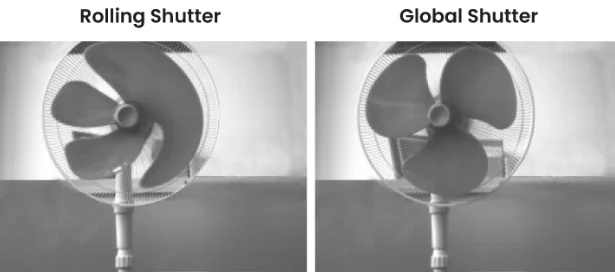
Comparison of electronic and mechanical shutter. Source: e-consystems.com
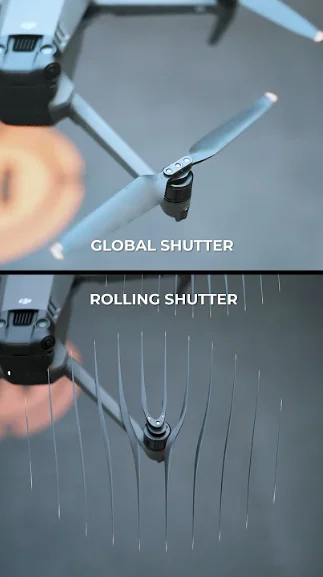
Source: youtube.com/@BandH
Flight parameters and accuracy verification
In photogrammetry, a key role is played by the Ground Sample Distance (GSD) parameter, which determines how much terrain area is represented by one pixel in the image. If the GSD is 2 cm, it means that the smallest element we are able to distinguish in the model is of this size. Achieving the optimal result requires a balance between flight altitude and resolution, so we usually aim for a ceiling between 50 and 120 meters. Added to this is the rigorous preservation of image coverage, since only when every piece of terrain is visible in a dozen shots can the algorithms perform error-free triangulation.
However, even the best RTK-equipped drone requires hard evidence of its accuracy. In professional studies, we use Checkpoints, which are the most important part of quality control. They are not involved in the model development process, but serve only to check the final error of the study. If the report shows high agreement on the Checkpoints, we gain confidence that the data provided is reliable and ready for further analysis.
From point cloud to report in SkySnap
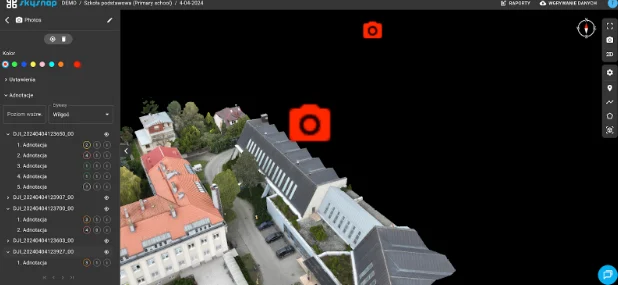
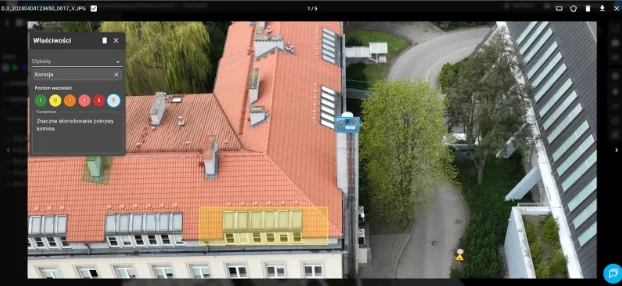
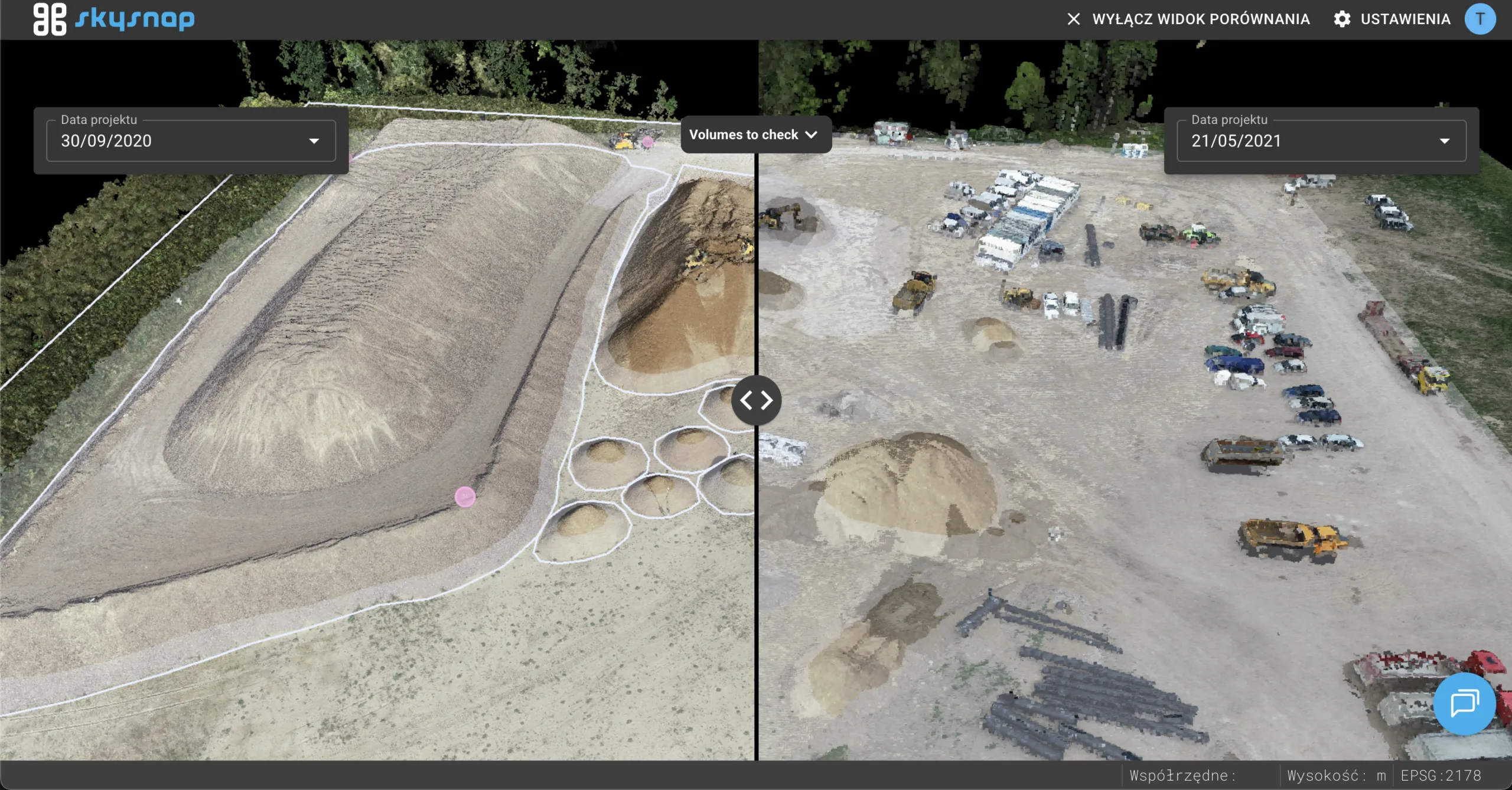
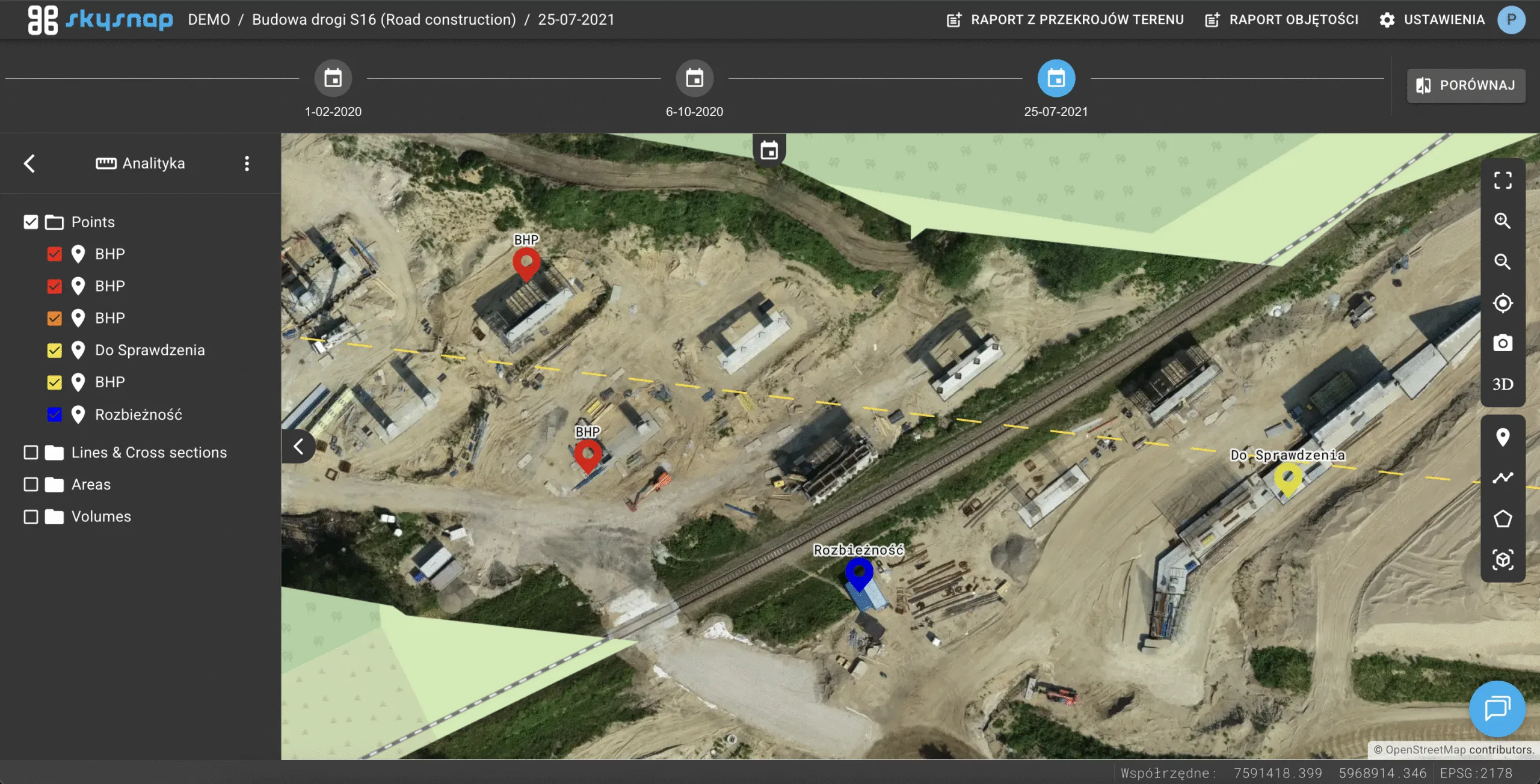
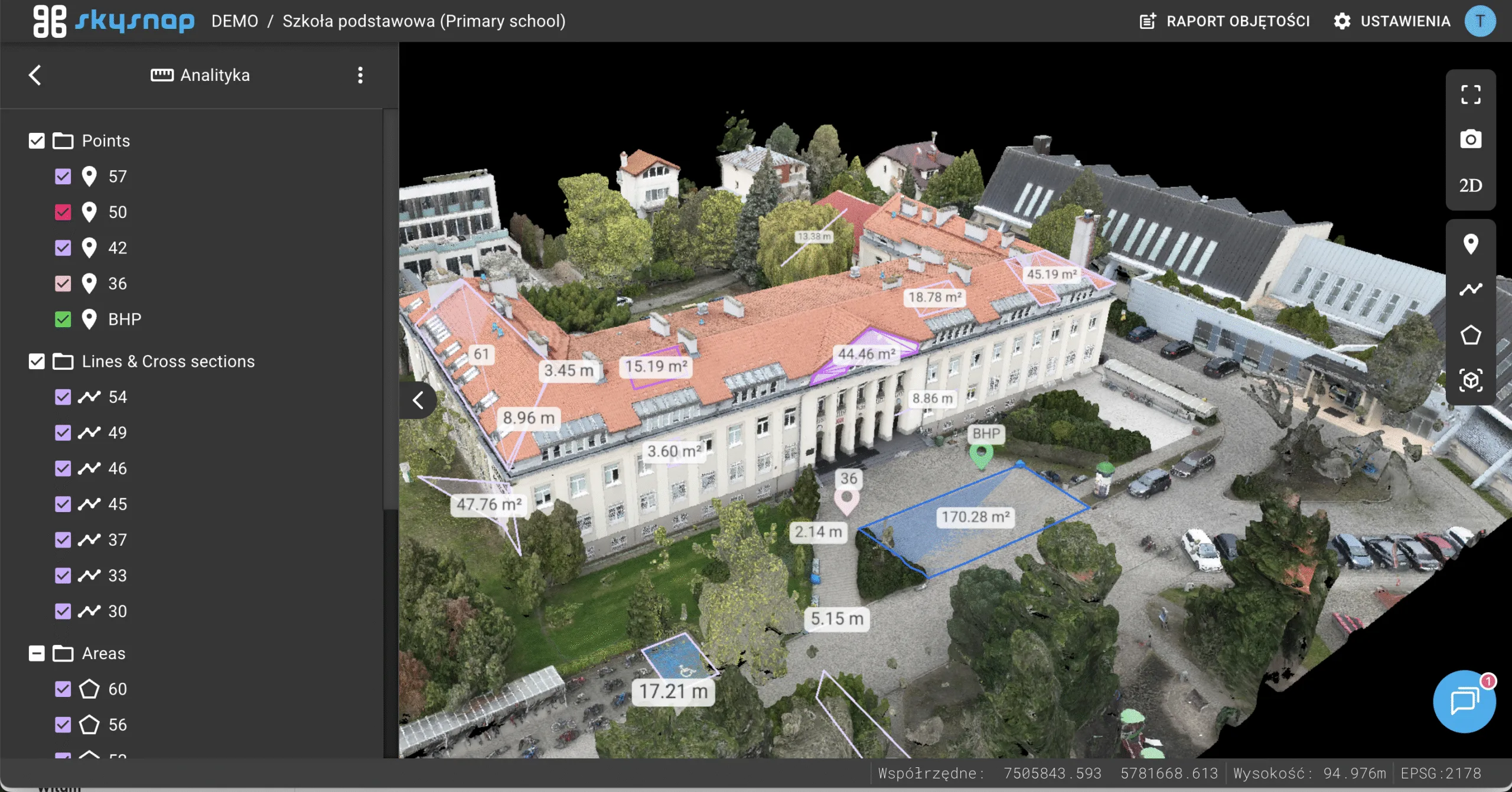
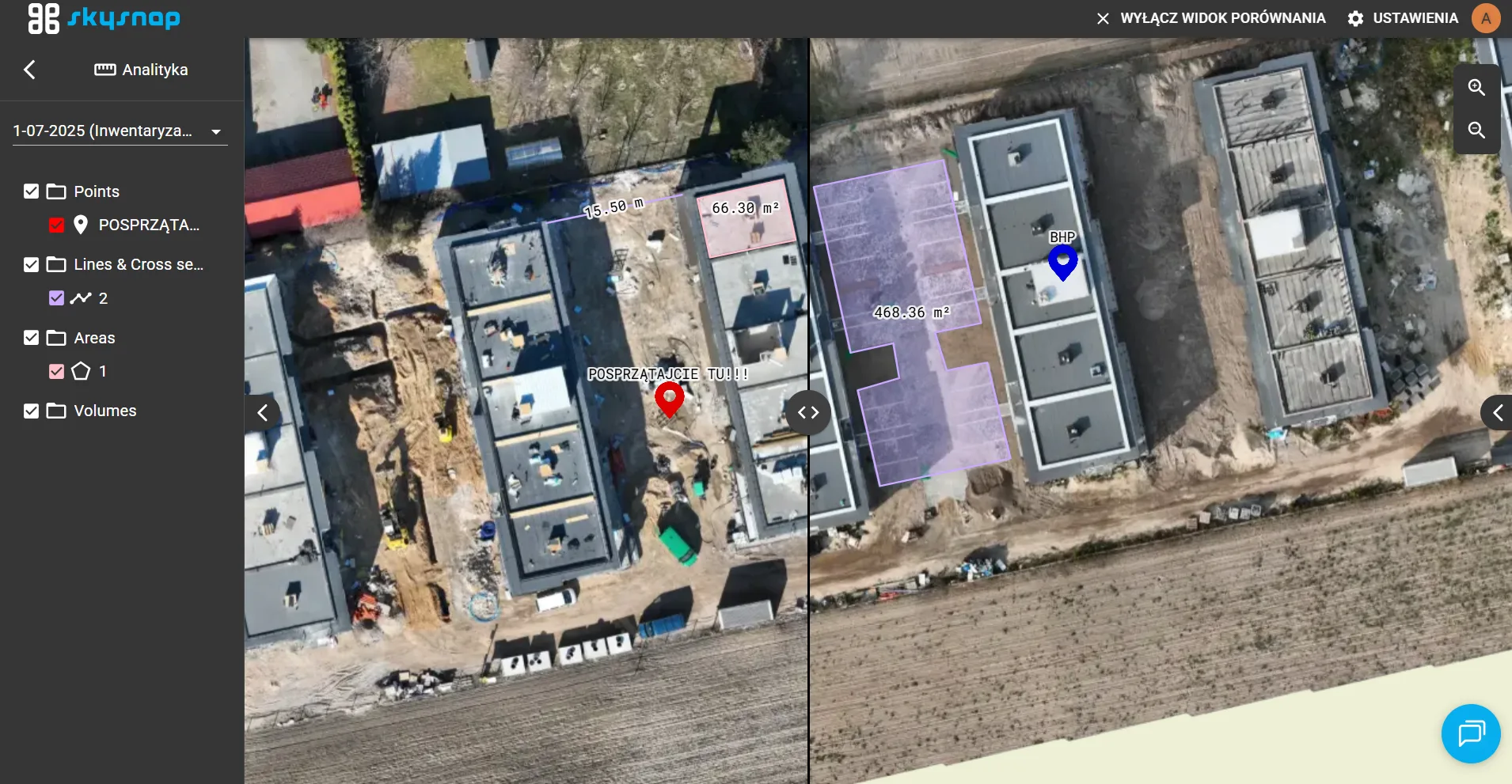
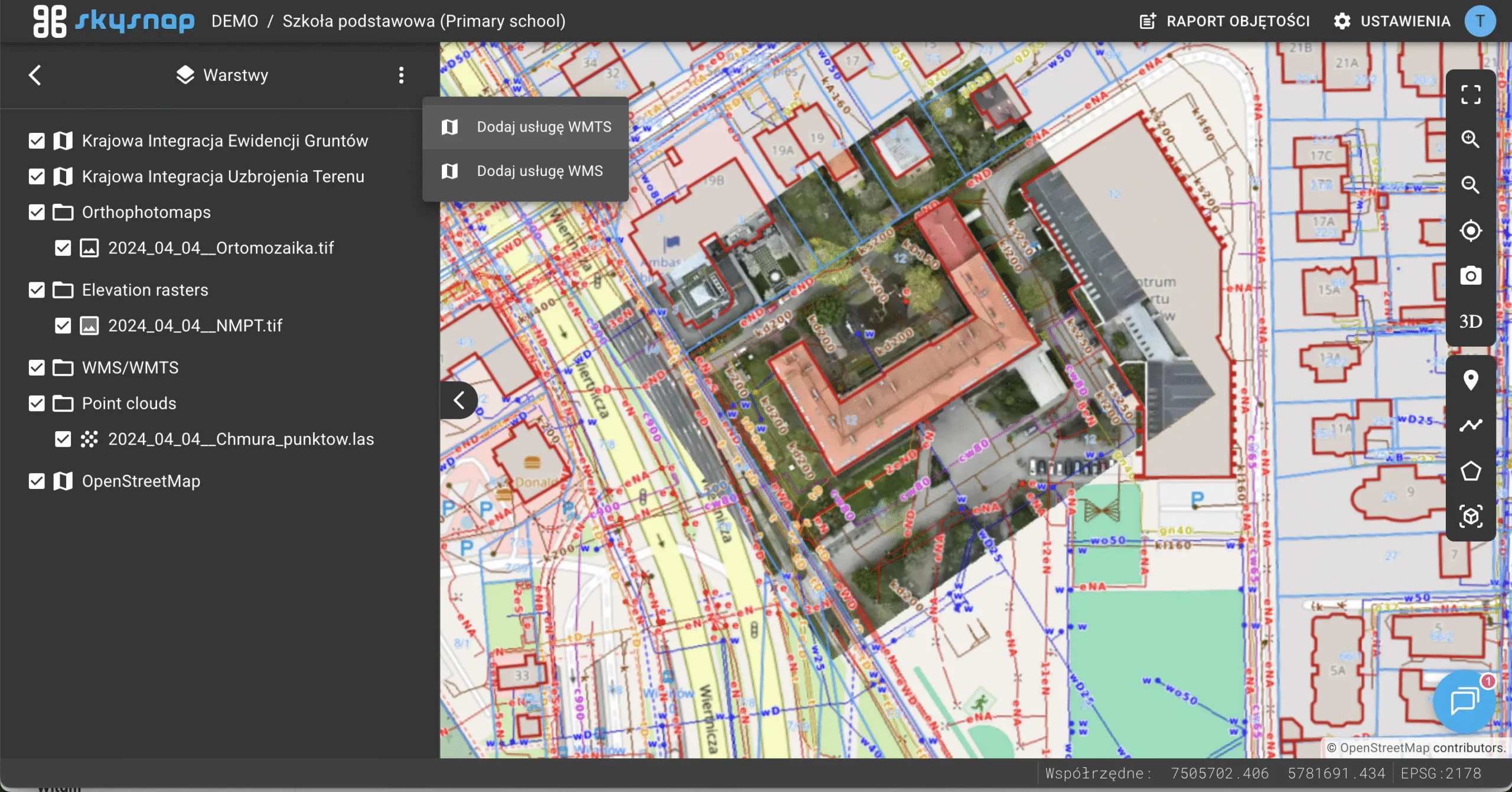
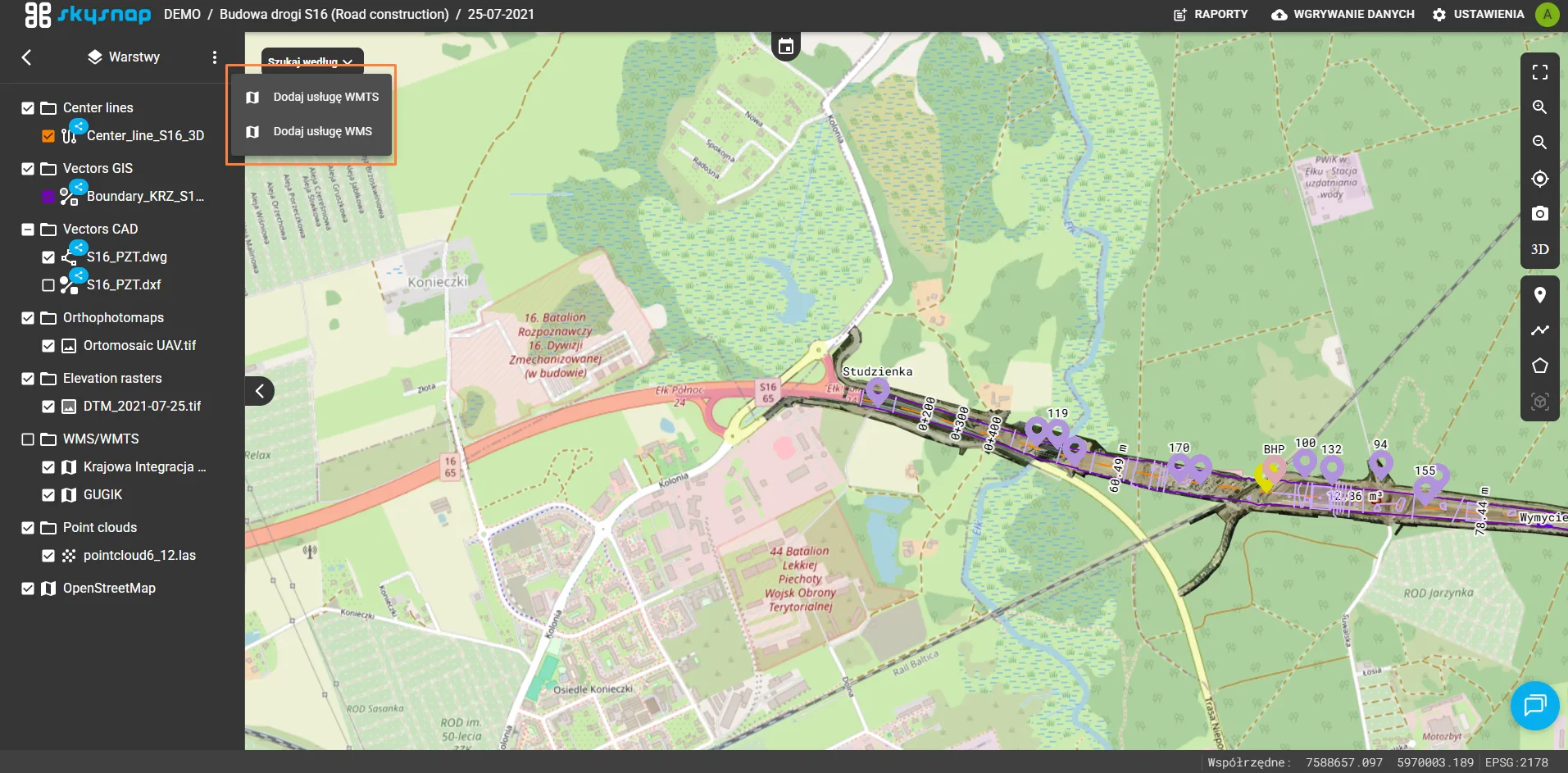
The raw data is only the beginning of the journey, as the real business value comes in the interpretation phase. With the SkySnap Portal, the process of data analysis becomes simple and intuitive, and the user can quickly take a precise measurement of any element on a high-resolution orthophoto, such as the area of a built sidewalk or the length of laid curbs.
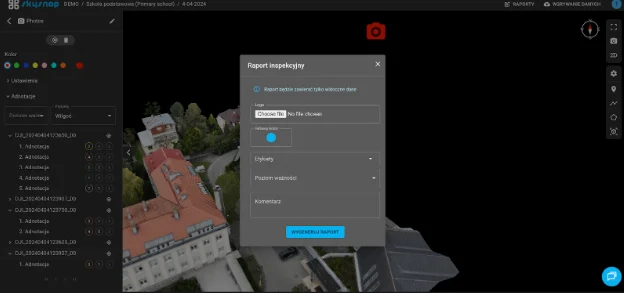
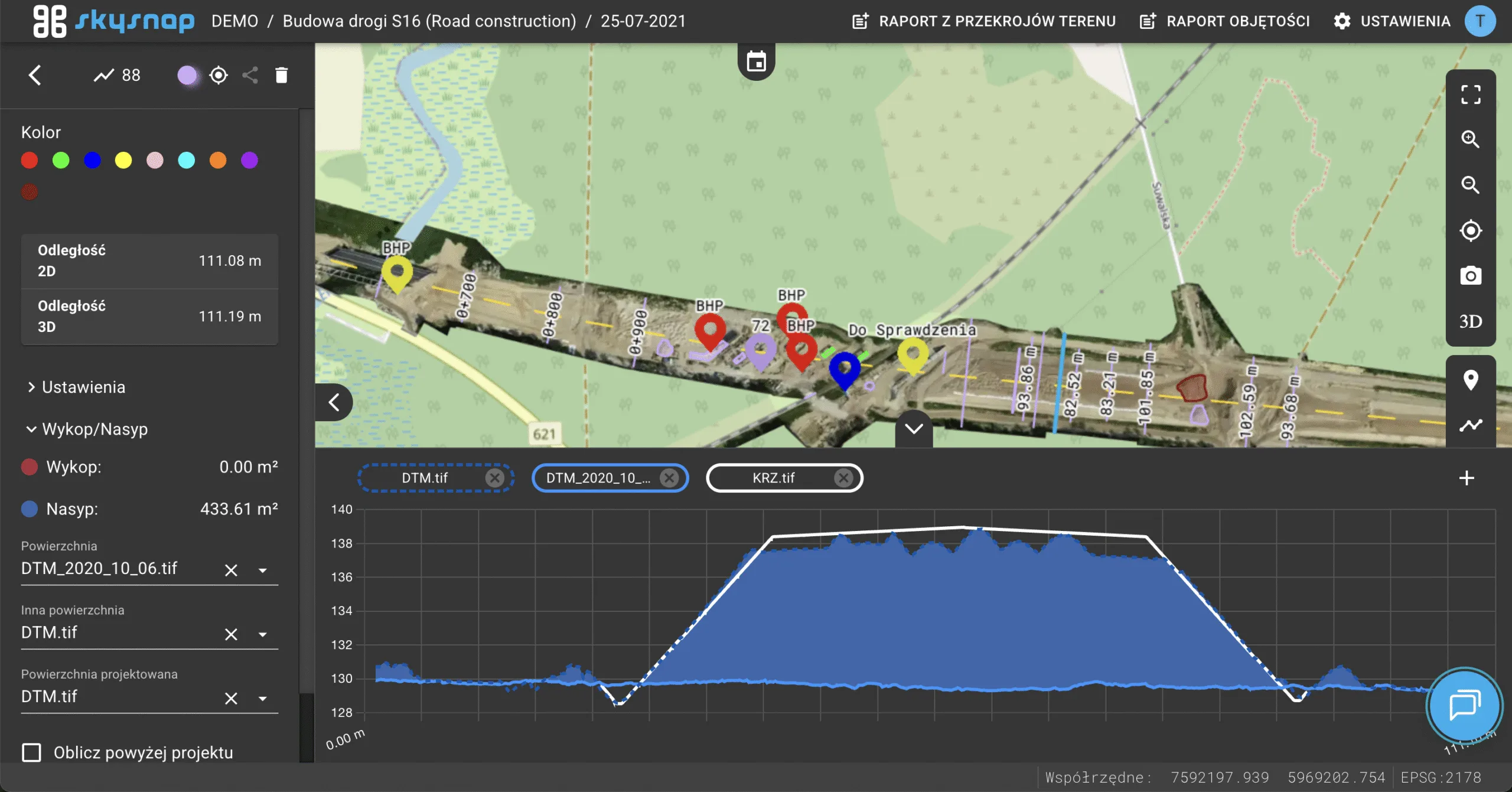
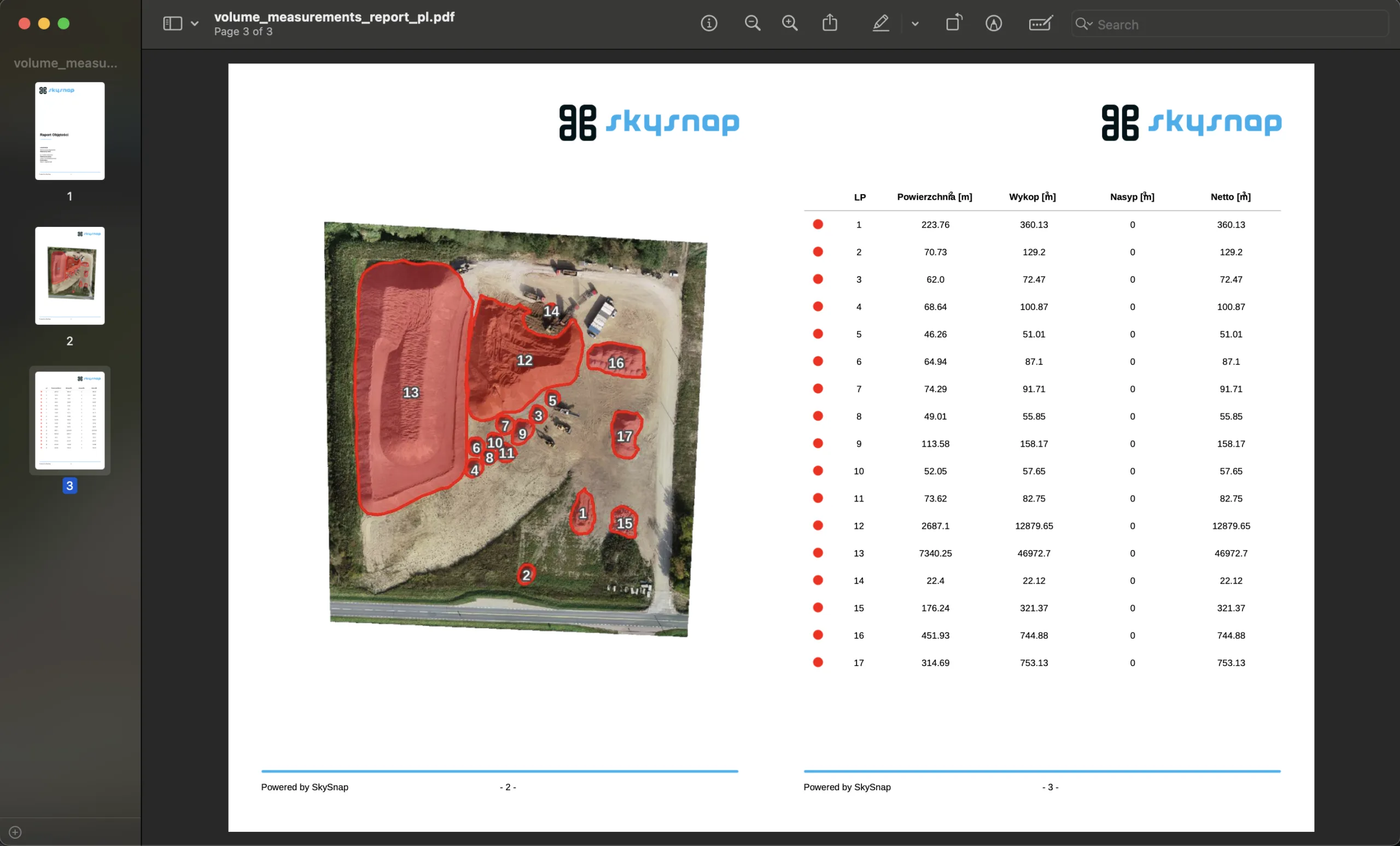
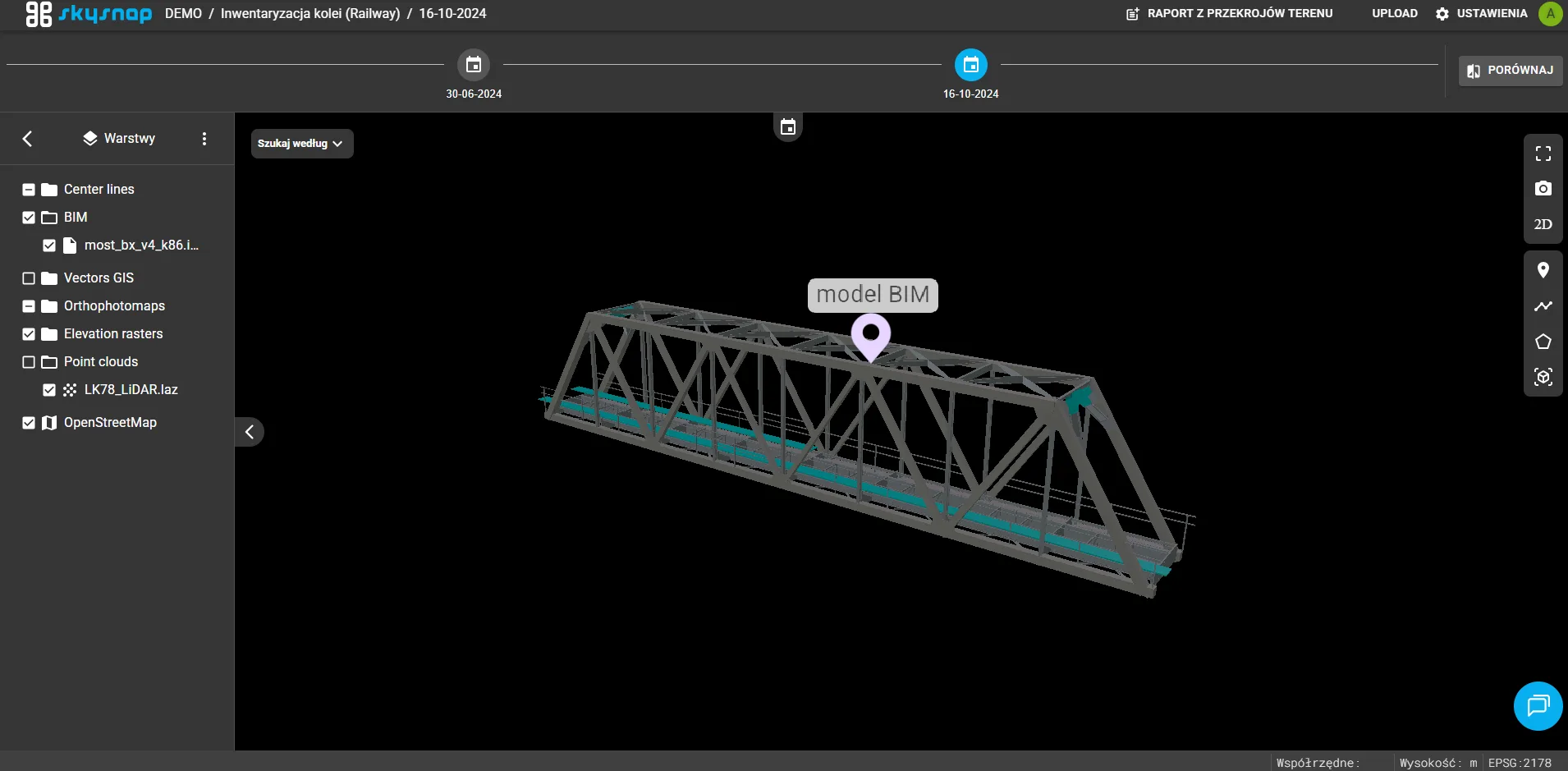
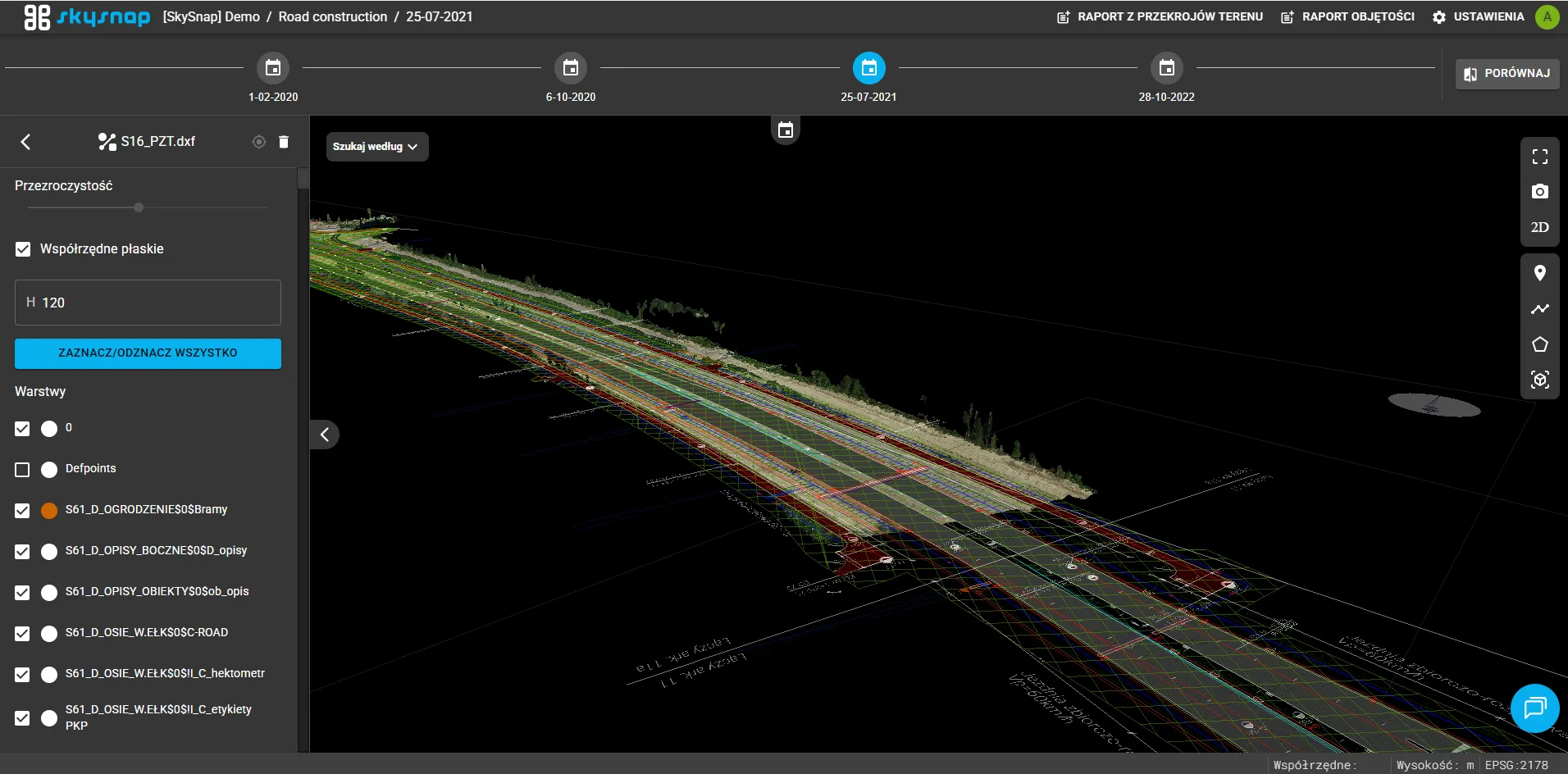
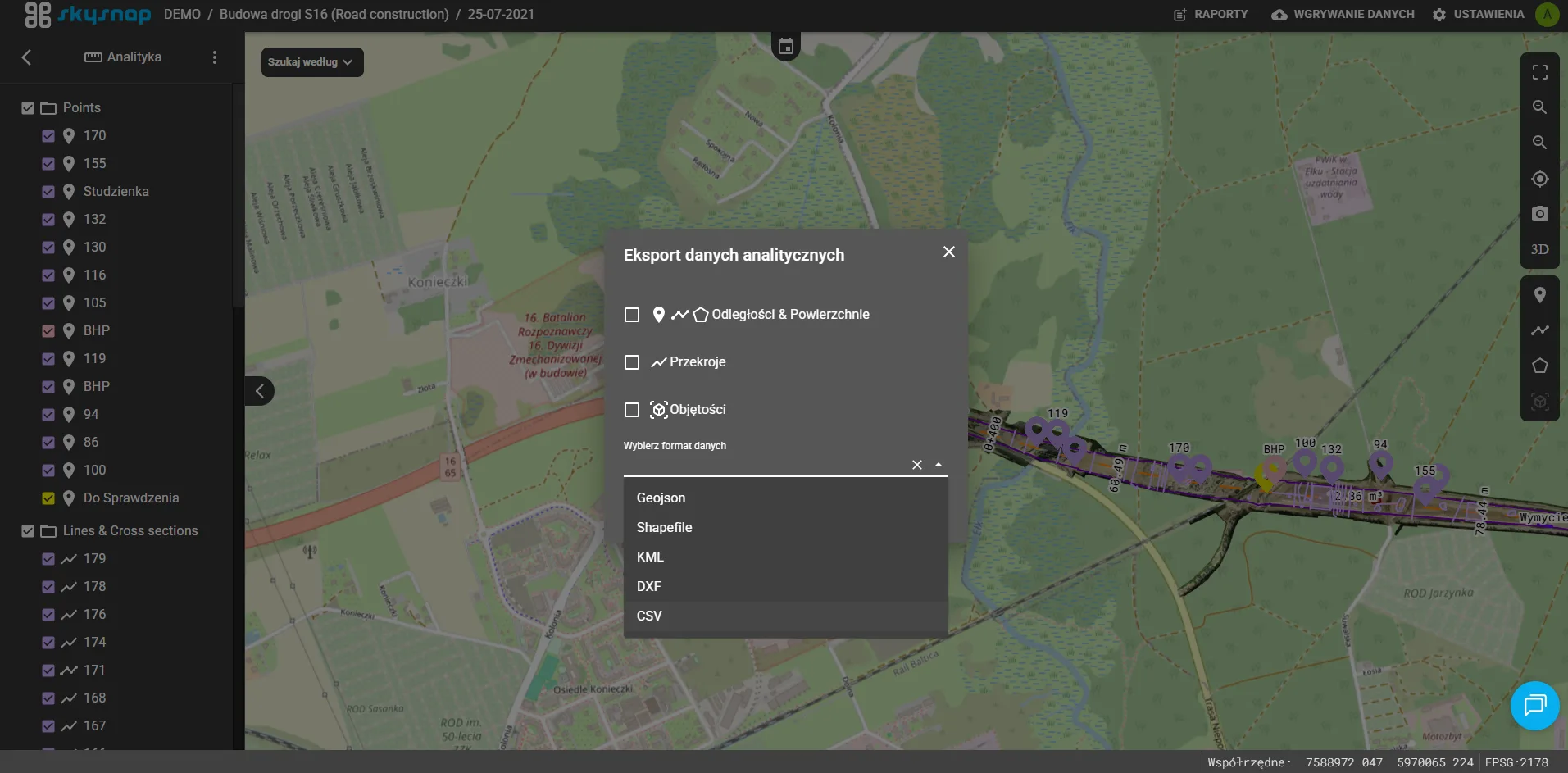
The system also allows the automatic generation of cross sections at a preset interval and allows direct comparison of the current status of the work with the design saved in DXF or LandXML files. The end result is a professional PDF report bearing your own logo, which can be immediately provided to the investor or supervisor.
Modern photogrammetry does not aim to replace surveyors, but is becoming their most powerful tool to provide data faster and more securely, while maintaining a density of information unattainable by traditional methods.
Would you like to see how photogrammetry can improve your daily projects?
Sign up for a free trial account on the SkySnap Portal to test our volume and cross-section analysis tools on your own data or finished demo projects.

Free E-book
Learn how to prepare a mission step-by-step, avoid raid mistakes and create accurate orthophotos and 3D models. The perfect guide before your first commercial assignments.
Table of Contents:
Podoba Ci się artykuł? Podziel się nim z innymi!
Podoba Ci się artykuł? Podziel się nim z innymi!
Tips, news, insights
Related articles
Check out our articles and get the latest industry news.