Introduction to drone technology
History of drone development
- Beginnings in military applications – World War I.
- 1980s and 1990s – civilian applications, GPS development.
- Today: common in surveying, construction, agriculture and environmental studies.
Basics of drone operation
Drones operate through a combination of GPS technology, sensors and electric motors.
- Control: Drones are typically controlled by remote control or a smartphone app.
- Navigation: GPS allows drones to pinpoint their location.
- Stabilization: Built-in gyroscopes help maintain balance during flight.
Drone technology makes it possible to perform tasks that would be difficult or impossible for humans. The use of sensors enables real-time data collection, which is crucial for many applications.
Examples of drone applications
Drones have found applications in many fields, from agriculture to public safety.
- Agriculture: crop monitoring and irrigation.
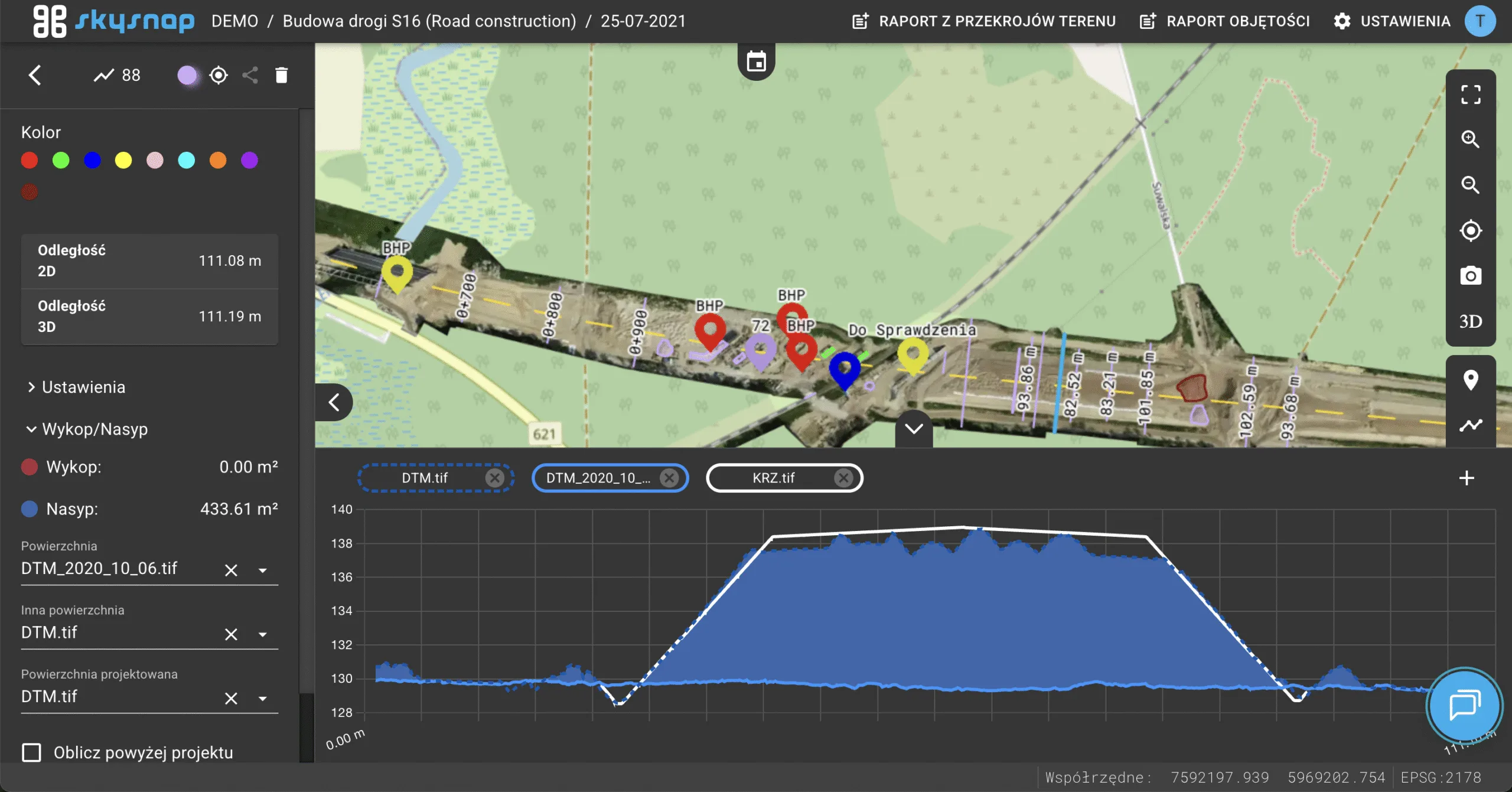
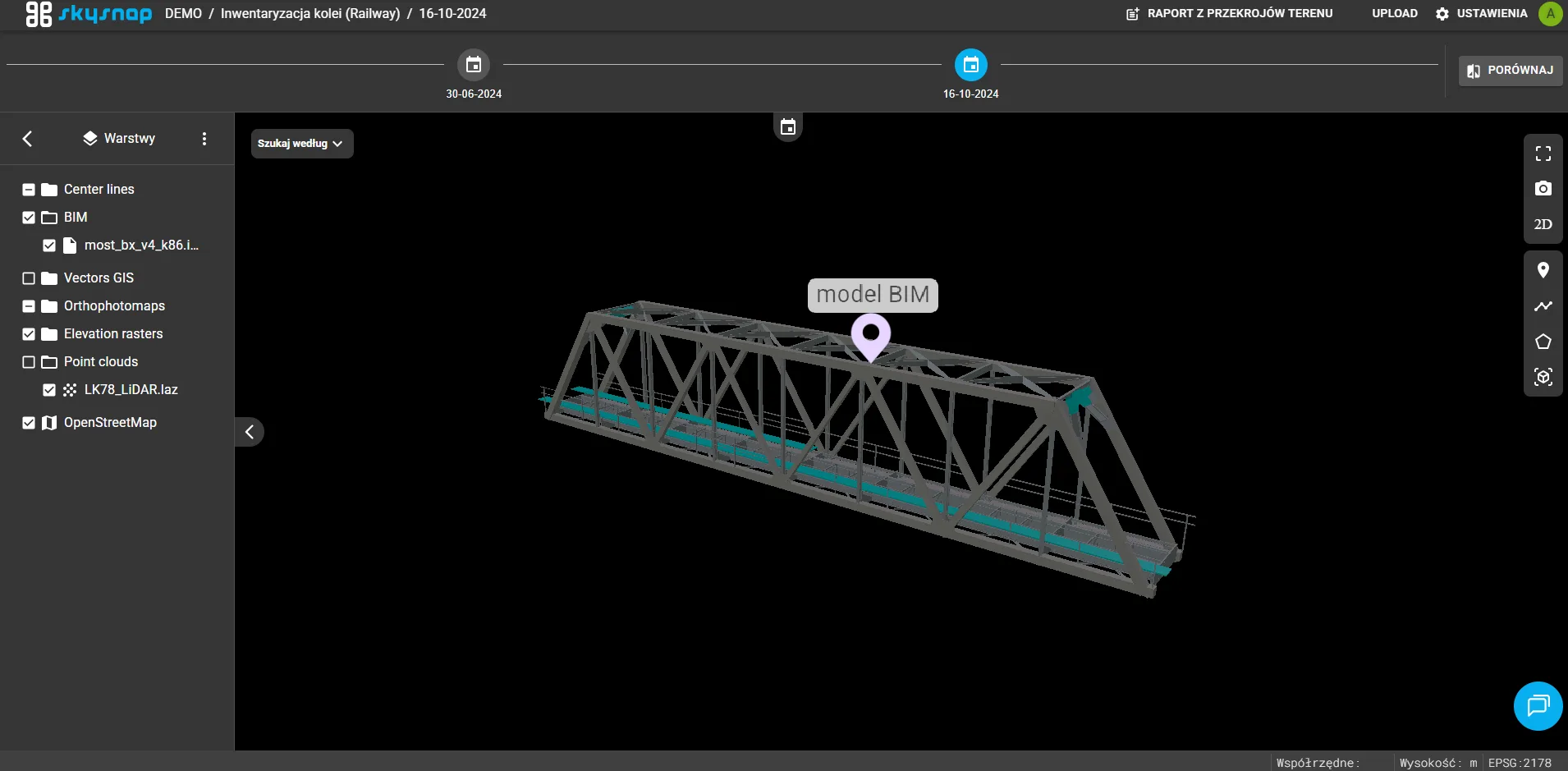
- Construction: Building inspection and 3D model creation.
- Rescue: Quickly locate people in difficult terrain.
- Drones are also being used to conduct inspections, including thermographic inspections on photovoltaic farms.
The use of drones in these sectors shows their potential to increase efficiency and safety. Drones are also used in scientific research, where they help collect data from hard-to-reach locations. In the environmental field, drones help monitor ecosystem changes and manage natural resources.
Accuracy of measurements
The accuracy of drone measurements is one of the most important factors in using this technology. The key element affecting precision is the size of the terrain pixel, which determines the detail of the data obtained. Traditional surveying methods, while proven, are often less accurate and require more time and resources. Drones allow for high-resolution data, which is essential in many fields such as construction, agriculture and environmental protection. Thanks to modern technology, drones can provide more accurate and detailed data, resulting in better planning and execution of projects.
Drones in agriculture
In agriculture, drones are becoming an indispensable tool. They allow farmers to monitor their crops with unprecedented accuracy. Drones are an essential tool for accurately mapping crop fields and monitoring changes in ecosystems. In this section, we will discuss how drones are being used to monitor crops, optimize processes and detect plant diseases. The use of drones in agriculture allows for efficient management of natural resources.
Application in crop monitoring
Drones in agriculture enable large-scale crop monitoring. Photos and data collected by drones allow analysis of the condition of plants.
This allows farmers to respond quickly to changing conditions. Drones help identify areas that need intervention.
The use of drone technology also makes it possible to assess crop yields and save resources by precisely planning operations.
Optimization of fertilization and irrigation
Optimizing fertilization and irrigation are key areas where drones offer significant benefits. Collecting data on soil moisture and plant health allows strategies to be adjusted.
- Soil analysis: Drones can collect samples for analysis.
- Humidity assessment: Sensors measure humidity levels.
- Accurate action: Data helps in action planning.
The use of drones in these processes reduces costs and increases farm productivity.
Plant disease detection
Detecting plant diseases is an essential part of crop management. Drones with multispectral cameras can quickly identify areas where plants are diseased.
This allows you to react quickly and take appropriate action. Preventing the spread of diseases is key to maintaining a healthy crop.
Drones also make it possible to monitor the effectiveness of applied crop protection products, which is important for long-term crop management.
Drones in construction
In the construction industry, drones offer new possibilities for monitoring and managing projects. They make it possible to accurately track the progress of work, inspect hard-to-reach areas and create precise terrain models.
Supervision of work progress
Surveillance of construction progress is one of the main uses of drones. Regular drone flights make it possible to document changes on the construction site.
- Visual documentation: aerial photos and videos provide a complete picture of the project.
- Progress analysis: Data is analyzed to assess compliance with the schedule.
- Informing stakeholders: Visual materials facilitate communication with customers and investors.
With drones, project management becomes more efficient and transparent.
Creation of 3D terrain models
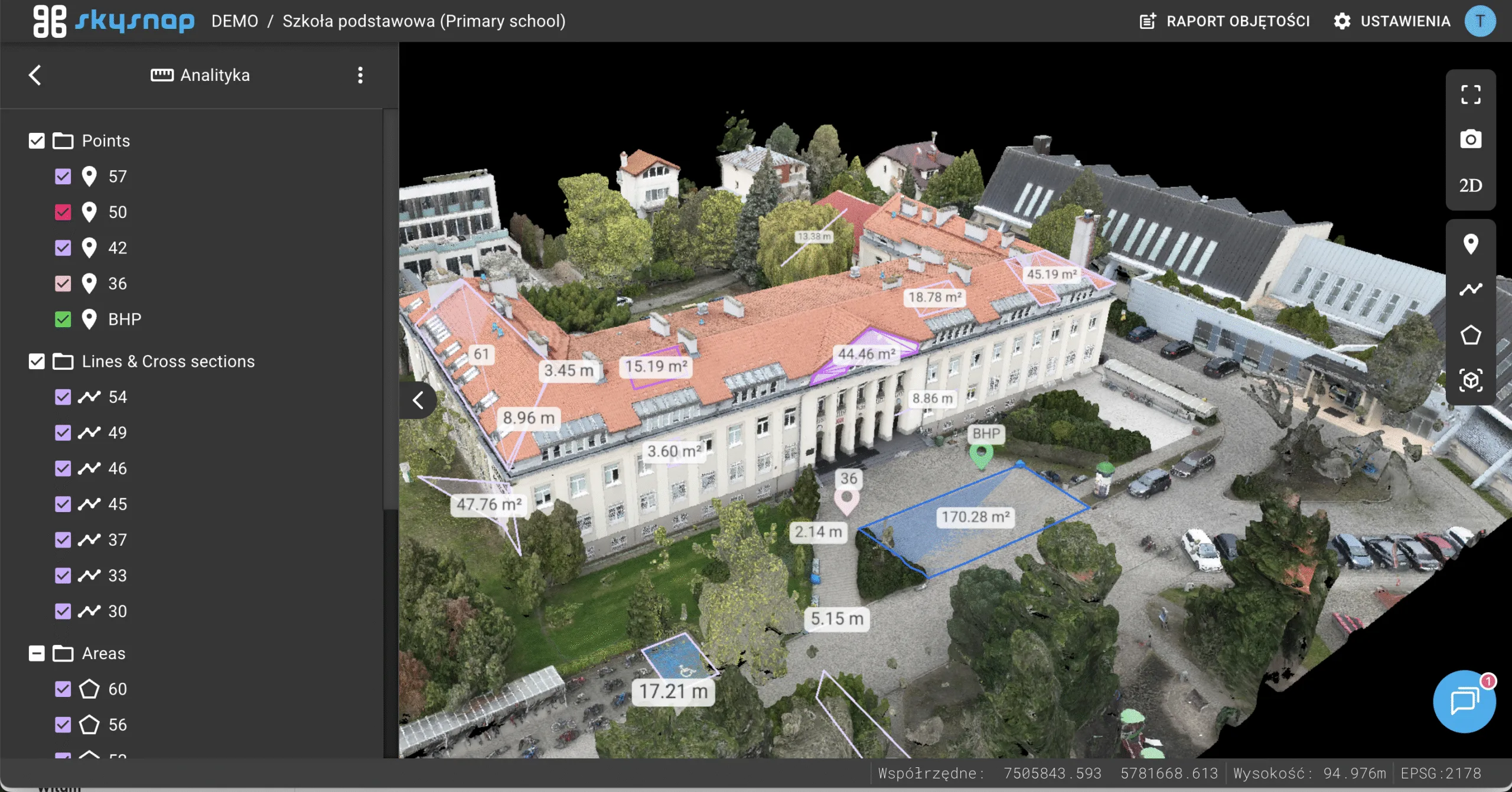
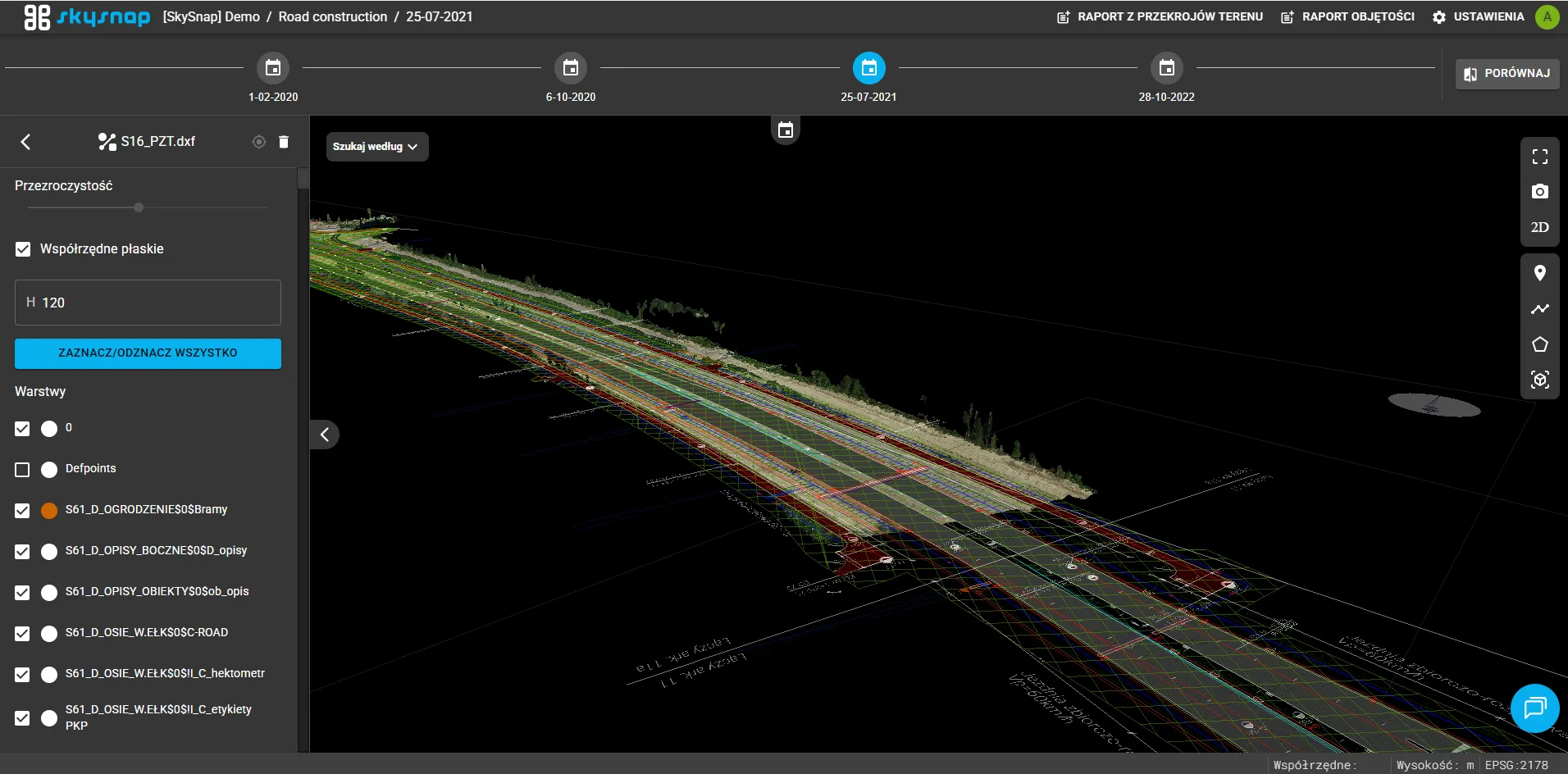
Creating 3D models of terrain is another innovative feature of drones. Photogrammetry uses images taken by drones to generate precise models.
- Photo collection: Drones take photos from different perspectives.
- Data processing: Specialized software generates 3D models.
- Use of models: Models are used to plan and analyze construction projects.
Drones facilitate the creation of accurate models, which are essential for precise planning and design.
Inspections of hard-to-reach areas
Inspection of hard-to-reach places is a task where drones excel. Instead of using scaffolding or cranes, drones can reach selected points quickly and safely.
Drones with HD cameras allow accurate analysis of the condition of structures. Inspections are faster and less costly than traditional methods.
The use of drones in inspections reduces the risk of accidents and improves safety on construction sites.
Application of drones in surveying
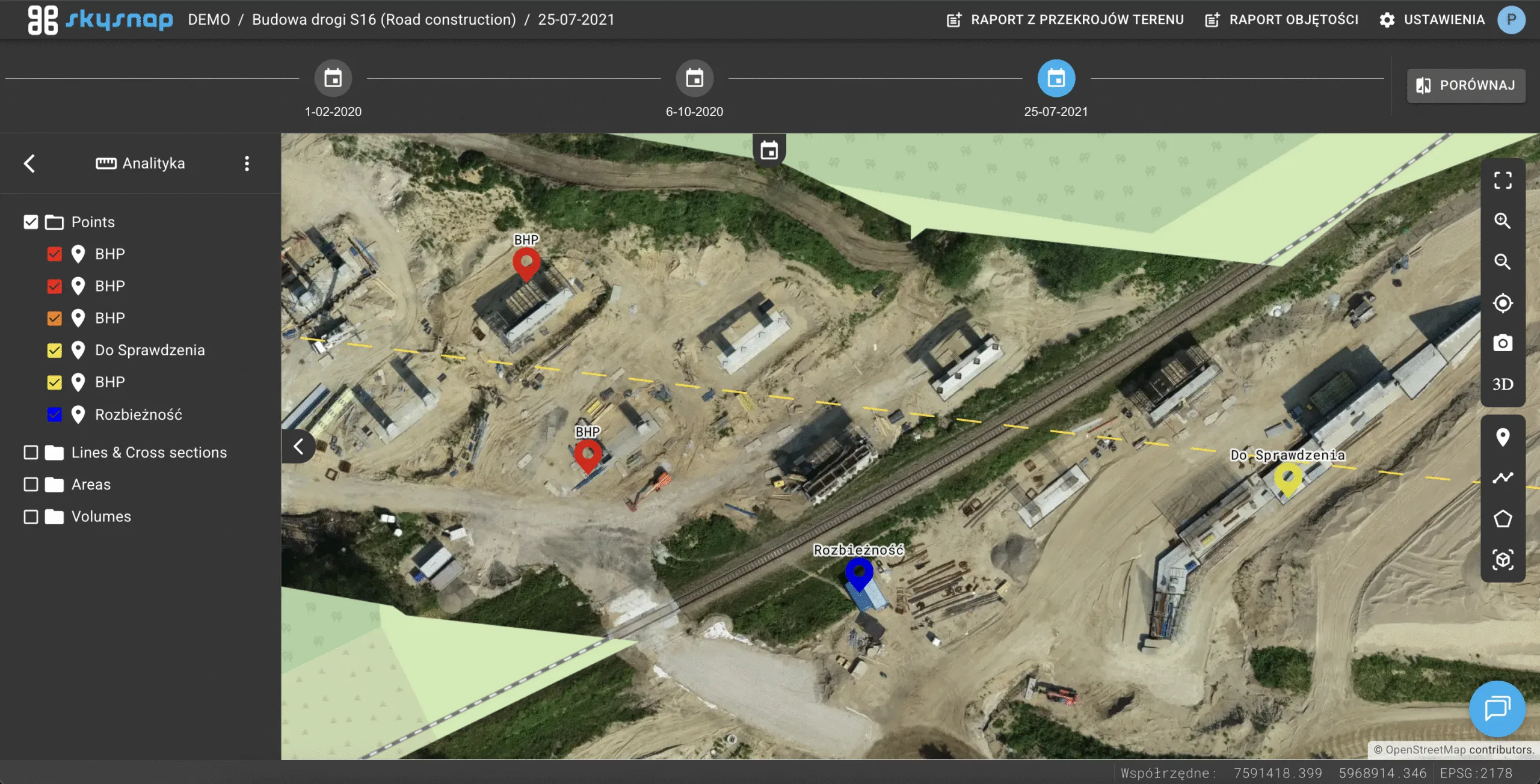
Drones also play a key role in surveying, where their ability to accurately map terrain and analyze data brings significant benefits. The accuracy of a photogrammetric model created with a drone largely depends on the measurement of photopoints. In this section, we discuss how drones support surveying and mapping, data analysis, and collaboration with engineers and architects. The use of ground control points is key to ensuring accurate results. Orthophotos are a modern tool in photogrammetry that allows fast and accurate field data. The precision of surveying from a drone is crucial to the quality of 3D data. Drones can move unhindered over large areas, collecting information from hard-to-reach places. GCP points are key in converting pixels to actual geographic coordinates. The drone’s camera specifications, such as resolution and focal length, affect the quality of images. The drone’s flight altitude affects the density of GCPs. The pixel size of the UAV’s camera sensor plays a significant role in determining GCP density.
Site surveying and mapping
Surveying and mapping land is one of the primary uses of drones in surveying. Drones equipped with GPS and cameras can map large areas quickly and accurately.
- Speed: Drone flights are much faster than traditional surveying methods.
- Accuracy: Data is processed to produce accurate maps.
- Cost-effectiveness: Drones reduce costs associated with human labor.
The use of drones in surveying speeds up processes and increases the accuracy of results.
Analysis of geodetic data
Analysis of geodetic data collected by drones is a key part of the mapping process. Advanced software enables data processing and interpretation.
- Data collection: Drones take photos and collect GPS data.
- Processing: Data is processed to generate maps and models.
- Interpretation: the results are analyzed in the context of surveying projects.
Drones allow for more accurate analysis and a better understanding of the terrain, which is invaluable in engineering projects.
Benefits for engineers and architects
The benefits for engineers and architects of using drones in surveying are numerous. 3D models and accurate maps support design and decision-making processes.
- Better planning: Accurate data makes planning and design easier.
- Reducing errors: Precise maps minimize the risk of design errors.
- Increasing efficiency: Drones speed up surveying and design work.
Drones support innovative approaches to the design and implementation of buildings and infrastructure.
Checkpoints
Checkpoints are essential in drone surveys because they enable accurate survey data. These strategically placed points on a mapping or survey site are used to calibrate and evaluate the accuracy of drone-derived data. The number of checkpoints depends on the scale of the project and precision requirements. In practice, checkpoints help minimize errors and ensure that the data collected by drones is consistent with reality. They enable reliable and accurate results, which is crucial in surveying, construction and other fields that require precise measurements.
Number of photopoints
The number of photopoints is also an important factor in drone measurements. Photopoints are used to create 3D models and orthophotos, and their number directly affects the accuracy of measurements. Depending on the scale of the project and precision requirements, the number of photopoints can vary. A higher number of photopoints usually leads to more detailed and accurate models, which is essential in surveying, construction and other industries. With the right number of photopoints, drones can provide high-resolution data for precise project planning and execution.
The future of drones in surveying
The future of drones in surveying is full of promise. Developments in technology, regulations and ethics, as well as the industry’s outlook, are key elements shaping the future of the sector. In this section, we take a look at what lies ahead in the drone world.
New technologies and innovations
New technologies and innovations in the field of drones are constantly evolving. Developments in artificial intelligence and sensors are opening up new possibilities.
Drones are becoming increasingly autonomous and precise. Integration with other technologies allows for even more advanced applications.
In the future, we can expect greater accuracy and efficiency, which will further revolutionize the way we use drones.
Regulatory and ethical challenges
Regulatory and ethical challenges are two key aspects related to the future of drones. Privacy and security regulations must keep pace with the technology.
- Safety: Need for clear regulations on drone flights.
- Privacy: Protecting personal data collected by drones.
- Ethics: The use of drones should be in accordance with ethical principles.
Regulatory development is essential to fully realize the potential of drones in a responsible and legal manner.
Development prospects of the drone industry
The growth prospects for the drone industry are promising. The increase in demand for precision data and efficiency is driving the industry’s growth.
- Commercial applications: New markets for drones are developing.
- Technological innovation: advances in sensor technology and AI.
- Global expansion: Increased interest in drones around the world.
The drone industry has a bright future, and its development will have a far-reaching impact on many industries.

Free E-book
Learn what services to offer, who to sell them to, and how to write an effective offer email. Ready-made templates, tips and examples of campaigns that really work.
Table of Contents:
Podoba Ci się artykuł? Podziel się nim z innymi!
Podoba Ci się artykuł? Podziel się nim z innymi!
Tips, news, insights
Related articles
Check out our articles and get the latest industry news.