How thermal imaging drones are changing the way we see the world
Drones with thermal imaging are revolutionizing the way we perceive our surroundings, offering a new perspective and capabilities that were previously unavailable. Thanks to advanced thermal imaging technology, we can now easily observe places and phenomena that were difficult to investigate with traditional methods. These drones allow us to monitor wildlife, search for missing people, and detect faults in infrastructure. In this article, we’ll take a look at how thermal imaging drones are changing our perception of the world, the benefits they bring, and their applications in various areas of life. I invite you to discover how this technology affects our daily lives.
Application of drones in various fields
Drones with thermal imaging are widely used in many fields, offering new ways to solve problems and make operations more efficient. Let’s take a look at how these devices are changing different areas of our activity.
The role of drones in rescue
Drones with thermal imaging are invaluable in rescue operations. They make it possible to quickly search large areas, which is crucial in emergency situations. Thanks to their ability to record temperature differences, they can locate missing people in difficult terrain.
Drone operators can instantly provide information to emergency teams, significantly reducing response times. Drones can also carry light medical payloads or first-aid supplies to hard-to-reach areas, increasing the chances of surviving casualties.
In rescue operations, drones can operate both during the day and at night, making them an indispensable tool in any situation requiring quick intervention.
Use in agriculture
Thermal imaging drones are gaining popularity in agriculture, where they are used to monitor crops and assess plant health. They can detect temperature changes that may indicate problems with plant health or irrigation.
With drones, farmers can quickly identify and respond to the needs of their crops, leading to increased yields and farm efficiency. Drones also make it possible to assess the condition of the soil, which helps in making fertilization decisions.
Drones can also assist in pest control processes by identifying areas that require more intensive chemical protection, minimizing the use of pesticides.
Drones in environmental protection
In environmental protection, drones with thermal imaging are used in monitoring and protecting wildlife. They can track migrating herds of animals, which helps in their conservation and population management.
Drones are also being used to monitor environmental changes, such as deforestation and soil erosion. This allows environmental organizations to respond more quickly to threats.
Examples of application also include air and water quality control, which is key to maintaining the health of ecosystems. Such activities help inform local and global conservation decisions.
Thermal imaging technology in drones
Thermal imaging technology in drones allows us to record the thermal radiation emitted by objects. This provides images that show temperature differences, which has wide applications in a variety of fields.
How thermal imaging works
Thermal imaging is a technology that records infrared emissions from objects. Each object emits thermal radiation, which is converted into thermal images by special cameras.
These thermal imaging cameras are mounted on drones, allowing them to capture temperature-scale images. This makes search, rescue or monitoring operations much more efficient.
Thermal imaging does not require light sources, which means it can be used both day and night, in all weather conditions. This feature makes it extremely versatile and useful.
Advantages of thermal imaging in drones
The use of thermal imaging on drones brings many benefits. First of all, it makes it possible to accurately locate objects in all weather conditions, which is crucial in emergency situations.
Drones with thermal imaging cameras can identify technological problems, such as heat leaks or overloads in electrical systems. Such analysis helps avoid failures and minimize losses.
Another advantage is the ability to monitor sensitive ecosystems without interfering with the natural environment, which is particularly important in nature conservation.
Examples of the use of thermal imaging
Thermal imaging is used in many fields. In rescue operations, it helps quickly locate missing persons, which significantly increases the chances of finding them.
In industry, it makes it possible to detect temperature anomalies in machinery, allowing quick response and prevention of failures. Drones with thermal imaging are also being used to monitor power grids.
In environmental protection, thermal imaging can effectively track animal migrations and assess forest health. These applications make thermal imaging an invaluable tool in many industries.
Changing perception of the world thanks to drones
Drones with thermal imaging are giving us new insights into the world around us. They are opening up possibilities that were previously unattainable and changing the way we view our environment.
New perspectives in observation
Thanks to drones with thermal imaging, we can observe the world from a completely different perspective. They allow us to view previously inaccessible places, which is invaluable for scientific research.
Drones make it possible to remotely monitor areas that are difficult to access or dangerous for humans. This opens up new possibilities in exploration and documentation.
They also make it possible to create accurate thermal maps, which is useful for urban planning and environmental protection. These new perspectives are changing the way we view our world.
Impact on research
Drones with thermal imaging are having a significant impact on scientific research. They allow accurate analysis of natural and climatic phenomena, which is invaluable in environmental research.
In geological research, drones help identify changes in land structure, which is crucial for understanding geological processes. In biology, they make it possible to track animal behavior and migration.
With drones, scientists can collect data more quickly and efficiently, resulting in a better understanding of the world around us and taking more effective action.
Drones and everyday life
The impact of thermal imaging drones on our daily lives is becoming increasingly apparent. They allow us to better monitor our homes, which increases our sense of security.
Drones are also used in logistics, delivering goods to hard-to-reach places.
Their use in inspecting buildings and installations helps detect defects quickly, minimizing the risk of failure.
In cities, drones can monitor traffic and support the activities of city services, helping to improve the quality of life for residents.
Challenges and future of thermal drones
Thermal drone technology faces many challenges, but at the same time offers great opportunities for the future. Let’s take a look at what obstacles and prospects await the development of this technology.
Technological barriers
Despite their many advantages, thermal imaging drones face some technological barriers. There are still limitations in terms of operating range and battery life, which can hinder their use in some situations.
Another challenge is the precise processing of thermal imaging data. This requires sophisticated software and specialized knowledge, which can limit the availability of the technology for less advanced users.
Drones must also be equipped with adequate safety features to operate in harsh weather conditions, which poses additional challenges for manufacturers.
Legal and ethical regulations
The development of thermal drones also raises questions of legal and ethical regulation. A legal framework is needed to ensure responsible and safe use of this technology.
Privacy is a key issue that requires careful consideration to avoid abusive monitoring of people and property. Regulations must also take into account aspects related to flight safety.
Ethical drone use requires cooperation between manufacturers, users and regulators to ensure the benefits of the technology without infringing on the rights of individuals.
Future opportunities and innovations
Despite the challenges, the future of thermal imaging drones looks promising. Technological innovations could lead to increased performance and availability of these devices.
In the future, we can expect further development of artificial intelligence, which will enable more advanced analysis and automation of monitoring processes. This will increase the applicability of drones in various fields.
The development of battery technology can significantly improve the range and operating time of drones, which will open up new operational opportunities.
Practical applications and examples
Drones with thermal imaging are used in a wide range of practical situations, from rescue to wildlife protection to industrial inspections. Let’s look at some key examples of their use.
Emergency services and security
In rescue operations, drones are invaluable. They make it possible to quickly locate missing persons, which increases the effectiveness of search operations.
- Case study: a rescue operation in the mountains, where a drone located missing tourists in record time.
- Drones can also monitor emergency situations such as fires or floods, providing valuable data to rescue teams.
These types of applications show how drones can enhance the safety and efficiency of rescue operations.
Wildlife monitoring
Drones with thermal imaging are being used to monitor wildlife, helping to protect endangered species and manage animal populations.
- Example: Observing elephant populations in Africa, helping to protect them from poachers.
- Drones enable non-invasive monitoring and data collection of animal behavior in their natural habitat.
This allows for more effective conservation efforts.
Industrial inspections and infrastructure
In industry, drones are used to inspect infrastructure, allowing for quick detection of potential problems and minimizing the risk of failure.
- Example: inspecting high-voltage lines to detect areas in need of repair.
- Drones allow for safe and efficient monitoring of hard-to-reach areas, with the benefit of time and cost savings.
Industrial applications show how drones with thermal imaging can increase operational efficiency and safety.
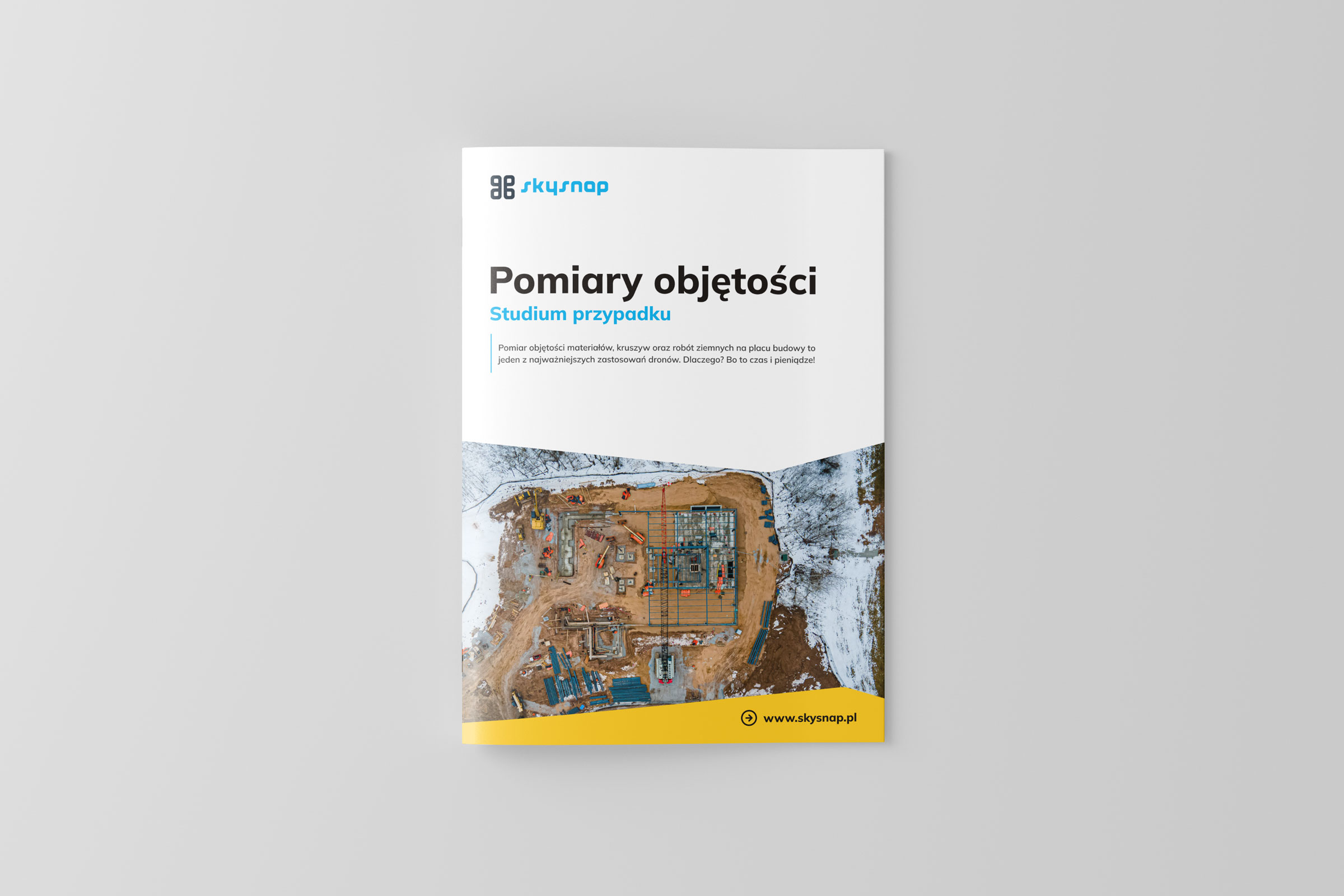
Free E-book
Measuring the volume of materials, aggregates and earthworks on a construction site is one of the most important uses of drones. Why? Because it’s time and money! Download our short e-book and learn how you can monetize your passion with drones.
Table of Contents:
Podoba Ci się artykuł? Podziel się nim z innymi!
Podoba Ci się artykuł? Podziel się nim z innymi!
Tips, news, insights
Related articles
Check out our articles and get the latest industry news.