Step 1: Mission Planning
- Define the area to be mapped (range, obstacles, flight altitude).
- Selecting a suitable drone (e.g., with an RGB or LiDAR camera).
- Set mission parameters in software (e.g., overlapping, resolution, flight grid).
Step 2: Flight and data collection
- The drone autonomously carries out the mission, taking hundreds of images or scans (if it’s LiDAR).
- Depending on the purpose – it takes vertical (orthophoto) or oblique (for 3D models) photos.
- GPS RTK/PPK increases the precision of recording the position of each image.
Step 3: Data processing
Photos are uploaded to the software.
It creates:
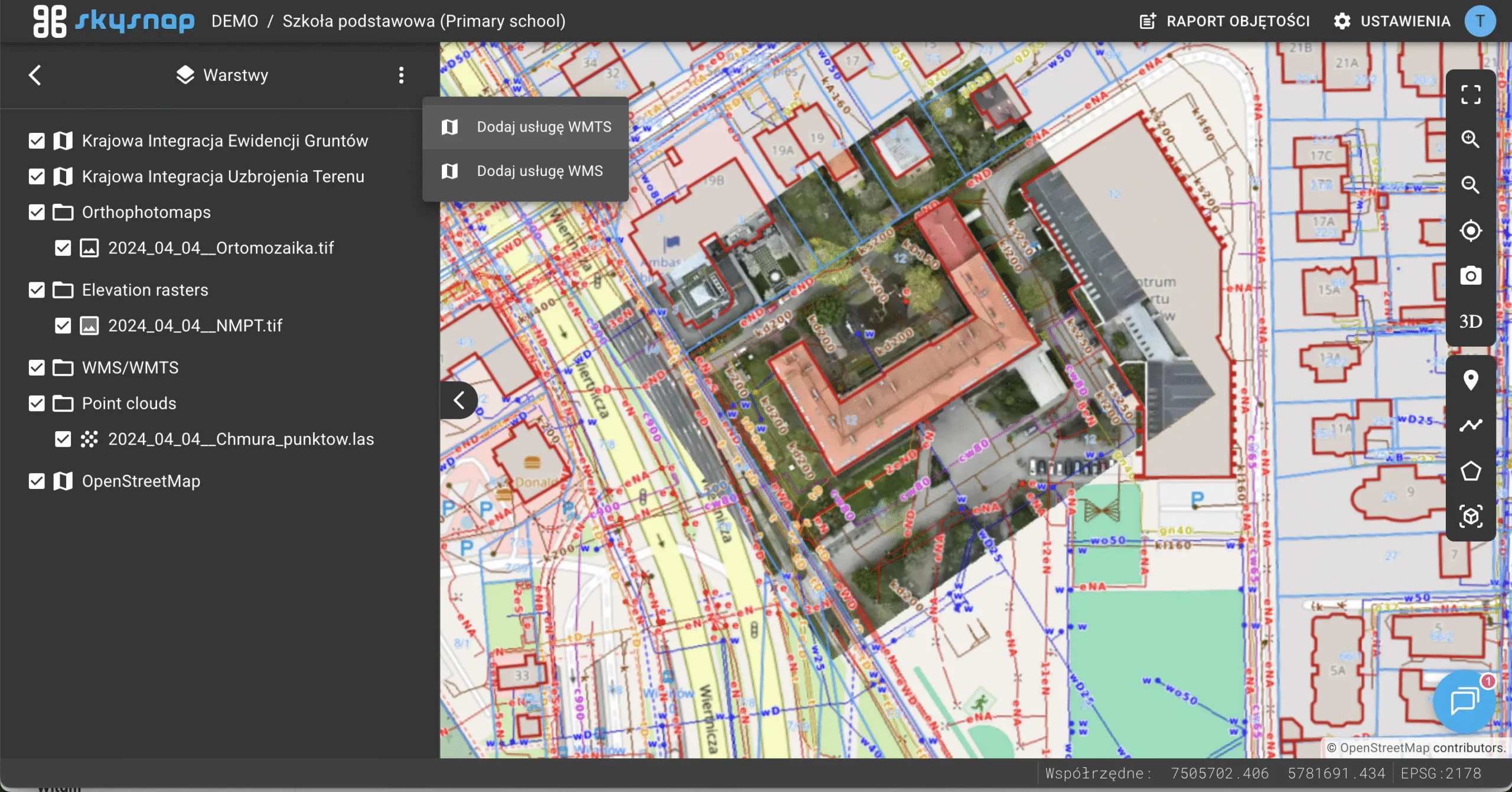
- Orthophotomap – an aligned map of georeferenced images.
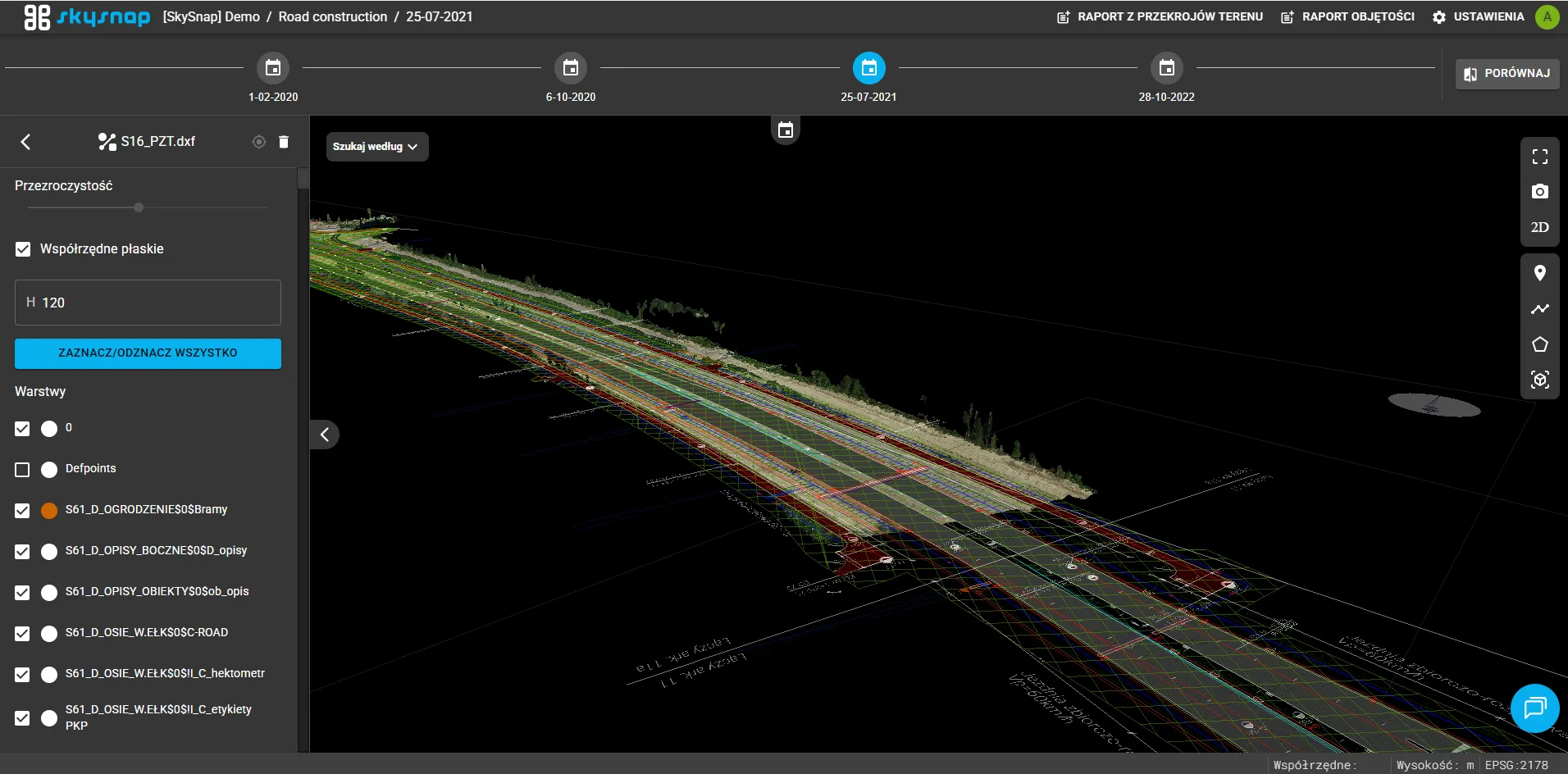
- Point cloud – XYZ data of each point of the terrain.
- Digital Terrain Model (DTM) or Surface Model (DSM).
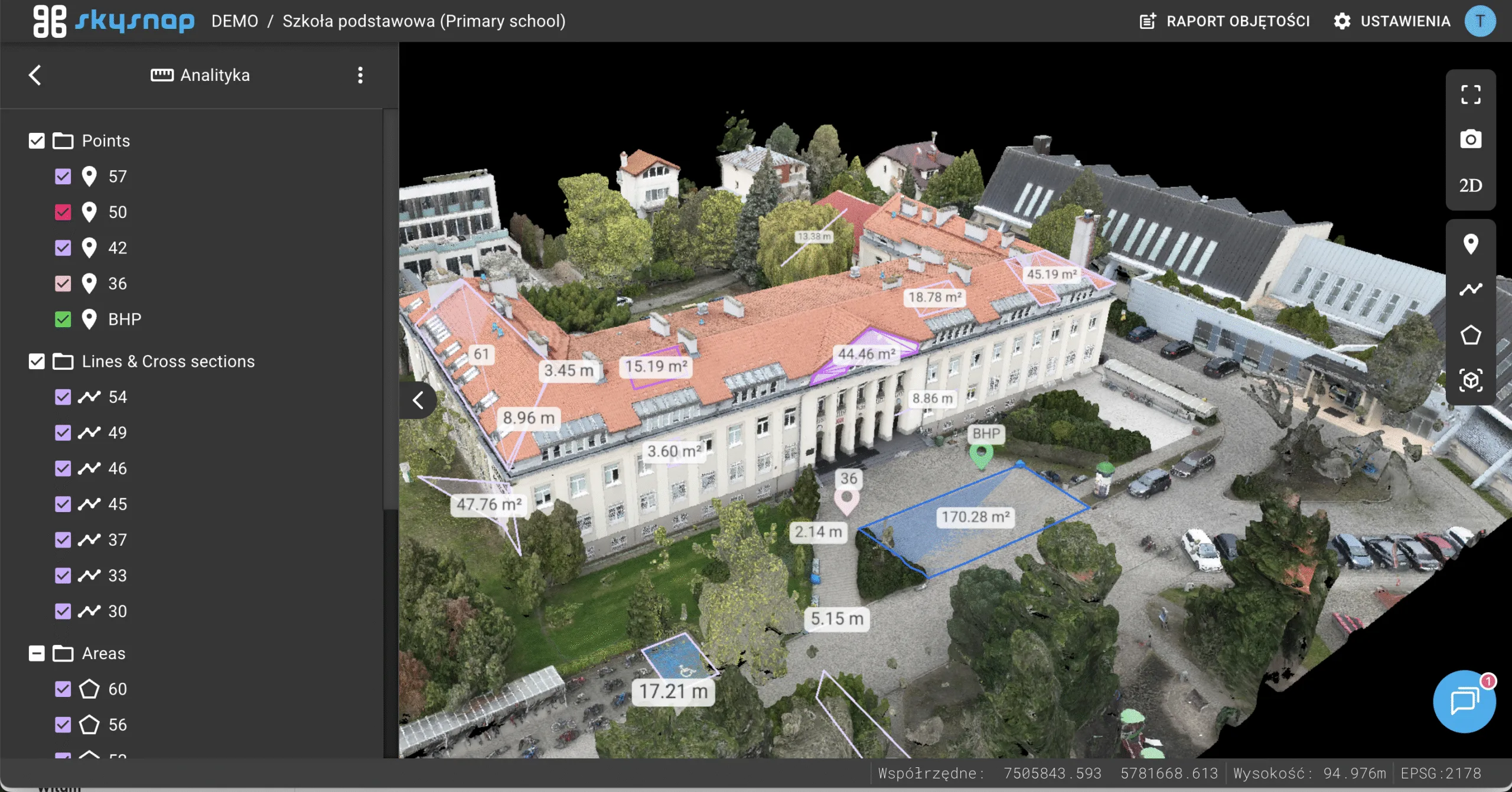
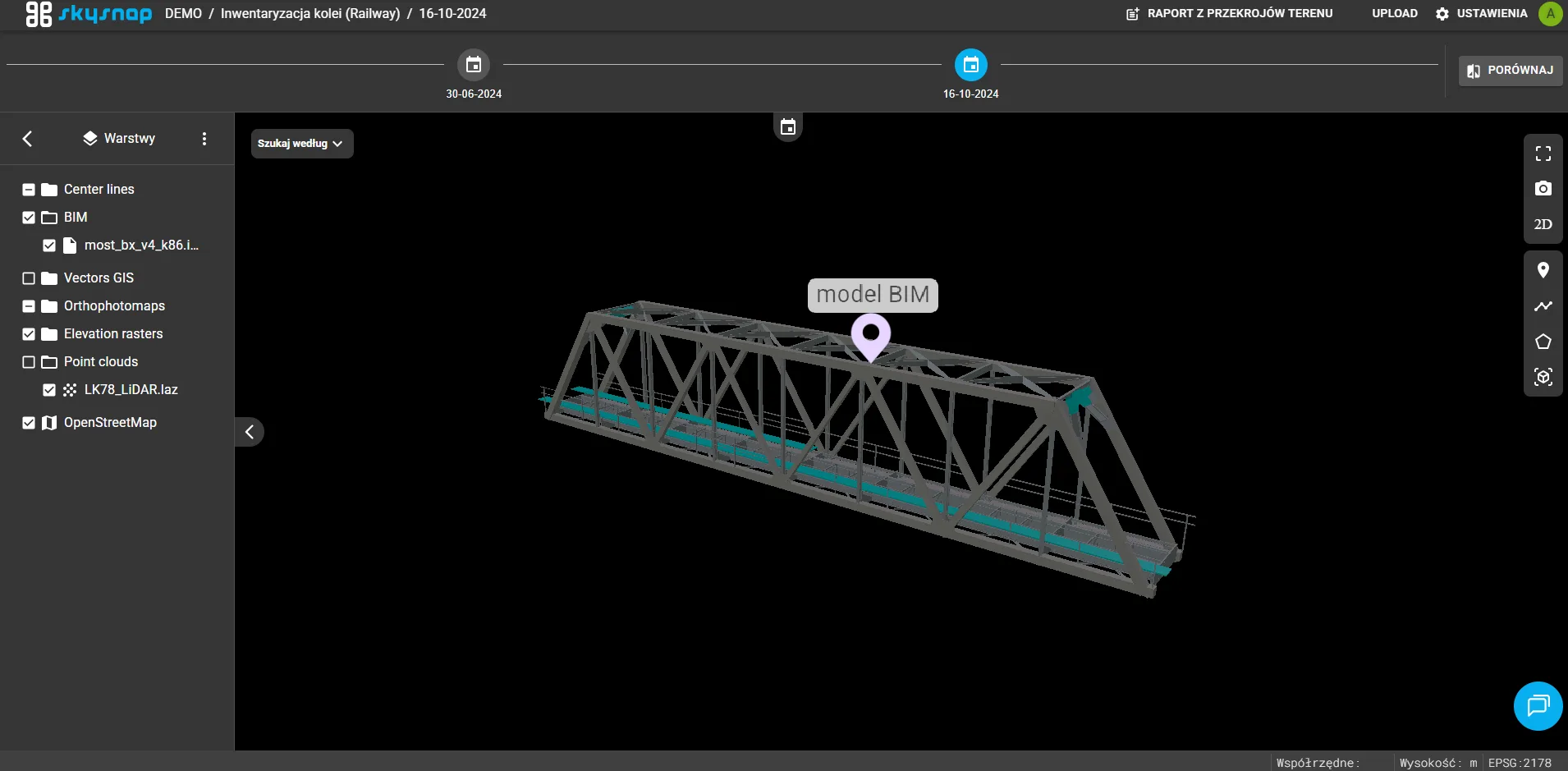
- 3D model – textured mesh.
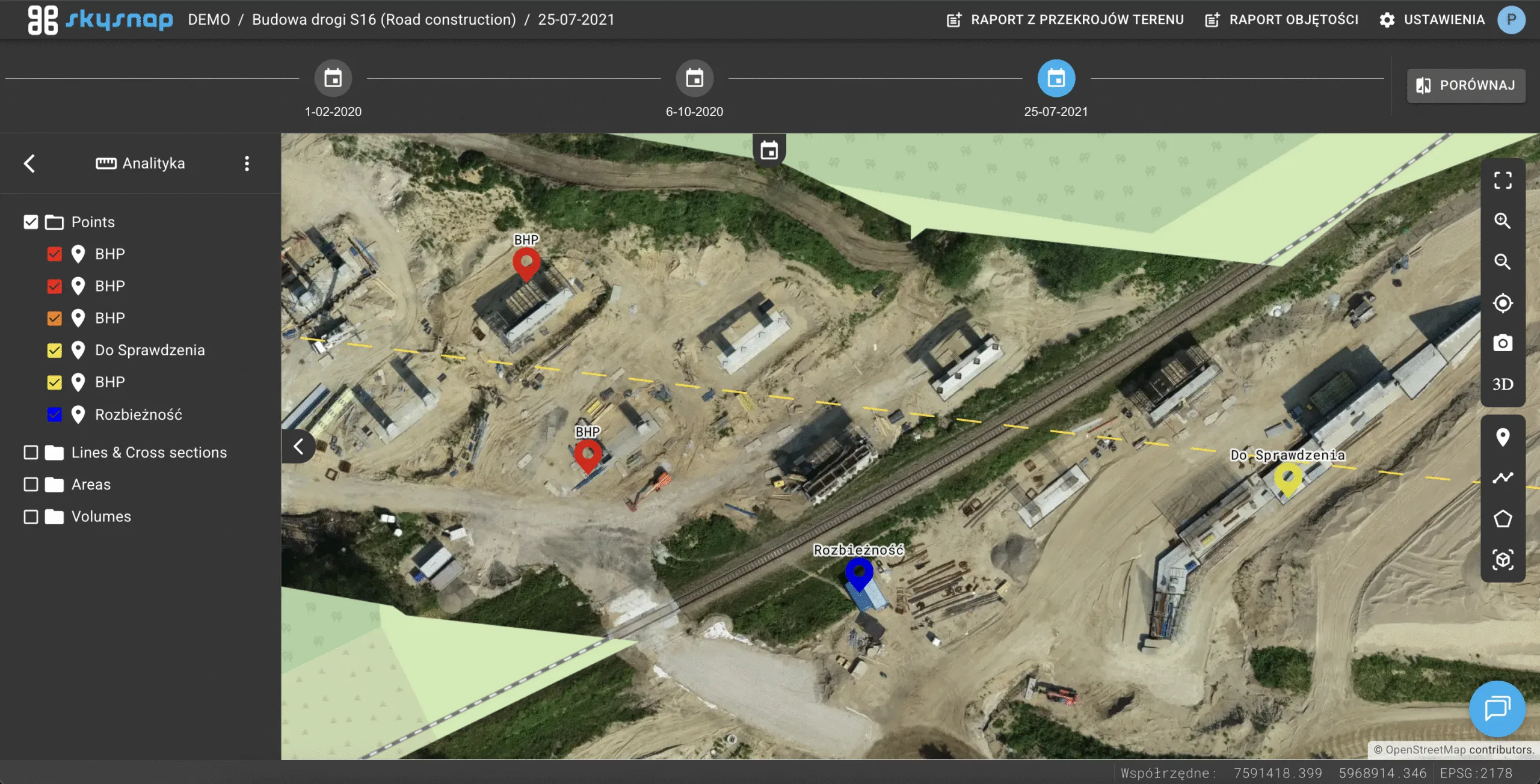
Step 4: Measure, analyze and export data
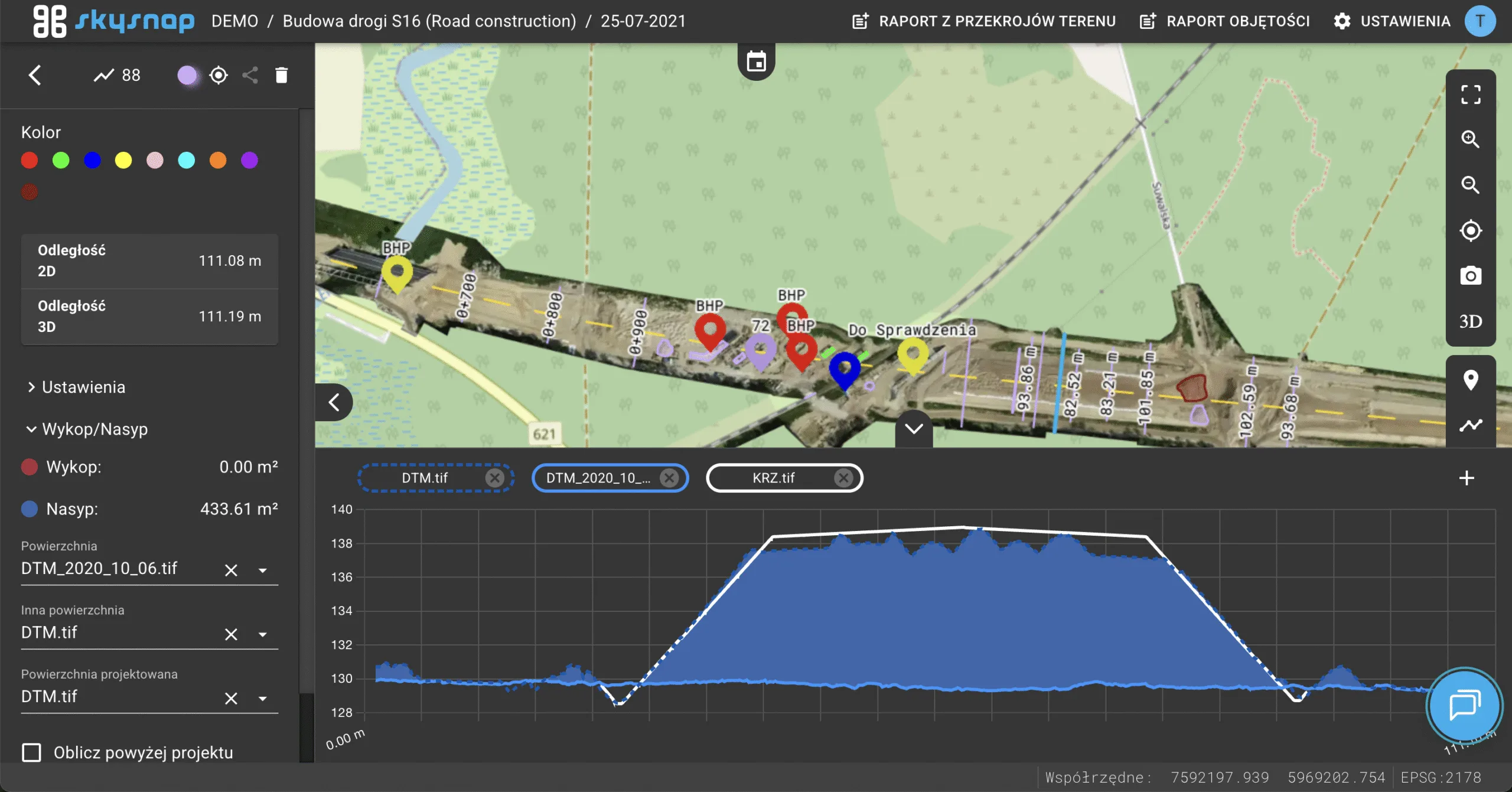
- Measurements of lengths, slopes, volumes (e.g., heaps), elevation profiles.
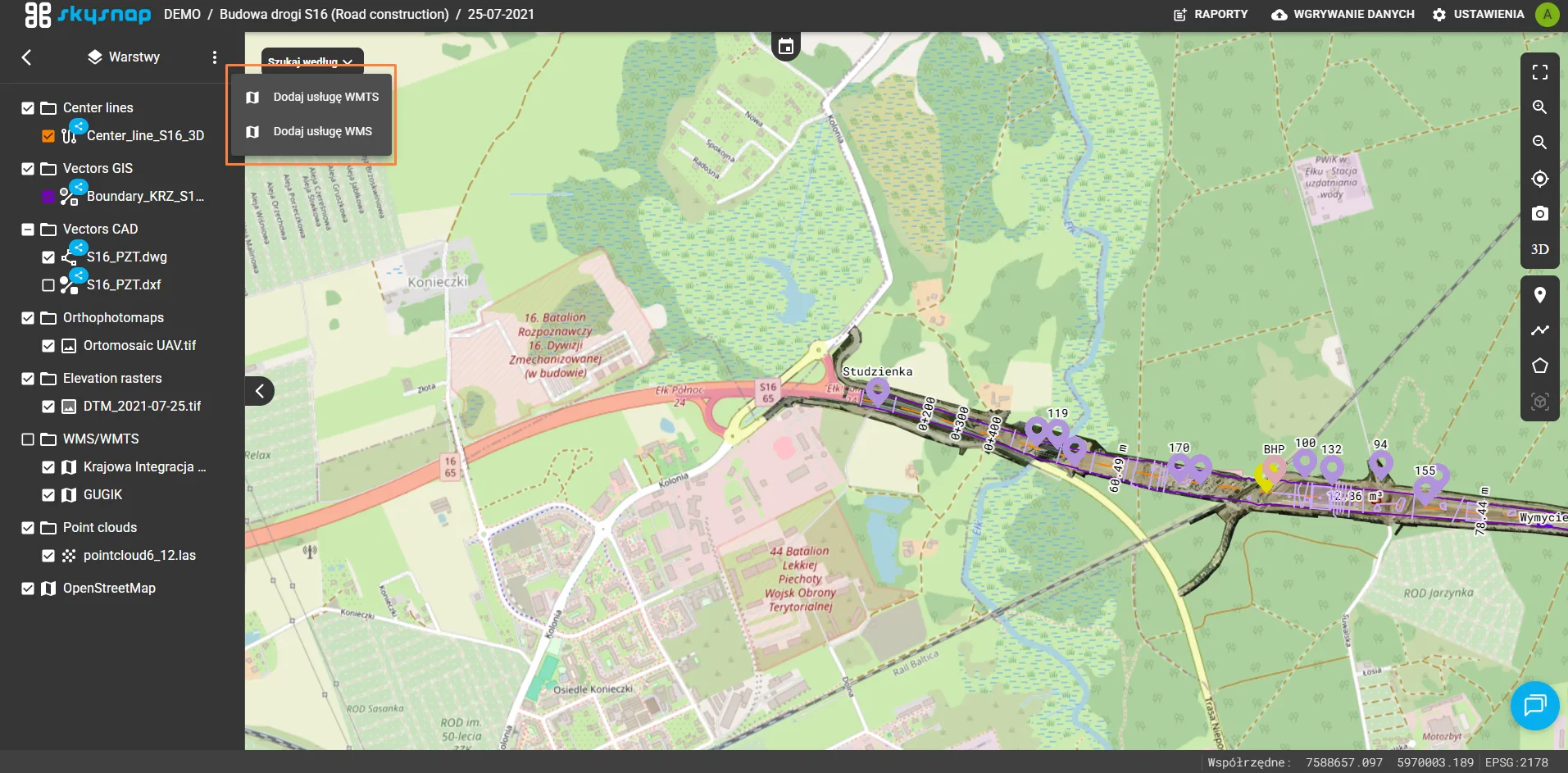
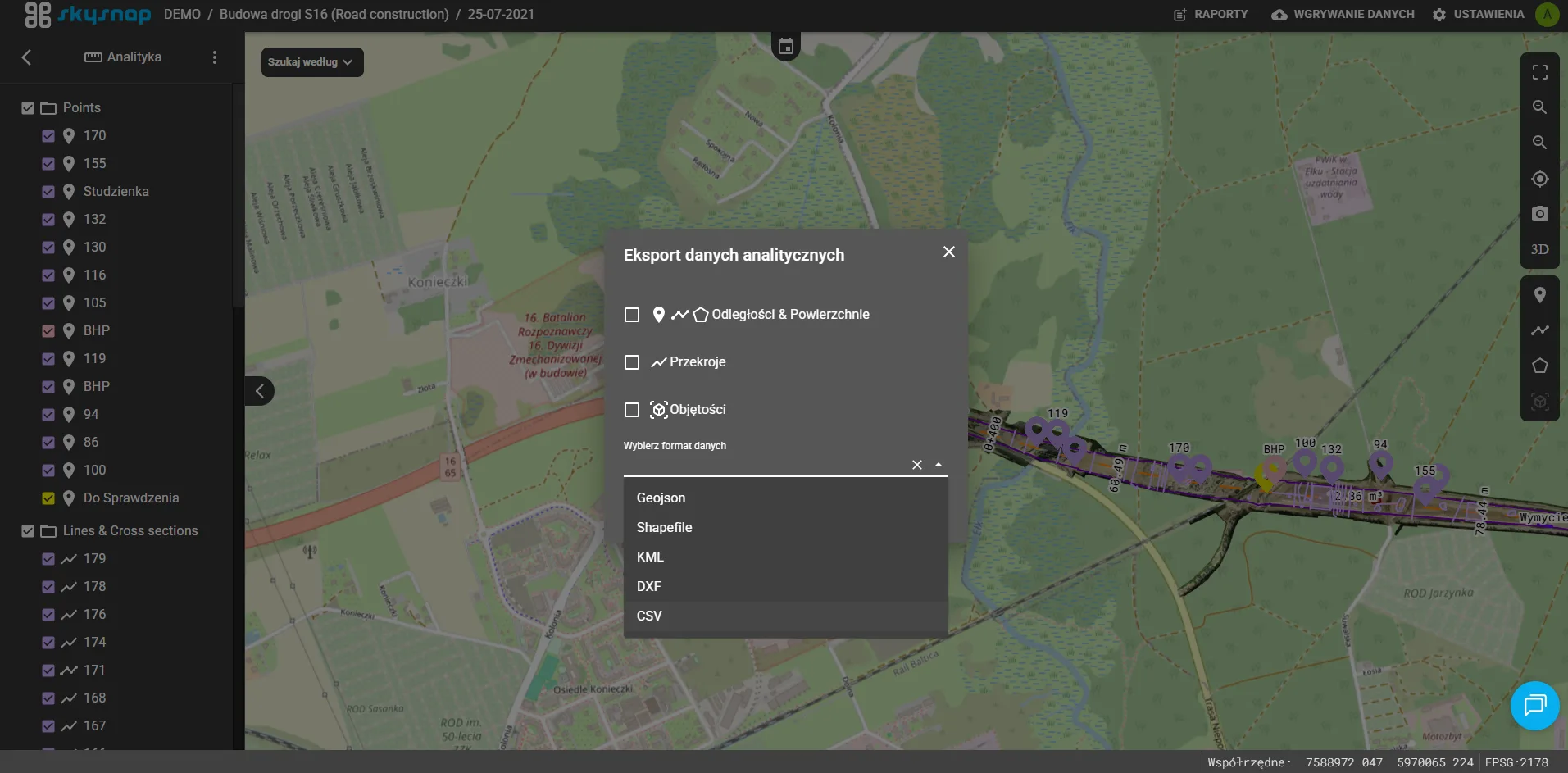
- Export data to CAD/GIS (e.g. DXF, GeoTIFF, LAS).
- Finished materials can go to the designer, investor or authority.
Why drones in topography?
Drones reduce survey time from days to hours. They allow rapid creation of orthophotos and 3D models, especially where access is difficult. They are cheaper, more accurate and safer than traditional methods.
Benefits for the operator and investor:
- Time and cost savings: fewer employees, faster results, less risk.
- High precision: measurement accuracy of up to a few cm thanks to GPS RTK and LiDAR.
- Flexibility: ability to work in diverse and inaccessible terrain.
Drone applications in surveying and engineering
- Terrain mapping from the air – high-resolution images processed into orthophotos.
- 3D models – realistic visualization of the area, ideal for investment planning.
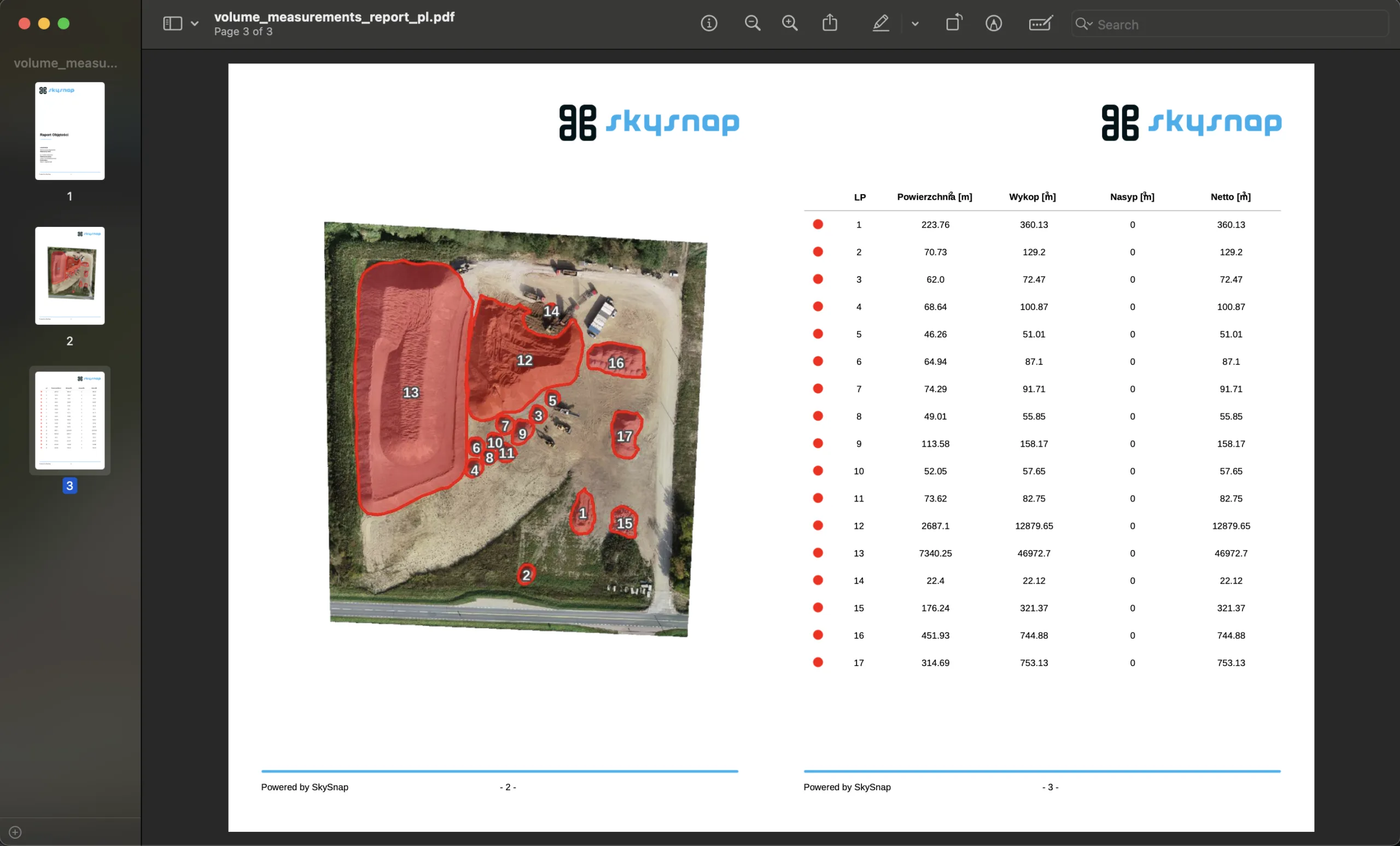
- Volumetric analysis – heaps, pits, cross sections.
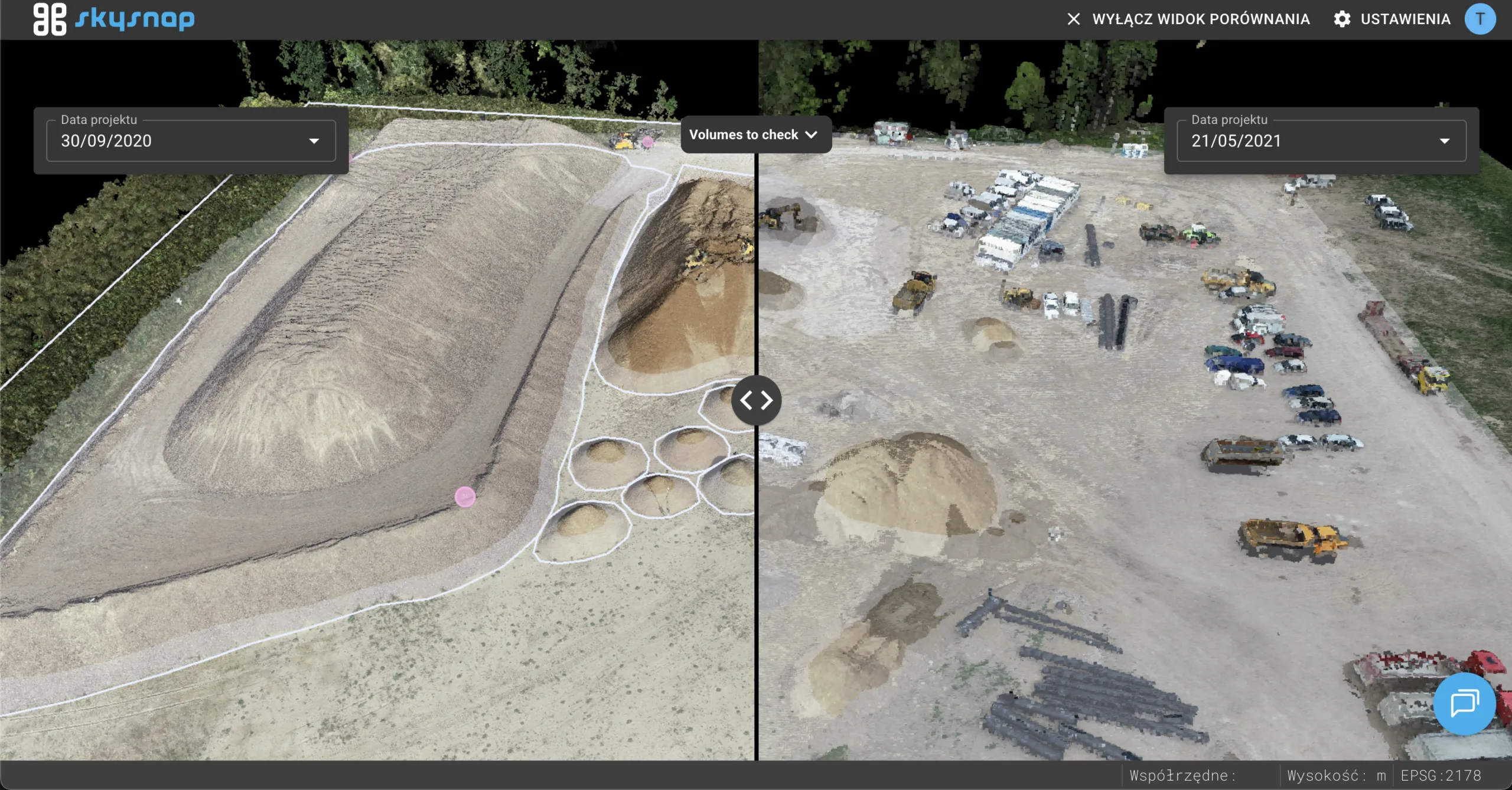
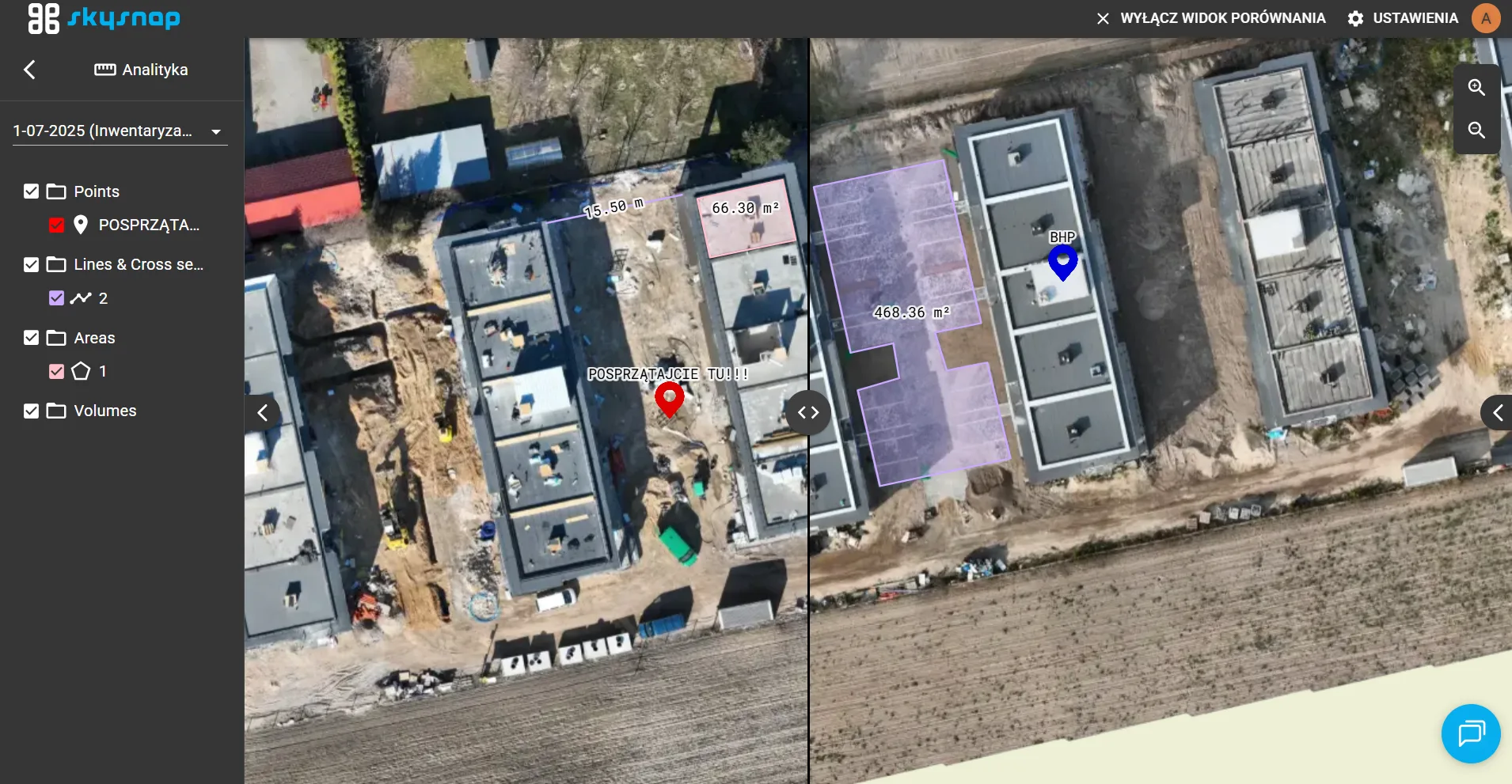
- Monitoring the progress of the work – quick verification of changes over time.
Challenges and the future
Challenges:
- Regulations: urban flight restrictions and licensing requirements for operators.
- Updating technology: the rapid development of hardware and software requires constant retraining.
What will the future bring?
- Greater autonomy and integration with AI and ML – automated data analysis and design recommendations.
- Better sensors and longer flight time.
- Topography will become fully digital – from measurement to design and visualization.

Free E-book
Learn what services to offer, who to sell them to, and how to write an effective offer email. Ready-made templates, tips and examples of campaigns that really work.
Table of Contents:
Podoba Ci się artykuł? Podziel się nim z innymi!
Podoba Ci się artykuł? Podziel się nim z innymi!
dron
fotogrametria
fotogrametria dronem
Datorobcy
Datobiorcy
regularne przychody dronem
zarabianie dronem
Pomiary i raporty 2D vs modele 3D
seria – zarabianie dronem
drony na budowie
seria – efekt drona na budowie
obliczanie objętości dronem
usługi obliczeniowe
liczenie objętości dronem
drony w budownictwie
drony w budownictwie liniowym
wyróżnione
Portal SkySnap 2.0
powiązane z aktualizacjami produktowymi
polecane drony
seria – aktualizacje produktowe
LiDAR
BIM AGA
pomiary dronem
seria – drony w nieruchomościach
płatności za usługi dronowe
GIS
BIM
mapa lotów dronem
Raporty automatyczne i analiza objętości hałd
dane przestrzenne
pomiary hałd
drony w monitorowaniu przestrzeni magazynowych
Moduł pomiaru hałd z drona
Pomiary liniowe infrastruktury energetycznej
Analiza 3D inwestycji
Inspekcja dachów i elewacji dronem
Drony w branży telekomunikacyjnej
Analiza objętości materiałów ziemnych z drona
dokładność pomiaru z drona
Pomiary terenu dronem
Model 3D budynku z drona
Monitoring postępu prac z drona
Ortofotomapa z drona
dane geoprzestrzenne
Tips, news, insights
Related articles
Check out our articles and get the latest industry news.