Introduction
Planning a drone mission is a key step in successful photogrammetry. Whether we’re talking about documenting a linear construction project or creating a detailed 3D model of a roof, the approach to flight and data collection will be dramatically different. In this post, we’ll compare two scenarios – a linear construction site and a 3D model of a roof – and show how to avoid mistakes that can weigh on the quality of the final study.
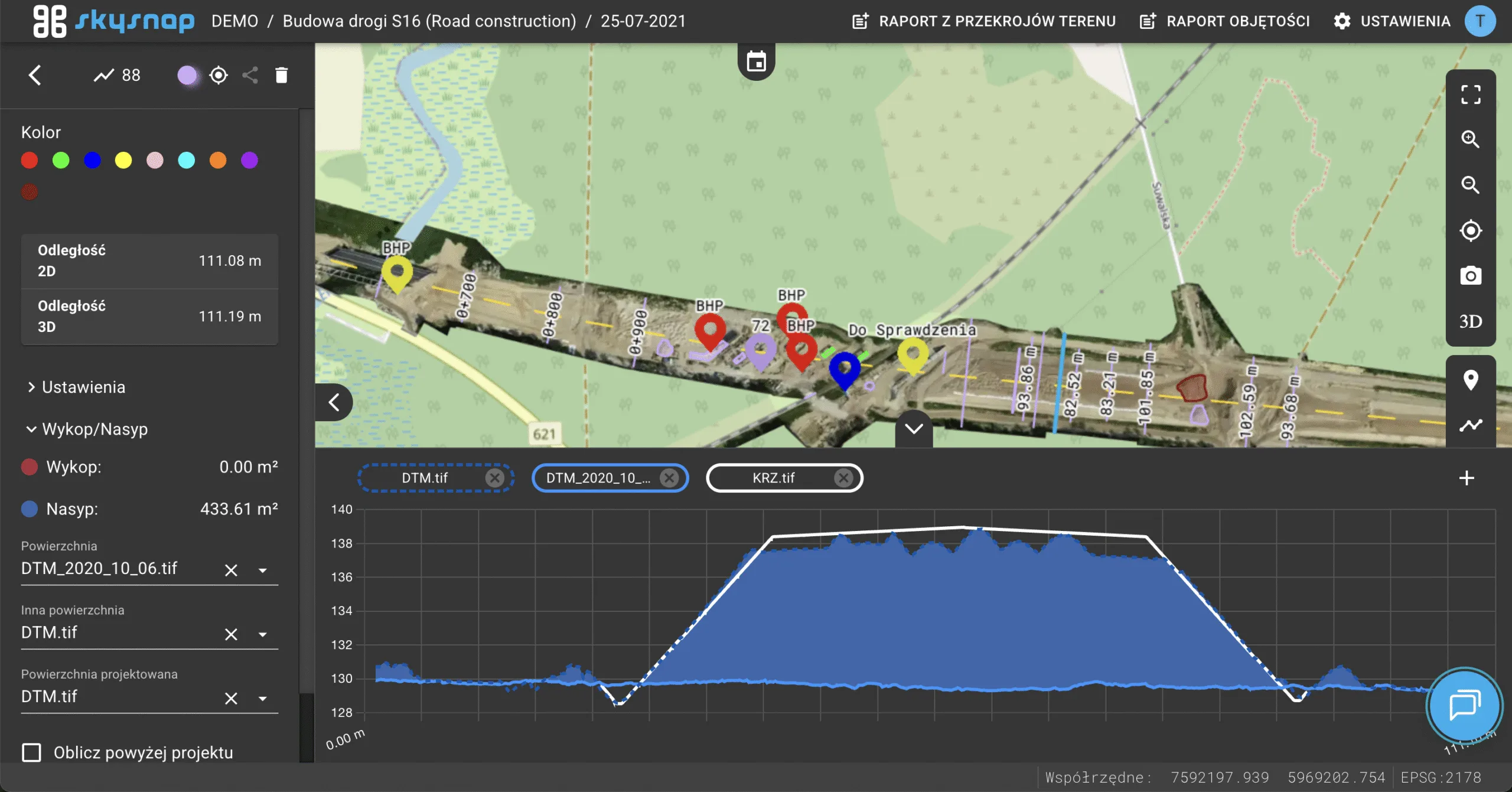
Mission planning for a linear construction site
Key principles
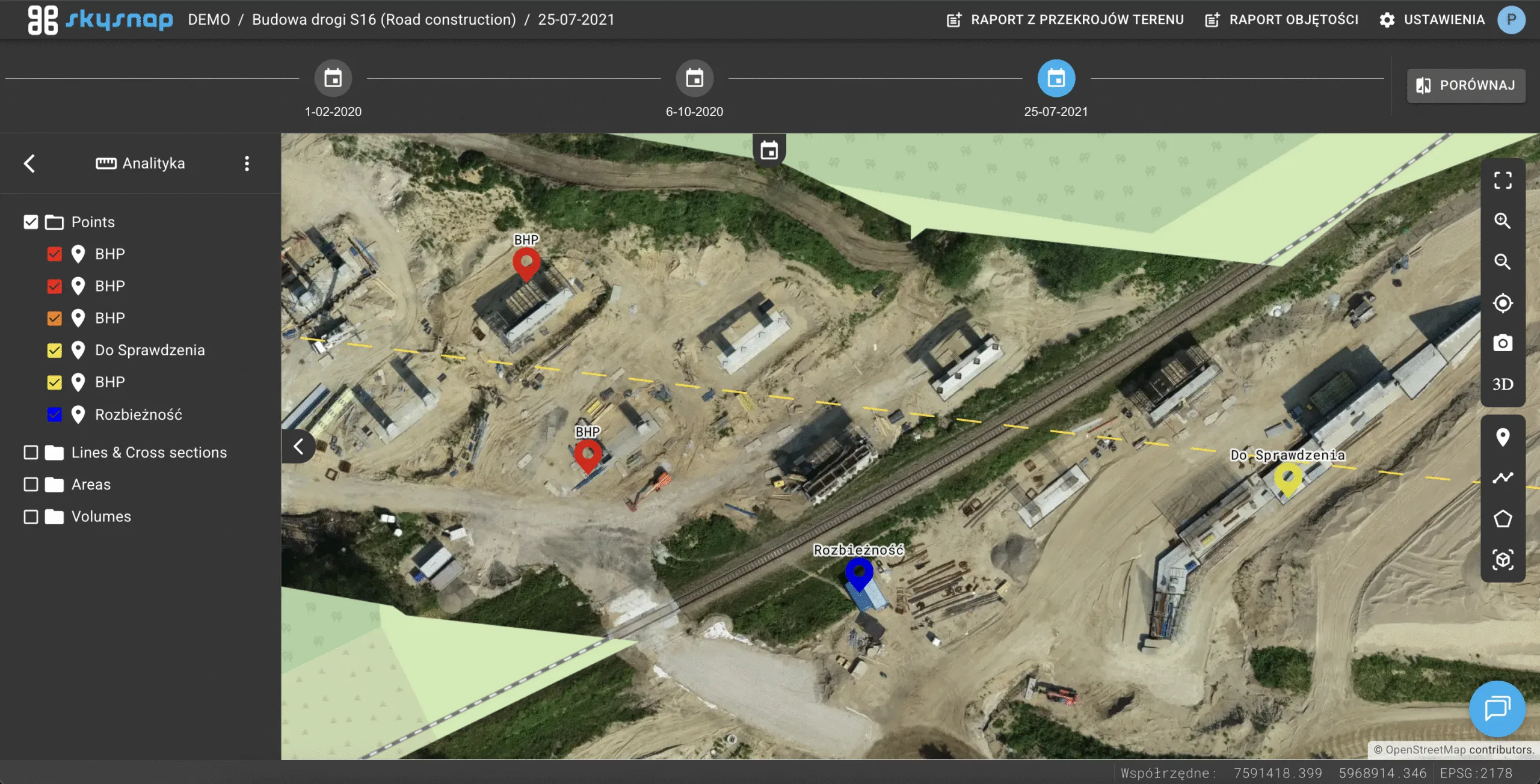
- Raid route – an elongated corridor parallel to the course of the project instead of the classic grid.
- Flight altitude – 80-100 m AGL to cover a wide strip of terrain with adequate resolution.
- Coverage – a minimum of 80% along the route and 70% across to ensure data continuity.
- Flight segmentation – dividing the mission into 1-2 km segments to avoid battery problems.
- Checkpoints (GCPs) – distributed along the route, for greater accuracy of georeferencing.
Most common mistakes
- A raid strip that is too short, leading to missing side data.
- Flight at too high an altitude, resulting in poor detail (GSD > 5 cm).
- No mission segmentation and loss of continuity during battery replacement.
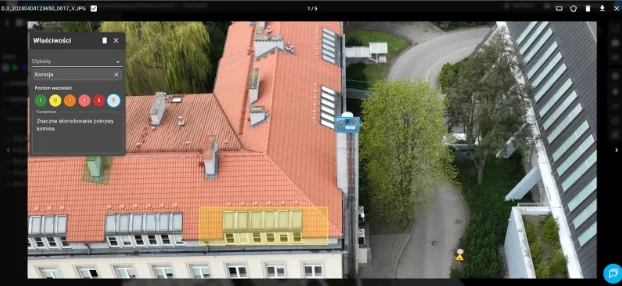
Mission planning for 3D roof model
Key principles
- Flight altitude – 20-40 m AGL to achieve high detail (1-2 cm GSD).
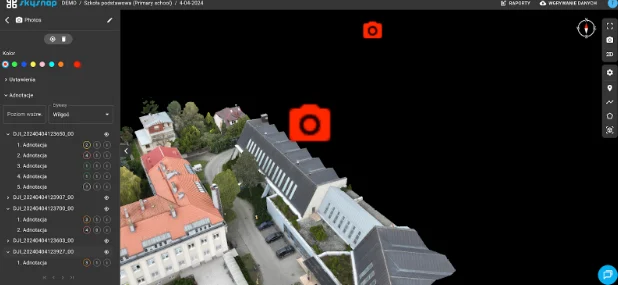
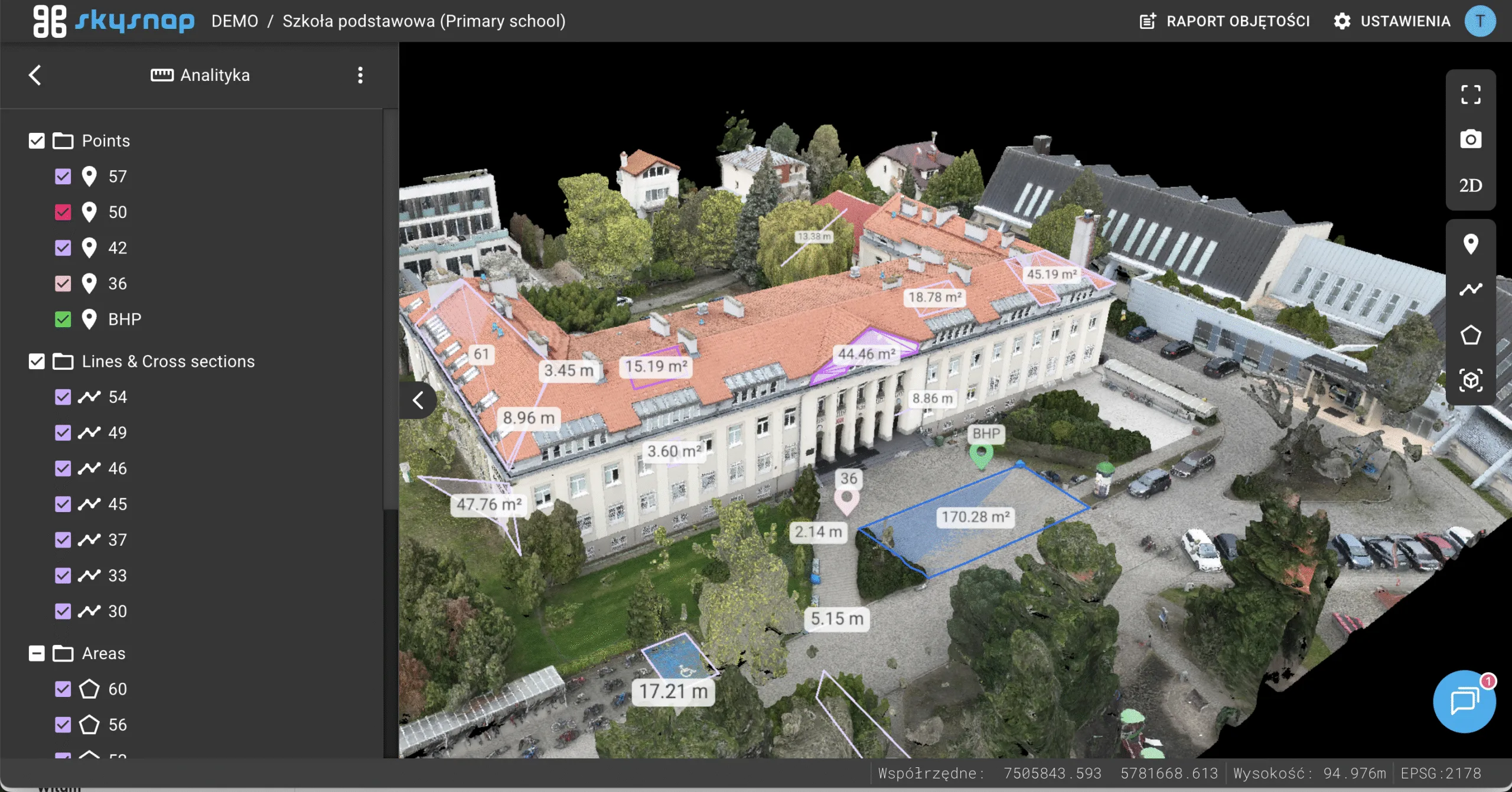
- Mesh + orbit mode – photos from above supplemented by an angled flyby around the building.
- Coverage – a minimum of 80% front and 80% side, which allows the algorithms to capture details.
- Different angles of shots – necessary for correct representation of edges, chimneys or PV installations.
- Lighting conditions – preferably with even light to avoid deformations caused by shadows.
Most common mistakes
- Only nadir photos (from above), which leads to a lack of information about vertical elements.
- Flight at too high an altitude and loss of detail.
- No oblique images, resulting in a “flattened” 3D model.
Comparison – what makes the two scenarios different?
| Element | Line construction site | 3D model of the roof |
|---|---|---|
| Flight altitude | 80-100 m AGL | 20-40 m AGL |
| Type of route | Long corridor along the development | Grid + slanted flight |
| Coverage | 80% lengthwise, 70% crosswise | 80% front and side |
| Mission segmentation | Necessary for long routes | Usually one short mission |
| Main risks | Deficiencies in lateral data | Inaccurate mapping of verticals |
Summary
Although both scenarios – the linear construction site and the 3D roof model – use the same technologies, the way the drone mission is planned must be tailored to the target. For linear construction sites, the most important thing is continuity and regularity, while for roof models it is high detail and a variety of image angles. Understanding these differences is a guarantee of obtaining high-quality data that can be easily processed into orthophotos, 3D models or investment documentation.

Free E-book
Learn proven methods for pricing jobs: From building structures to large linear and space raids. This guide will help you earn effectively and confidently.
Table of Contents
Tips, news, insights
Related articles
Check out our articles and get the latest industry news.