1. RTK and PPK – precision that pays off
RTK (Real-Time Kinematic)
RTK is a technology that allows a drone to determine its position with an accuracy of 2-3 cm in real time. The drone connects to a GNSS base station or a correction network (e.g. ASG-EUPOS in Poland), which allows for precise mapping of photo coordinates.
👉 Application:
- geodesy and cartography,
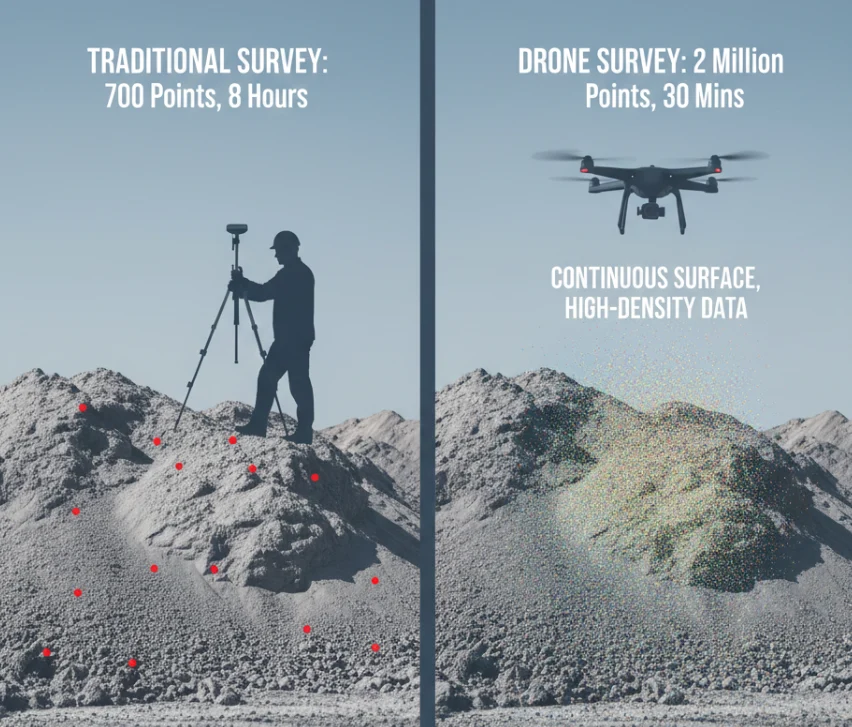
- Measurements of heaps, volumes of earth masses,
- Monitoring of construction sites and infrastructure.
👉 Why it’s worth it:
When working commercially (especially with surveying clients), RTK is often the difference between an image “for visualization” and survey data that can be used in technical documentation.
PPK (Post-Processed Kinematic).
In PPK, position corrections are calculated after the flight, during data processing.
It does not require a continuous network connection, and the accuracy is comparable to RTK.
👉 Application:
- Areas with limited GSM network coverage,
- Photogrammetric missions in difficult field conditions.
👉 SkySnap Tip:
For many operators getting started with photogrammetry, PPK is a cheaper and simpler alternative to RTK, without the risk of losing signal in flight.
2. GSD – or how detailed your model will be
GSD (Ground Sample Distance) is a value that determines how many centimeters actually correspond to one pixel in an image.
Example:
If GSD = 2 cm/pixel, then each pixel on the orthophoto represents a 2×2 cm square of terrain.
👉 How to put it into practice:
- For construction and surveying: GSD up to 2 cm.
- For agriculture and NDVI analysis: 5-10 cm is sufficient.
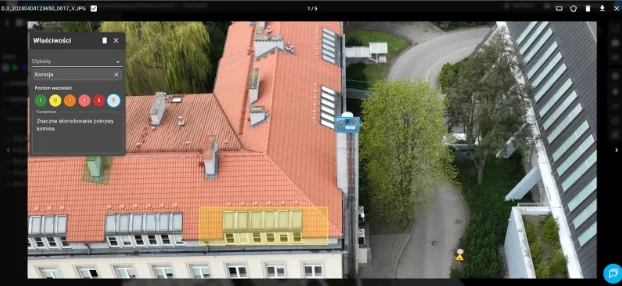
- For roof or facade inspections: as low as 0.5 cm.
The smaller the GDS, the more detail – but also more data to process. In SkySnap, you can easily process large sets of images without losing quality, because the portal automatically adjusts the resolution and range of the model.
3. lIDAR – a laser that can see through trees
LIDAR (Light Detection and Ranging) is a technology that uses laser pulses to create 3D point clouds.
Unlike photo-based photogrammetry, LIDAR can “look through” vegetation and obtain a terrain model (DTM) even in forest or scrubland.
👉 Application:
- Inventory of forested areas,
- infrastructure planning,
- surveying for road and railroad construction.
👉 Why it’s important for operators:
LIDAR-enabled equipment is more expensive, but there is a growing demand for subcontractors to provide LIDAR data for engineering and GIS companies.
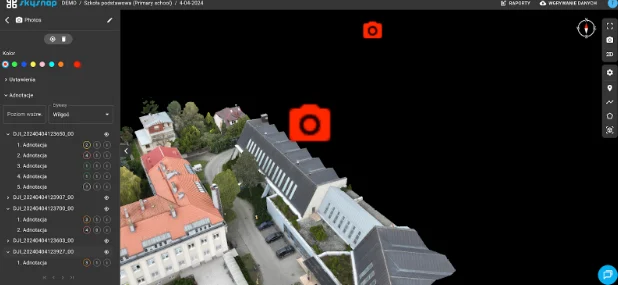
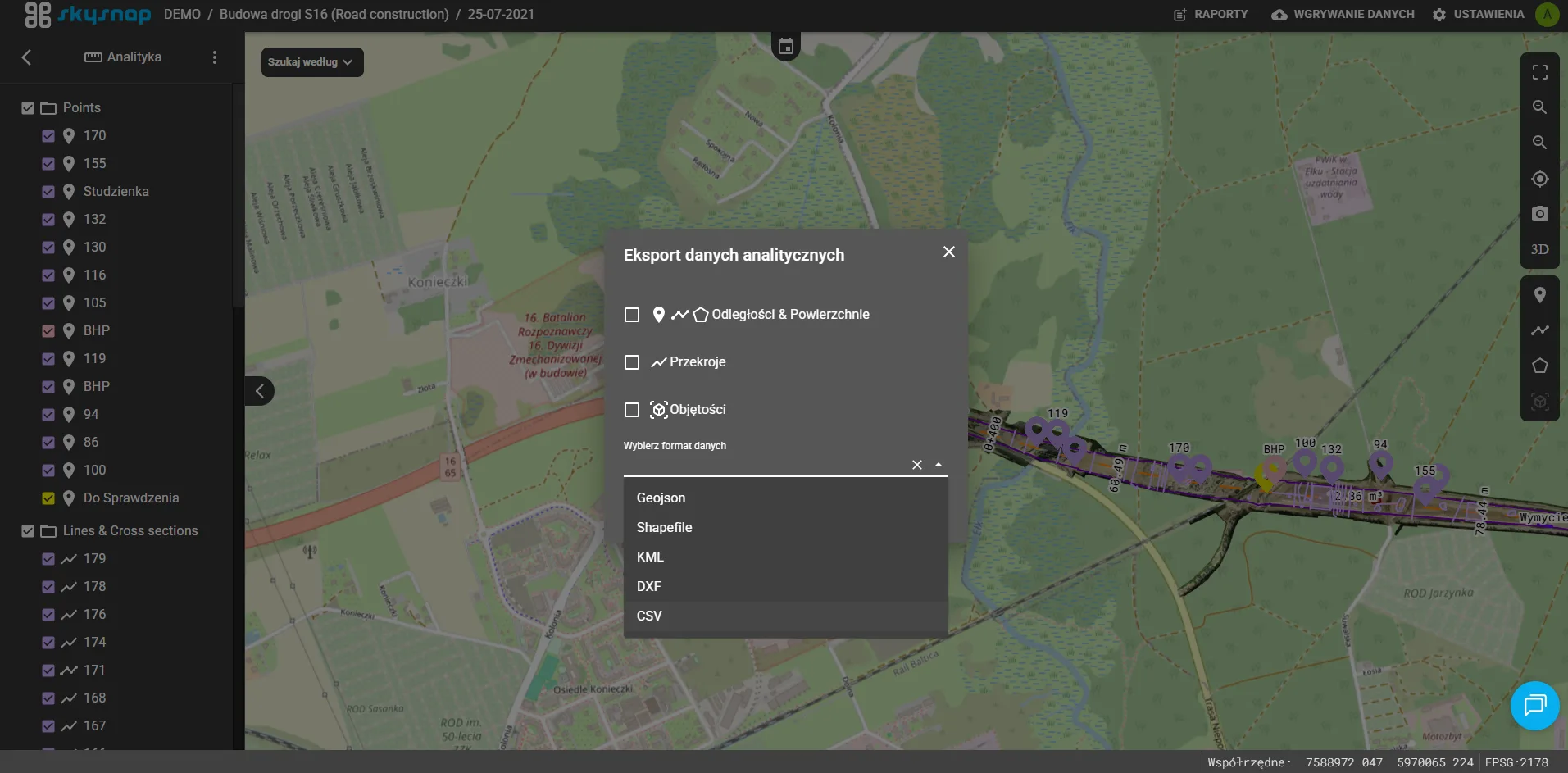
SkySnap allows LIDAR and photogrammetry data to be combined in a single project, creating complete 3D models of terrain and objects.
4. point cloud, orthophotomap, DSM and DTM – or photogrammetric products in practice
Point Cloud
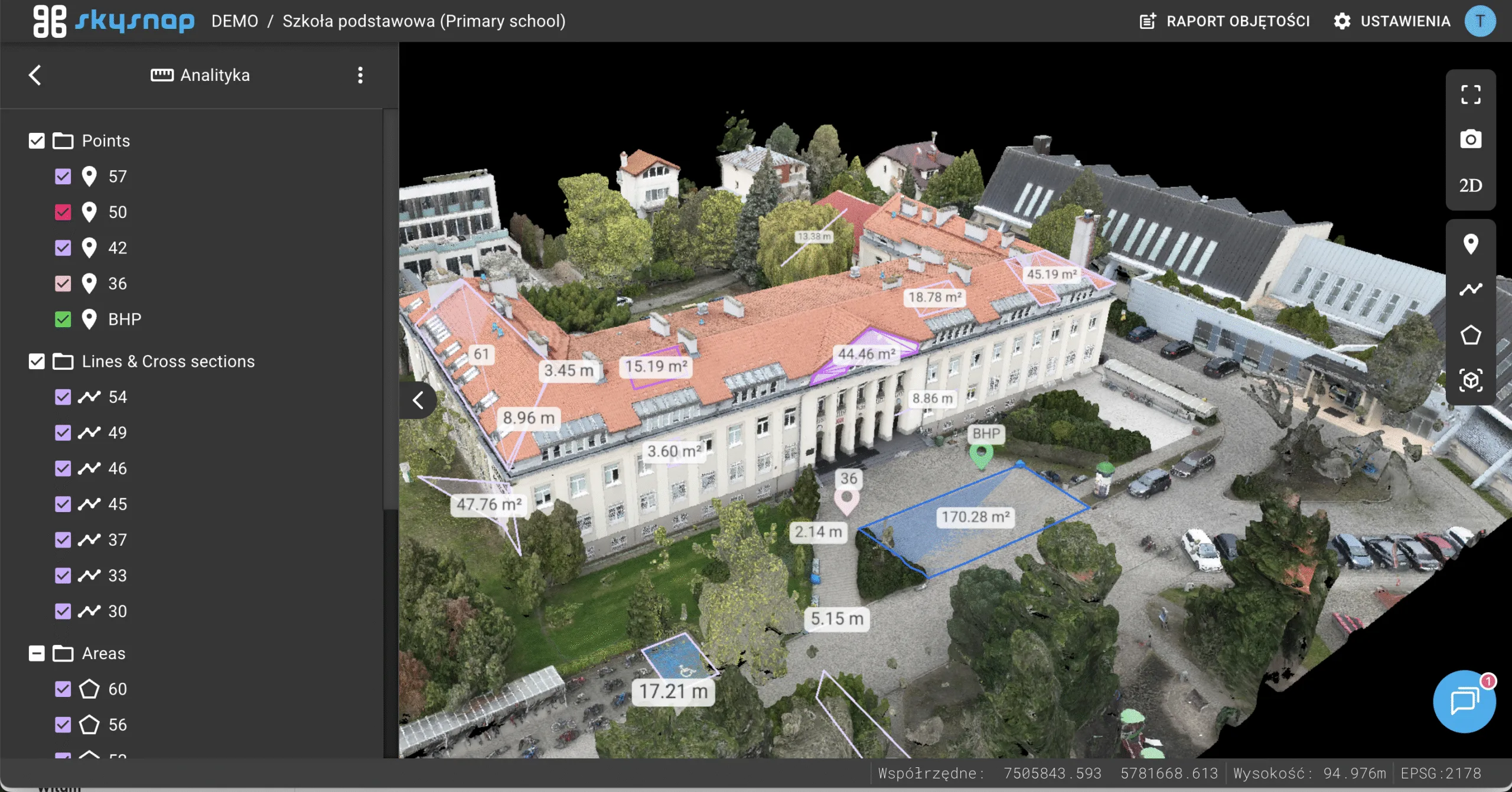
It is a collection of millions of 3D points representing the surface of objects. Each point has XYZ coordinates and often a color (RGB).
This is the basic result of SkySnap’s image processing, from which subsequent products are created.
Orthophotomap (Orthophoto)
It’s a geometrically corrected photo of the area – so that each point has exact coordinates.
It looks like a regular satellite map, but you can measure distances and areas from it with geodetic accuracy.
DSM (Digital Surface Model) and DTM (Digital Terrain Model).
- DSM shows everything “on the surface” – buildings, trees, heaps.
- DTM is the “bare ground” after subtracting the objects.
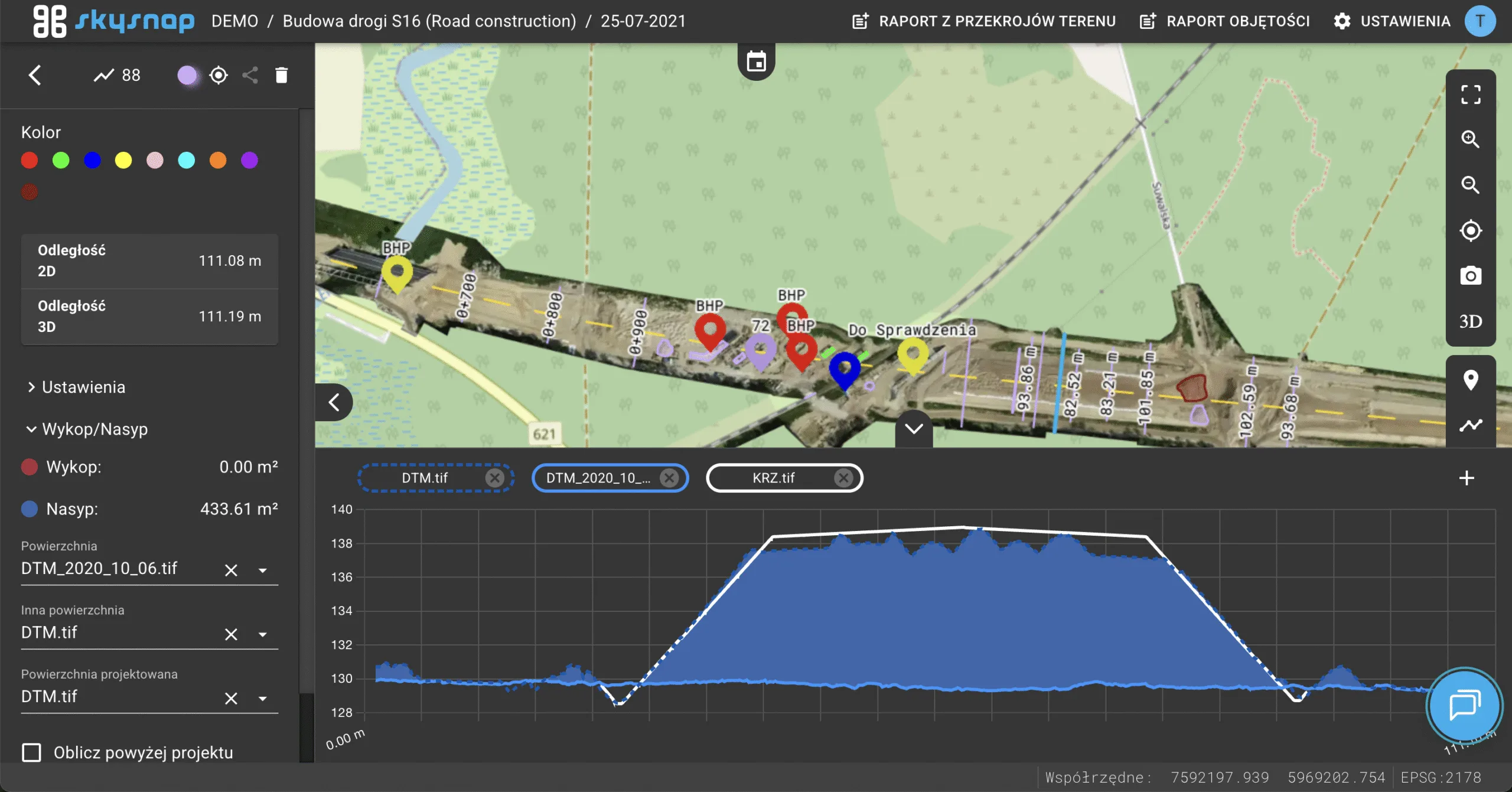
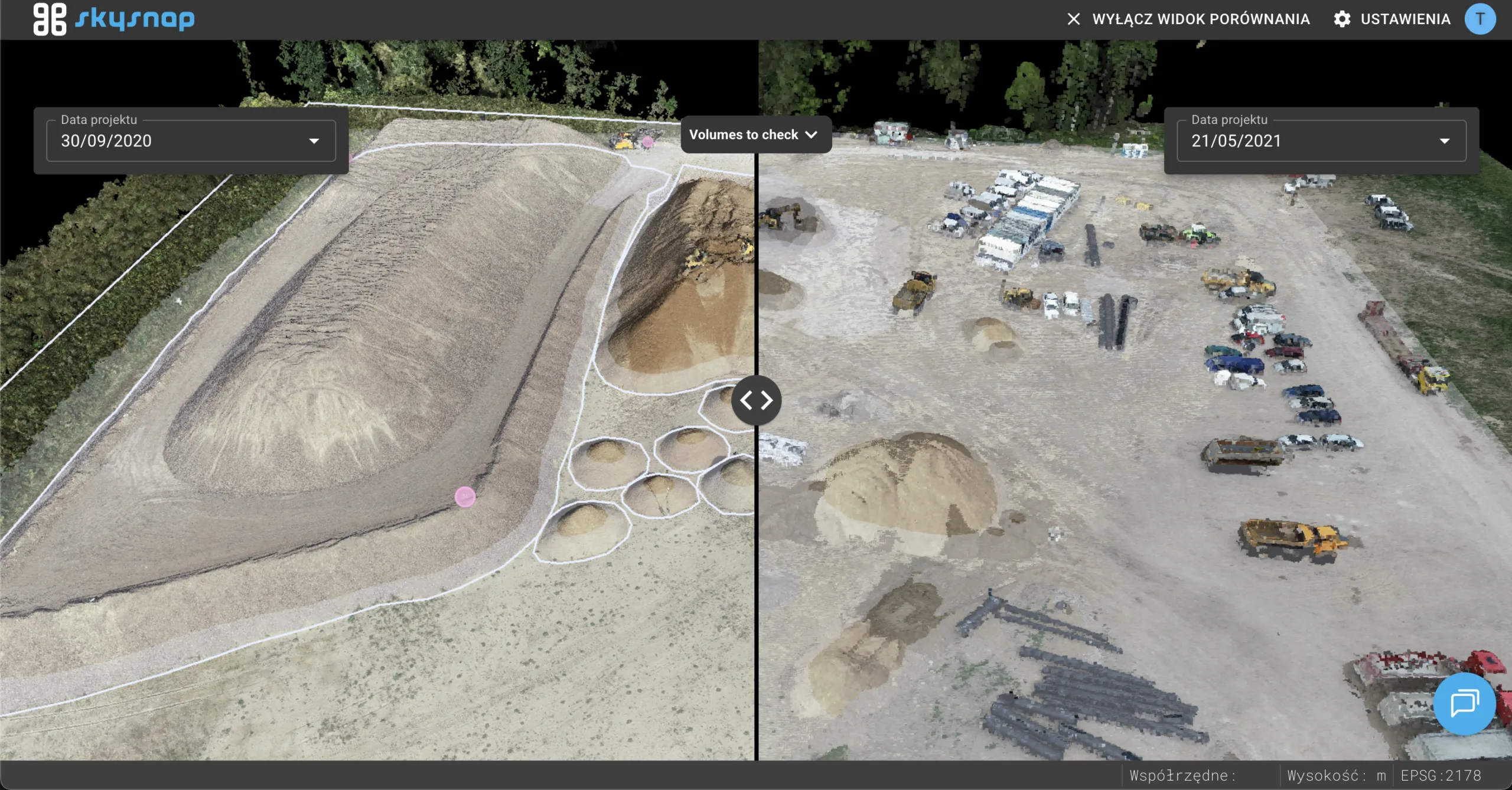
By comparing DSM and DTM, you can easily calculate the volumes of soil, heaps or embankments – and these are the reports that construction or aggregate companies use in their daily work.
5. photogrammetry vs AI – measurement automation
Modern platforms, such as SkySnap, go a step further. Thanks to artificial intelligence, it is possible:
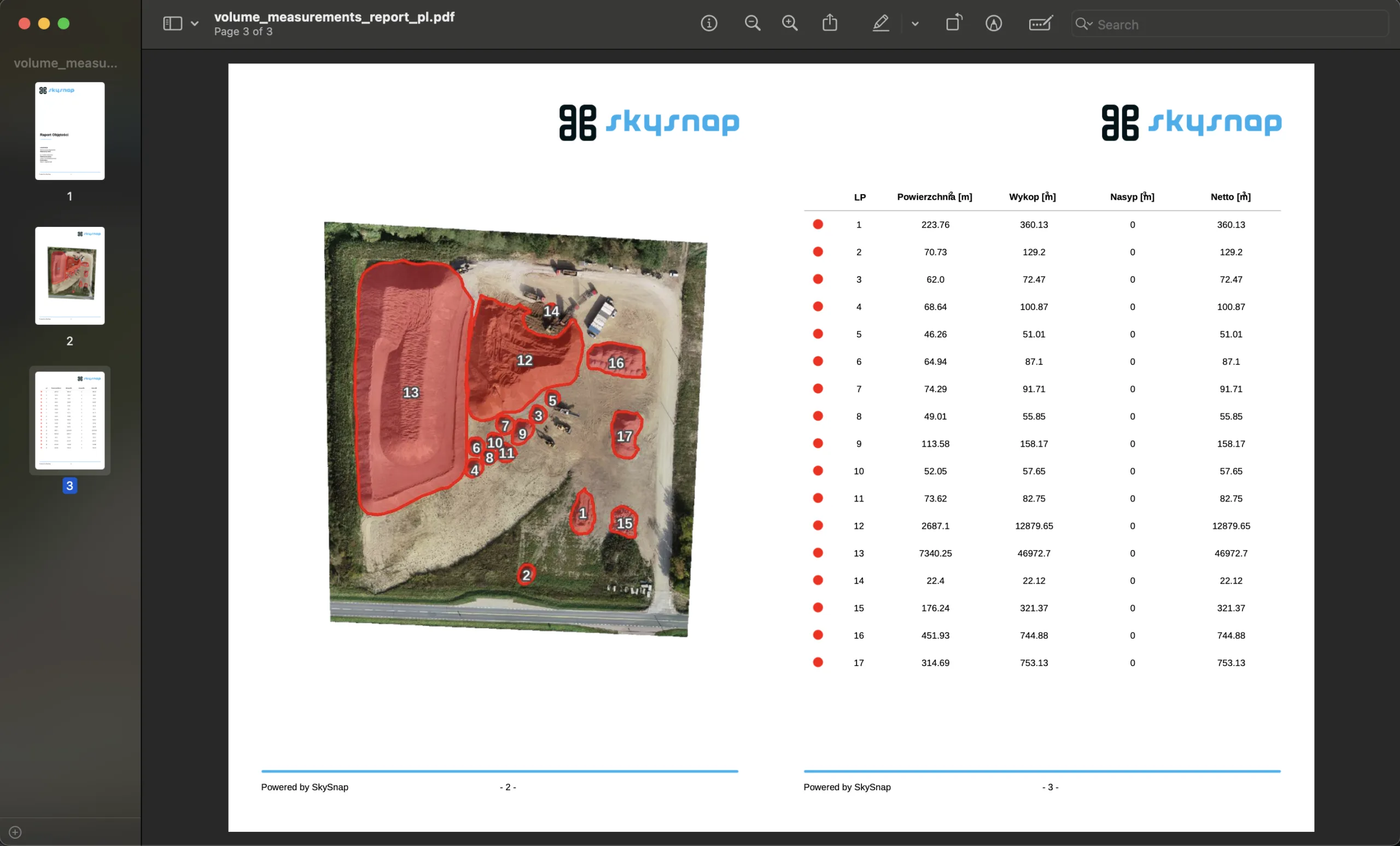
- Automatic heap recognition and counting,
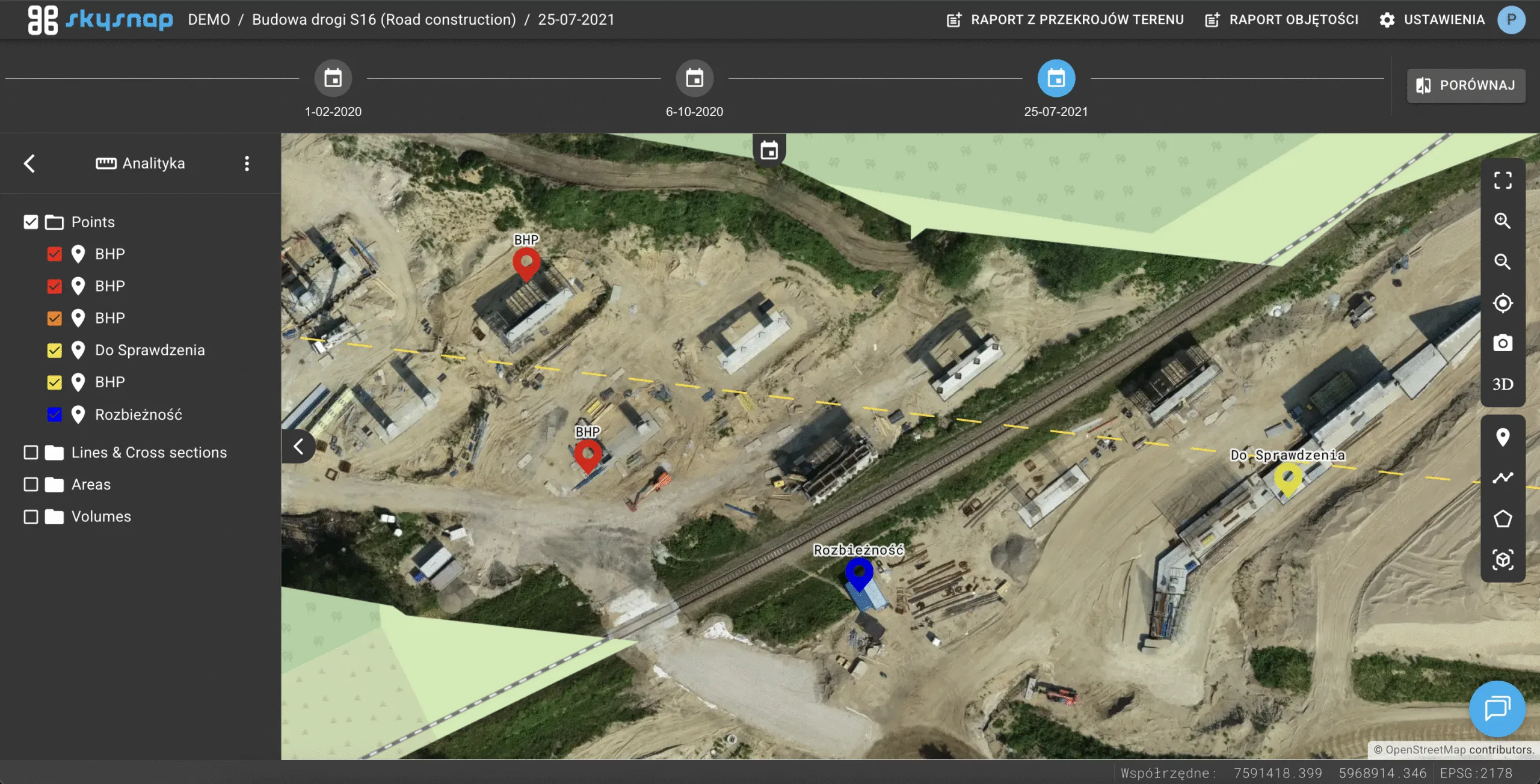
- Generation of cross sections and PDF reports,
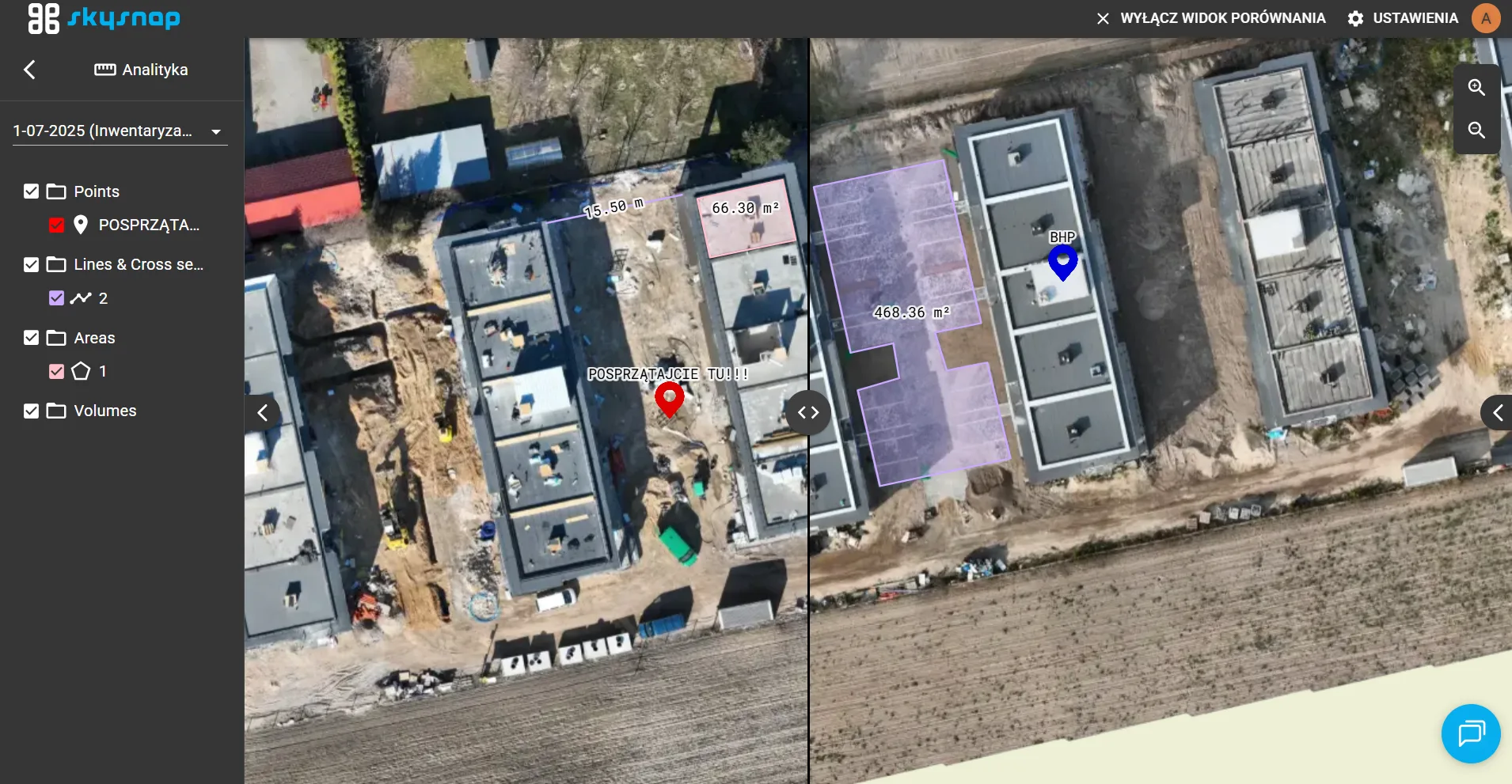
- Comparing changes over time (e.g., between raids).
AI is what makes photogrammetry a scalable business, not just a one-off service.
Summary
Knowledge of concepts such as RTK, LIDAR and GDS are not theory for enthusiasts – they are tools that translate into your earnings.
The better you understand technology, the more effectively you can advise clients, price projects and offer comprehensive services .
CTA – What’s next?
👉 Check out how you can use these technologies in practice in our next article:
“How to plan a photogrammetric raid step by step“
and try SkySnap in a free trial – see how easily you can turn your drone data into market-ready products.
Free E-book
Learn proven methods for pricing jobs: From building structures to large linear and space raids. This guide will help you earn effectively and confidently.
Table of Contents
Tips, news, insights
Related articles
Check out our articles and get the latest industry news.