How drones are revolutionizing field mapping: A Practical Guide – SkySnap
Drones have gained tremendous popularity in recent years, entering various fields of life, including agriculture. Their use in mapping agricultural fields is opening up new opportunities for farmers, enabling precise crop monitoring, resource management and yield optimization. With drones, it is possible to quickly and accurately collect data on vegetation condition, soil moisture or pest incidence, which previously required much more time and effort. In this guide, we’ll take a look at how drones are revolutionizing the field mapping process, what benefits they bring, and how to use them effectively in practice. Let’s discover how modern technology is changing the face of modern agriculture. One of the key applications of drones is the creation of fertilization maps, which allow precise planning and optimization of fertilization costs.
Introduction to drone field mapping
The use of drones in precision agriculture is becoming increasingly popular because it offers many benefits. Drones equipped with multispectral cameras and other advanced sensors allow precise mapping of fields, enabling farmers to obtain accurate information about soil health, plant health and crop needs. This makes it possible to optimize fertilization, reduce the use of water and crop protection products, saving resources and increasing yields. In addition, drones allow for quick and precise data collection, which is especially important for large farms. This allows farmers to make accurate decisions in real time, which significantly improves the efficiency of farm management.
Why use drones ?
Drones offer farmers invaluable benefits in crop management.
- First, they enable rapid and precise data collection that can be difficult to obtain through traditional methods. With advanced sensors, drones can monitor plant health, identify areas that need extra attention, and detect potential threats such as pests or diseases.
- Second, drones save time and resources. Instead of conducting time-consuming manual inspections, farmers can quickly get an accurate picture of the condition of their fields.
- In addition, the data collected by the drones can be integrated with other farm management systems, making it easier to make decisions based on up-to-date information.
As a result, farmers can optimize production, increase yields and minimize losses, resulting in greater efficiency and profits.
A brief history of drone technology
Drone technology has its roots in military applications, dating back to the early 20th century. Back then, the first unmanned aerial vehicles were mainly used for reconnaissance and training purposes. Over the years, the technology has evolved, gaining importance thanks to advances in electronics and miniaturization.
In the 1980s and 1990s, drones began to be used in combat missions, and their ability to perform tasks without endangering the lives of pilots has contributed to further development.
It wasn’t until the early 21st century that drones began to gain popularity for civilian applications. The advent of relatively cheap and easy-to-use models led to their use in photography, filming, as well as agriculture.
Today, drones are an integral part of modern agriculture, offering a wide range of applications from crop monitoring to precision agronomic treatments.
Benefits of drone mapping
Precision and time saving
Drones offer unparalleled precision in field mapping, which translates into better management and planning of agronomic activities. With advanced sensors and cameras, drones can provide detailed images and data on vegetation condition. This allows them to precisely locate problem areas, such as areas with water shortages or pest infestations. In this way, farmers can make quick and accurate decisions, significantly reducing the time needed for interventions and improving the efficiency of operations.
Traditional inspection methods often require many hours of work and do not always provide a complete picture of the field situation. Drones, on the other hand, can cover large areas in a short period of time, which is invaluable for extensive farms. As a result, drones can increase production efficiency and minimize losses, saving time and money.
Economic aspects of drone use
The use of drones in agriculture brings tangible economic benefits that translate into increased farm profitability. First and foremost, drones enable more efficient management of resources, leading to cost reductions. By precisely monitoring the condition of crops, it is possible to determine exactly where and how much fertilizer or crop protection products are really needed. This minimizes waste and reduces the expense of purchasing chemicals.
In addition, rapid detection of problems such as plant diseases or water shortages allows early intervention, reducing crop losses and preventing higher costs in the future. The investment in drones may seem costly at first, but it pays off over time through savings and increased productivity. In addition, drone data can support better production planning and forecasting, which is crucial for making financial decisions at a strategic level.
Technologies and tools
Cameras and sensors in drones
Cameras and sensors are a key piece of equipment for drones used in agriculture. They make it possible to collect detailed data on the condition of crops and the environment.
- Multispectral cameras can capture images in different light ranges to analyze plant health, identify biotic and abiotic stresses, and assess photosynthetic performance.
- Thermal sensors, on the other hand, provide information on surface temperature, which is useful for monitoring soil moisture and detecting areas with water deficits.
- LiDAR sensors make it possible to create three-dimensional maps of the area, which is particularly helpful in analyzing vegetation structure and planning agrotechnical treatments.
The integration of these technologies allows for a comprehensive approach to farm management, where data from different sources can be analyzed and used for real-time decision-making, improving the efficiency and precision of agricultural operations. The AgroFertiLab project’s comprehensive service includes soil analysis and fertilization planning, which minimizes the risk of errors and optimizes fertilization processes.
Innovative field mapping
Innovative field mapping is a process that uses state-of-the-art technology, such as drones and multispectral cameras, to obtain accurate information about soil and plant health. This process creates detailed maps that show information about plant health, soil composition, moisture levels and other key parameters. As a result, farmers can make informed decisions about fertilization, crop protection and other measures, resulting in increased yields and resource savings. The use of digital technology in field mapping enables precise planning and implementation of agronomic treatments, which is key to maximizing yields and farm sustainability.
Practical applications in agriculture
Monitoring plant health
Drones play a key role in monitoring crop health, an essential part of farm management. Equipped with multispectral and thermal cameras, drones can quickly and accurately collect data on crop health. Spectral analysis can detect signs of plant stress, such as nutrient deficiency, disease or drought, before they become visible to the naked eye. This allows farmers to react quickly and take appropriate action, such as adjusting irrigation or applying crop protection products. Regular monitoring with drones also makes it possible to track plant growth and assess the effectiveness of the interventions put in place. As a result, farmers can optimize production processes, increase productivity and minimize losses. Precise monitoring of plant health is key to sustainable resource management and maximizing yields. The laboratory performs detailed soil tests, such as analysis of macro- and micronutrient content, pH and other key soil parameters, which allows precise fertilizer recommendations to be made for farmers and gardeners.
Optimization of irrigation and fertilization
Drones are a key tool in optimizing irrigation and fertilization, helping to increase productivity and sustainable farm management. Equipped with thermal and multispectral sensors, drones can accurately identify areas requiring additional water or fertilizer. This allows farmers to tailor irrigation and fertilization to the actual needs of plants, leading to resource savings and reduced waste. Information from the drones allows the creation of soil and vegetation variability maps, which facilitate the planning and execution of precise agronomic treatments. The use of these technologies enables a better understanding of the dynamics of plant growth and the effectiveness of the methods used, which is crucial in the context of changing climatic conditions. As a result, optimizing irrigation and fertilization processes using drones leads to better crop quality and increased farm income.
Plant protection
Plant protection is one of the most important aspects of precision agriculture. Through the use of drones and other advanced technologies, farmers can obtain precise information about the condition of plants and soil, allowing early detection of diseases and pests. In addition, it is possible to precisely apply crop protection products, reducing the risk of overuse of chemicals and their impact on the environment. Drones make it possible to monitor large areas in a short period of time, which is invaluable for large farms. As a result, farmers can react quickly to threats and take appropriate action, which translates into plant health, increased yields and resource savings.
The future of drone field mapping
New trends and innovations
New trends and innovations in drone technology continue to evolve, opening up even more opportunities for precision agriculture. Developments in artificial intelligence andmachine learning allow for more sophisticated data analysis, making it easier to identify patterns and make real-time decisions.
Drones equipped with autonomous systems can independently plan flight routes and perform monitoring missions, increasing efficiency and reducing human involvement. There is also growing interest in hybrid drones, which combine aerial functions with ground mobility, opening up new possibilities in field applications.
In addition, sensor technologies are developing that enable even more accurate measurements of soil moisture, chemical composition or even detection of microorganisms. These innovations, combined with the increasing availability and affordability of drones, make the future of drone field mapping look promising and revolutionary.
Challenges and opportunities for growth
The use of drones in field mapping presents many challenges, but at the same time offers great opportunities for development.
- One of the main challenges is the regulation of drone use, which varies from country to country and can limit their use.
- In addition, farmers face the cost of purchasing and maintaining the technology, which can be a barrier for smaller farms.
- Another challenge is the need to train staff in drone operation and data interpretation.
Despite these difficulties, the potential for drones in agriculture is enormous. Developments in technology, including more advanced sensors and better analytical algorithms, could revolutionize the way farms are managed. As costs come down and technology availability increases, drones will become more common, contributing to sustainable and efficient agriculture.
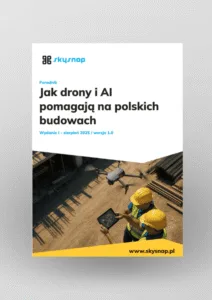
Free E-book
Find out how UAV and AI support investment supervision, facilities management and the daily work of engineers. Learn about real-world applications of technology in construction and real estate.
Table of Contents:
Do you like the article? Share it with others!
Do you like the article? Share it with others!
Tips, news, insights
Related articles
Check out our articles and get the latest industry news.