Introduction to drone technology
Drones have revolutionized many fields, and one area where their impact is particularly evident is surveying. Thanks to advanced technologies, drones offer new opportunities for data collection, making the measurement process more efficient and precise. For beginners just getting started with drone surveying, it’s important to understand the basic ways they work and the benefits they can bring. In this guide, we’ll discuss how drones are changing the way we measure, the technologies they use, and what to look for when getting started with these high-tech devices. Get ready for a fascinating journey into the world of drones and discover how they can make the measurement process easier and more efficient.
History of drones
The history of drones dates back to the early 20th century, when the first experiments with unmanned aerial vehicles took place mainly for military purposes.
In the 1930s and 1940s, drones were mainly used as training targets for the military. Only in later decades, thanks to technological advances, did drones begin to find applications in other fields.
In the 1980s. the first commercial applications appeared, and the development of GPS technology and the miniaturization of components in the 1990s opened up new possibilities.
In the 21st century, drones have become widely available thanks to falling production costs and growing popularity among consumers. Today, drones are used in a variety of sectors, from agriculture to filming, and their role in measurement and data collection is becoming increasingly important.
How drones work
Drones, also known as unmanned aerial vehicles (UAVs), operate by remote control by an operator or autonomously using built-in software. They are equipped with a set of sensors, such as GPS, accelerometers and gyroscopes, which help with flight stabilization and navigation. The drones communicate with the operator via a radio or network connection, allowing real-time data transmission. They can be equipped with a variety of cameras and sensors, allowing them to take photos, videos and collect environmental data. Depending on the model, drones are powered by electric or internal combustion engines, which affects flight time and range. Modern drones can carry out complex missions thanks to advanced artificial intelligence algorithms, making them a flexible tool for a variety of applications, including surveying and monitoring.
The popularity of drones in surveying
Drones are gaining popularity in the field of surveying due to their ability to collect data quickly and accurately. Their versatility makes them an ideal tool in hard-to-reach or dangerous areas such as mountains, forests and flood plains. Compared to traditional surveying methods, drones can cover large areas quickly, providing detailed maps and 3D models. Drones are often used in surveying, agriculture, construction and environmental monitoring. Their popularity is also due to the technology’s falling cost and increased availability in the market.
In addition, the development of drone data analysis software enables more advanced processing and visualization of the collected information. Thanks to these advantages, drones are becoming an invaluable tool for measurement professionals, offering new opportunities and improving work efficiency.
Application of drones in measurements
Site mapping
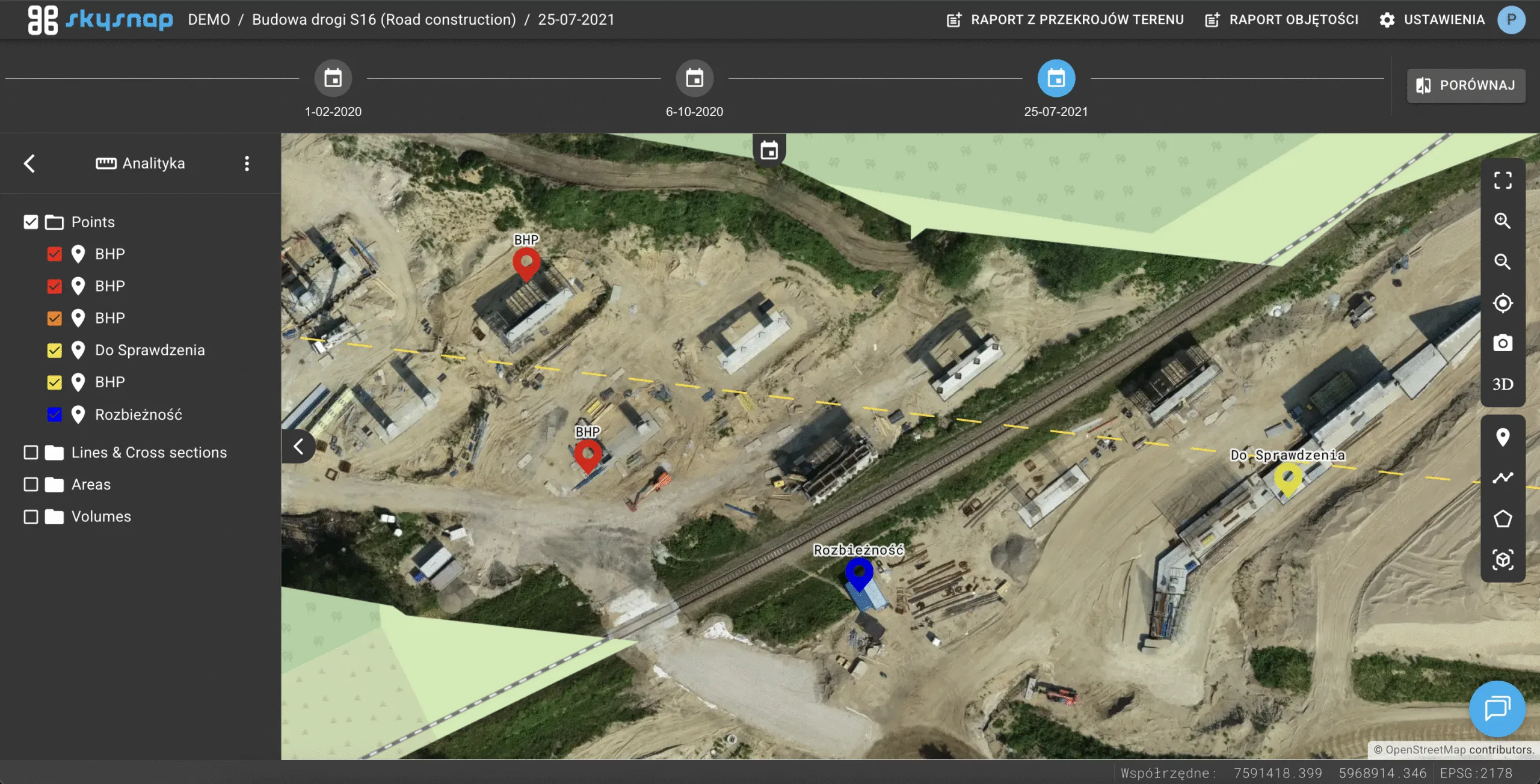
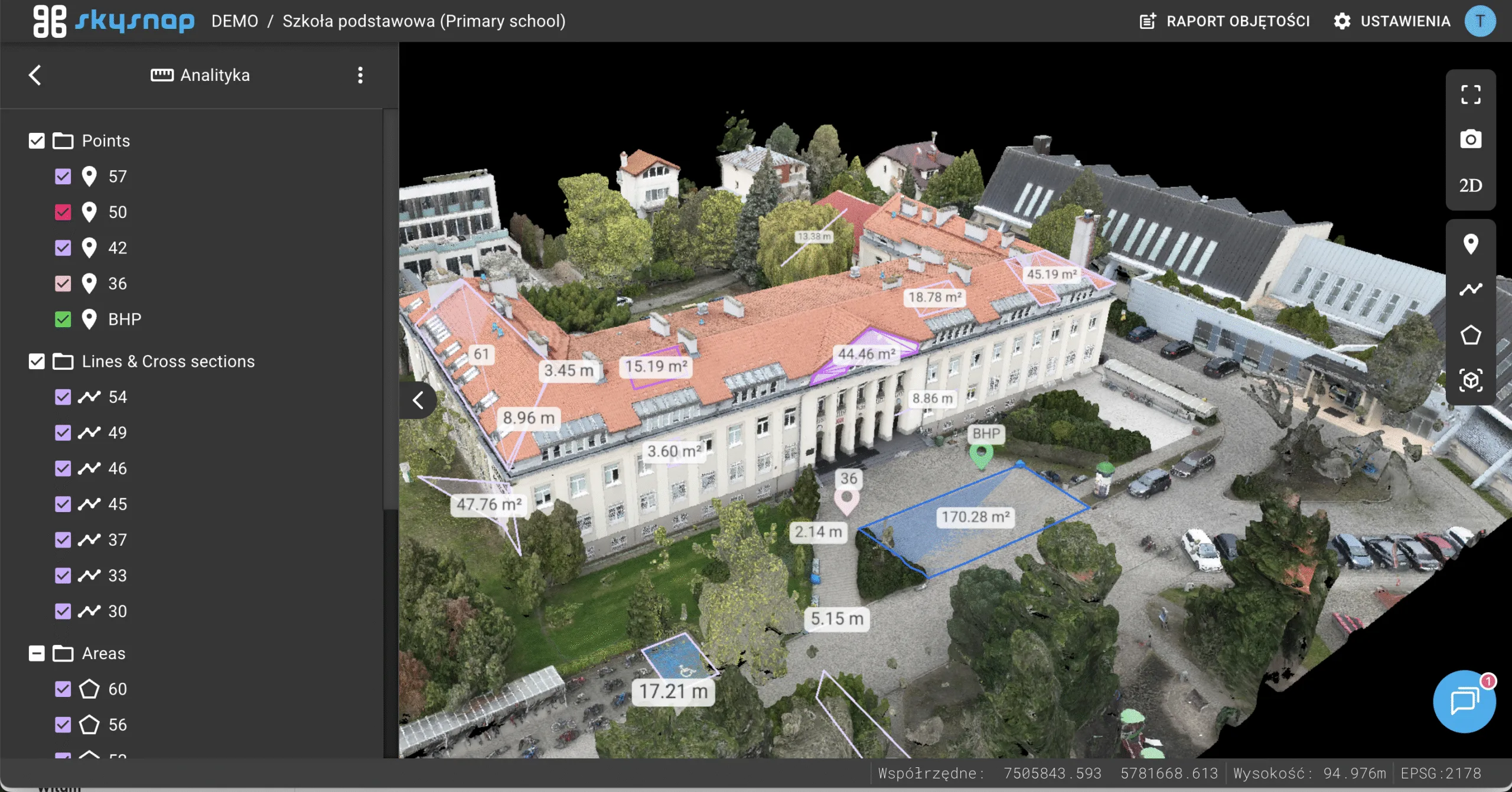
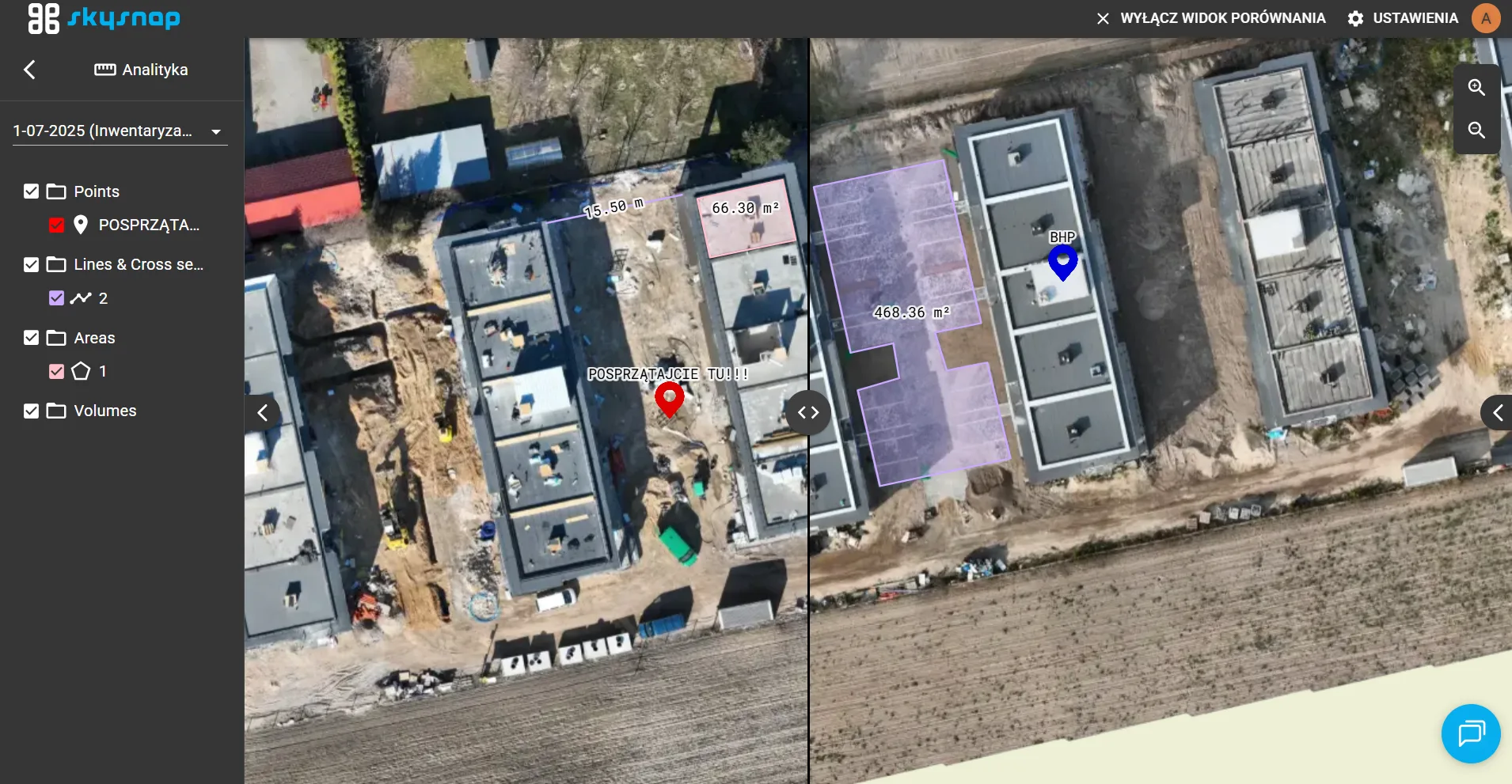
Terrain mapping with drones is gaining importance due to the precision and speed with which these devices can collect data. Drones equipped with high-resolution cameras and LiDAR sensors enable the creation of detailed 3D maps, which are crucial in many industries such as urban planning, agriculture and geology. With the ability to accurately map the topography of an area, drones allow for accurate planning and monitoring of environmental changes. While traditional survey methods often require lengthy fieldwork, drones can map large areas in a matter of hours, providing real-time data. Advanced software for analyzing drone images and data makes it possible to detect even the slightest changes in terrain. As a result, the use of drones in land mapping significantly improves the planning and decision-making process, increasing efficiency and reducing costs.
Building inspections
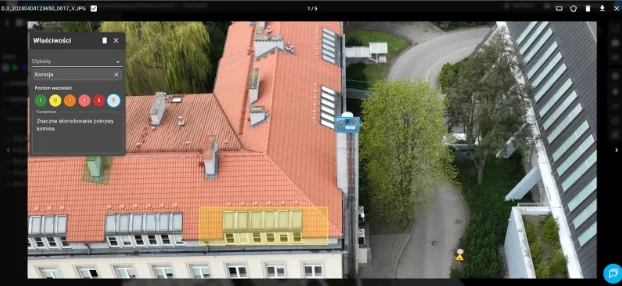
Drones are becoming an invaluable tool in construction inspections, offering quick and safe ways to assess the condition of structures. With the ability to record video and collect data from hard-to-reach areas, drones allow for a thorough inspection of roofs, facades or other tall structures without the need for scaffolding or lifts. The use of drones significantly reduces the risks associated with human inspections, while increasing the scope and quality of the data collected. Drone operators can analyze footage in real time, identifying potential problems such as cracks, corrosion or other damage. Drones are also useful in monitoring construction progress, enabling regular documentation of construction stages and verification of compliance with the plan. As a result, construction inspections using drones become more efficient, saving time and resources while improving accuracy and safety.
Agriculture and crop monitoring
Drones have become a key tool in modern agriculture, enabling precise monitoring of crops and soil health. With multispectral and thermal imaging cameras, the drones can provide detailed information on plant health, hydration levels, and the presence of pests and diseases. Regular drone flights over fields quickly identify problem areas, enabling farmers to take quick corrective action. The use of drones in agriculture contributes to the optimization of irrigation and fertilization, which in turn leads to increased yields and reduced costs. Analysis of drone data also enables better crop planning and crop rotation, which is crucial for sustainable farm management. With these advanced technologies, drones support farmers in making informed decisions, contributing to more efficient and sustainable management of natural resources.
Benefits of using drones
Time and cost savings
The use of drones in various fields is associated with significant time and cost savings. Traditional methods of collecting data and conducting inspections often require a large number of employees, specialized equipment and lengthy operations. Drones, thanks to their mobility and speed, can perform the same tasks in much less time.
- For example, mapping large areas of land, which could take days using traditional methods, can be accomplished in a matter of hours using drones.
- In addition, drones minimize the need to rent heavy equipment and costly flight operations, significantly reducing operating costs.
- With remote control and automation, drones also reduce the risks associated with working in harsh and dangerous conditions, resulting in safer and more efficient operations.
All this makes drones a cost-effective solution for many industries.
Accuracy and precision of data
Drones offer incredible accuracy and precision in data collection, making them indispensable tools in many fields. Equipped with advanced cameras and sensors, drones can provide detailed images and measurements that are crucial for analysis and decision-making.
With the ability to take aerial photos, drones provide a perspective that is difficult to achieve with traditional methods. GPS technology allows precise locating and mapping, which is particularly important in surveying and field research. Drones can also apply photogrammetric techniques, enabling the creation of 3D models with high accuracy.
This kind of precision is invaluable in construction inspections, where even the slightest deviation can lead to serious consequences. With drones, professionals gain a tool that not only improves the accuracy of their measurements, but also supports them in making more informed and accurate decisions.
Accessibility of hard-to-reach areas
Drones significantly facilitate access to hard-to-reach areas that would be challenging for traditional inspection and survey methods. Due to their mobility and ability to fly in hard-to-reach areas, drones can operate in mountainous regions, forests, ravines or flooded areas. This makes them an ideal tool for monitoring disaster-prone areas where human safety is a priority. Drones can also fly over obstacles and reach areas that threaten human health, such as contaminated areas or tall structures.
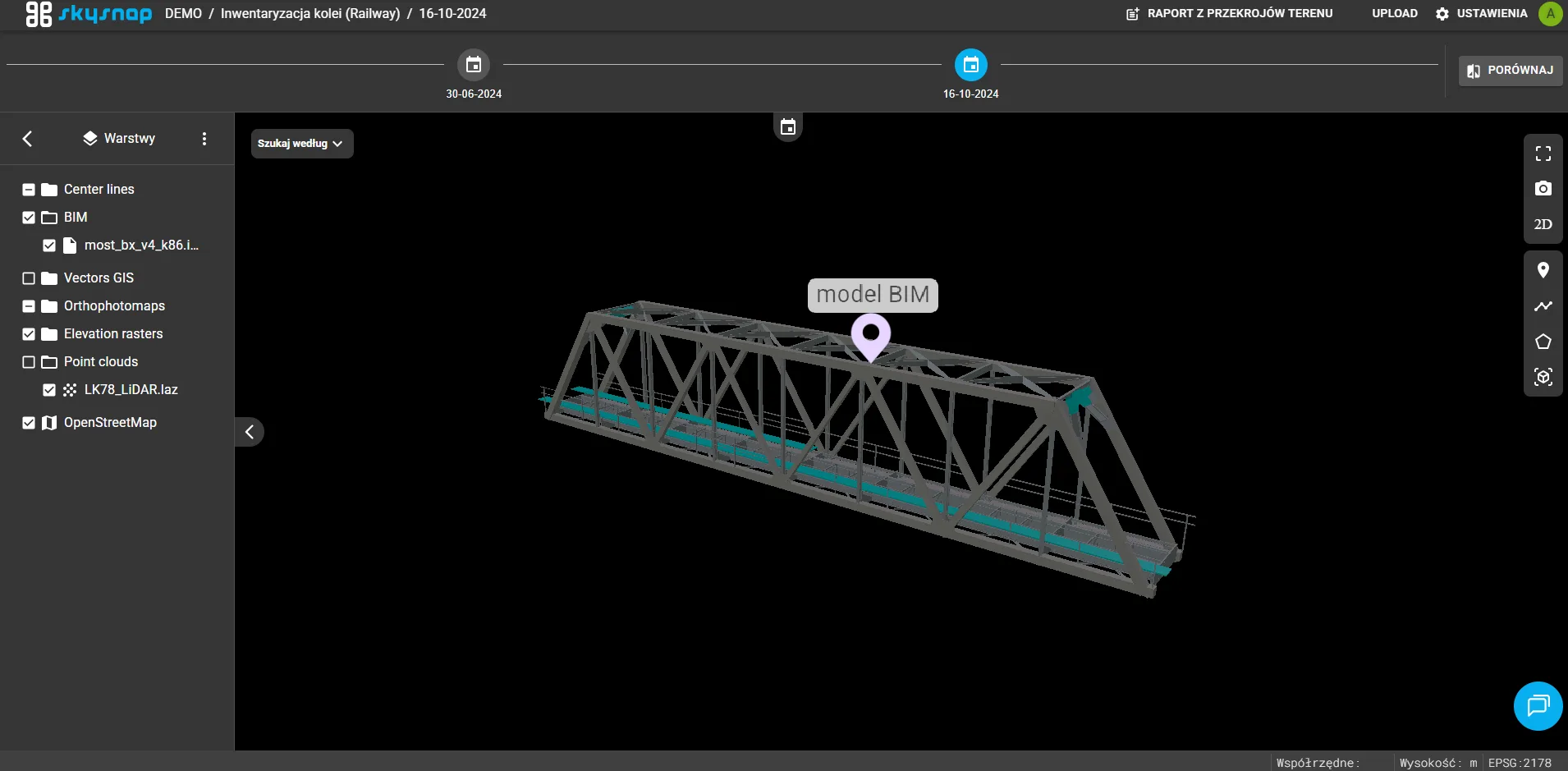
In the construction and energy sectors, drones make it possible to inspect towers and bridges without the need for scaffolding or lifts. As a result, drones not only improve operational efficiency, but also enhance safety by eliminating the need to send people into dangerous areas. This cutting-edge solution is benefiting a wide range of industries, facilitating access to previously inaccessible areas.
Choosing the right drone
Types of drones for surveying
Choosing the right drone for surveying depends on the specific needs and requirements of the project. There are different types of drones that can be used for surveying purposes.
- The most popular of these are multi-rotor drones, such as quadcopters, which are ideal for tasks that require precise maneuvering and hovering, such as construction inspections and mapping small areas.
- Fixed-wing drones are more suitable for mapping larger areas, as they can cover greater distances and have longer flight times.
- There are also hybrid VTOL drones that combine the advantages of both types, offering flexibility in a variety of terrain conditions.
- In addition, when choosing a drone for surveying, consider equipping it with the right sensors, such as high-resolution cameras, LiDAR or multispectral cameras, to ensure the accuracy and completeness of the data collected.
The right choice of drone can significantly affect the efficiency and quality of the measurement tasks performed.
Key features and specifications
When choosing a drone for surveying, it is worth noting a few key features and specifications that can significantly affect its effectiveness and application.
- First of all, the quality of the camera and the type of sensors used, such as LiDAR or multispectral cameras, which determine the precision and variety of data collected, are important.
- Another important aspect is the flight time and range of the drone, as they affect the ability to cover large areas without the need for frequent recharging.
- Flight stability and advanced navigation systems, such as GPS and obstacle avoidance systems, are crucial for safe and precise mission execution.
- In addition, the ability to program automatic flight paths and integration with data analysis software can greatly enhance the measurement process.
It is also worth paying attention to the durability of the drone’s design, especially if operations are planned in harsh weather conditions.
Factors influencing the purchase decision
The decision to purchase the right drone for surveying requires consideration of several key factors that can affect its usefulness and the value of the investment.
- The first factor is the purpose for which the drone will be used – whether it will be used for inspections, mapping large areas, or specialized tasks such as environmental surveys.
- Next, consider your budget, as different models offer different functionalities at different price ranges.
- It is also important to consider the level of difficulty of operating the drone and the availability of training, which may be important for less experienced operators.
- Another aspect is the quality of technical support and after-sales service, which can be crucial in the event of technical problems.
- In addition, it is worth noting the drone’s compatibility with existing software and systems used in the company to ensure seamless integration and operational efficiency.
The future of drones in surveying
Technological innovations
Technological innovations in drones are constantly changing their use in measurement, opening up new opportunities in various sectors.
- One of the key areas of development is the integration of artificial intelligence and machine learning, which allow drones to perform more autonomous missions, adapt to changing conditions and better process collected data.
- Developments in LiDAR technology and advanced sensors enable even more accurate mapping and 3D modeling of sites, which is crucial in urban planning and environmental protection.
- In addition, the increasing miniaturization of components and advances in battery technology are increasing the range and flight time of drones, making them more efficient.
- Hybrid and VTOL drones, which combine the advantages of different designs, are also becoming increasingly popular.
As these technologies evolve, drones will play an increasingly important role in measurement processes, contributing to even greater efficiency and innovation in many industries.
Rules and regulations
Laws and regulations governing the use of drones play a key role in shaping their future in surveying. As the number of drones in the airspace grows, harmonized regulations become necessary to ensure the safety and efficient use of these devices.
Current regulations often cover aspects such as drone registration, operator licensing, and restrictions on flying in specific zones, such as urban areas or space around airports.
In the future, the development of intelligent drone traffic management (UTM) systems could significantly affect how drones will be integrated into existing aviation infrastructure.
In addition, the introduction of international standards and cooperation between countries can help unify regulations, facilitating cross-border drone operations. Ensuring that regulations keep pace with rapid technological developments will be key to the continued growth of the drone industry and its safe use in surveying.
Impact on industry and society
Drones, as modern measurement tools, are having a significant impact on industry and society, transforming various sectors and daily life.
- In the construction and engineering industry, drones facilitate inspections and progress monitoring, leading to savings in time and resources.
- In agriculture, they enable precise crop management, resulting in increased yields and reduced costs.
- The environmental sector is using drones to monitor climate change and manage natural resources.
- From society’s point of view, drones contribute to security, for example, by providing quick response in emergency situations or searching for missing persons.
However, the growing presence of drones also raises concerns about privacy and data security. As drone technology continues to evolve, it will be important to strike a balance between the benefits they bring and the potential risks to society.
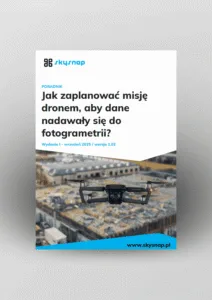
Free E-book
Learn how to prepare a mission step-by-step, avoid raid mistakes and create accurate orthophotos and 3D models. The perfect guide before your first commercial assignments.
Table of Contents:
Do you like the article? Share it with others!
Do you like the article? Share it with others!
Tips, news, insights
Related articles
Check out our articles and get the latest industry news.