How topographic survey drones are revolutionizing the construction industry
Topographic survey drones are becoming an integral part of the modern construction industry, bringing significant changes to the way construction projects are planned and executed. Thanks to the precise data these devices can collect, construction companies gain access to accurate field maps in much less time than traditional methods. This allows for faster decision-making and better management of resources and costs. Drones not only increase efficiency, but also improve worker safety by eliminating the need to take dangerous measurements in difficult terrain. In this post, we take a look at how topographic survey drone technology is changing the rules of the game in the construction industry.
Introduction to drones in construction
The importance of drones in the construction industry is growing every year. Their use contributes to increased efficiency, precision and safety on the job. In this section, we take a look at how drone technology has evolved and how it affects the construction industry.
History and development of drone technology
The history of drones dates back to the 1960s, when they were mainly used for military purposes. Over time, the technology began to gain popularity in civilian applications, including construction.
Drones, also known as unmanned aerial vehicles, have undergone a significant transformation – from simple flying devices to advanced machines equipped with cameras and sensors.
In recent years, the development of drone technology has accelerated, enabling its use in increasingly complex tasks. Advances in batteries, GPS navigation and data analysis have made drones an invaluable tool in the construction industry.
Thanks to these advances, drones can now take detailed measurements, create 3D maps and monitor the progress of construction sites. This all contributes to improving the quality and efficiency of construction projects.
How drones are changing the construction industry
Drones are transforming the construction industry in many ways.
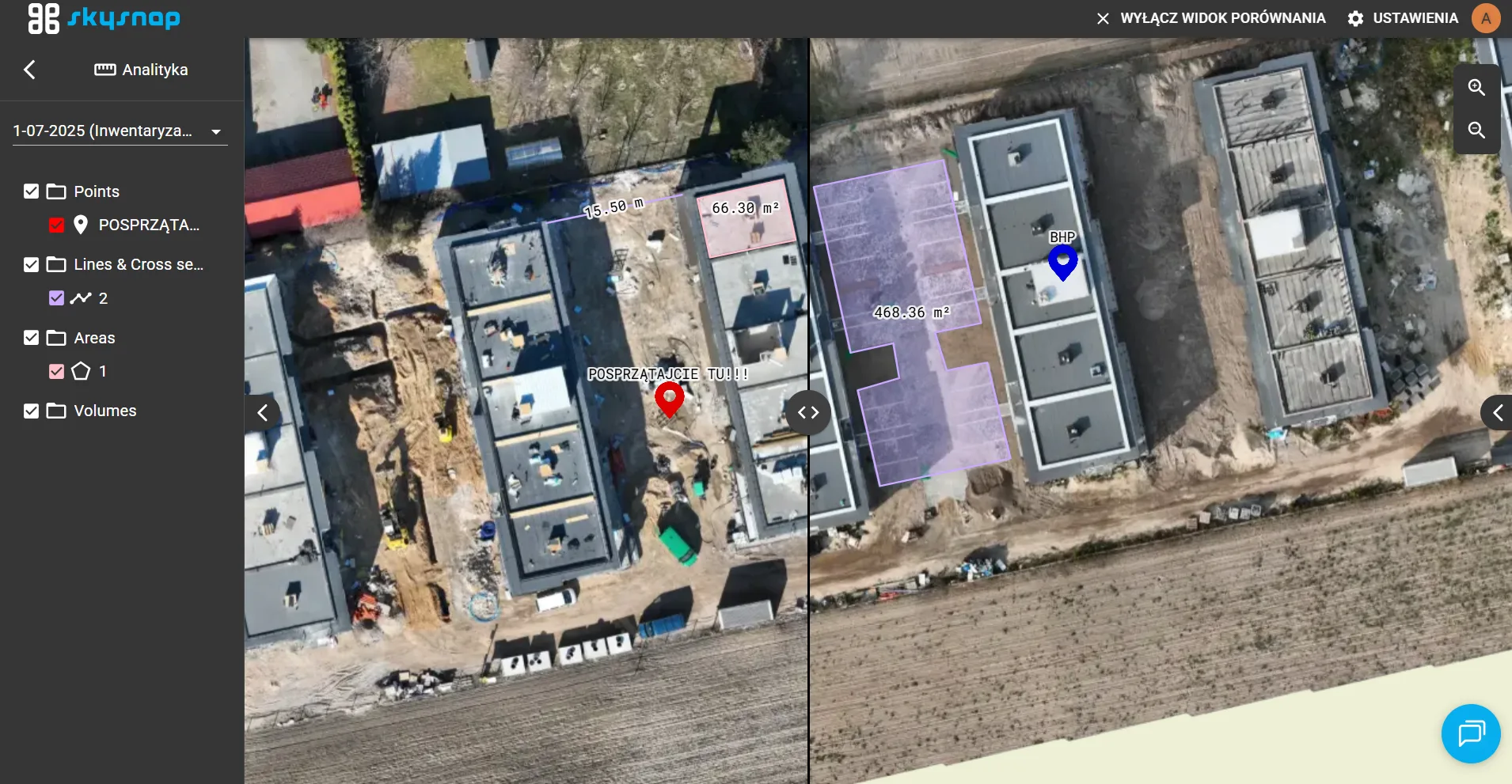
First, they allow for faster and more accurate collection of field data. Compared to traditional methods, drones are able to reduce the time required for measurements from several days to just a few hours.
In addition, drones enable the creation of detailed 3D models of construction sites, making it easier to plan and manage projects. This allows engineers and architects to better assess progress and adjust plans to real-world conditions.
Drones also play a key role in monitoring construction site safety. They can identify potential hazards and enable remote inspections, reducing the need for people to be in dangerous areas.
Use of drones for topographic surveys
Topographic surveying with drones is one of their most promising areas of application in construction. This section explains how drones are being used for accurate land surveying and the practical benefits they bring.
Survey techniques using drones
Drones use various surveying techniques to provide precise terrain data. One of the most popular methods is photogrammetry, which involves taking photos from the air and converting them into detailed 3D maps.
Another technique is LiDAR – technology that uses lasers to measure distances and create accurate terrain models. LiDAR is particularly useful in harsh environments where traditional surveying methods may be ineffective.
Drones can also use multispectral sensors to assess a variety of environmental parameters. All this makes drones a versatile tool for topographic surveys.
Examples of practical applications
In practice, topographic survey drones are used in a wide variety of construction projects.
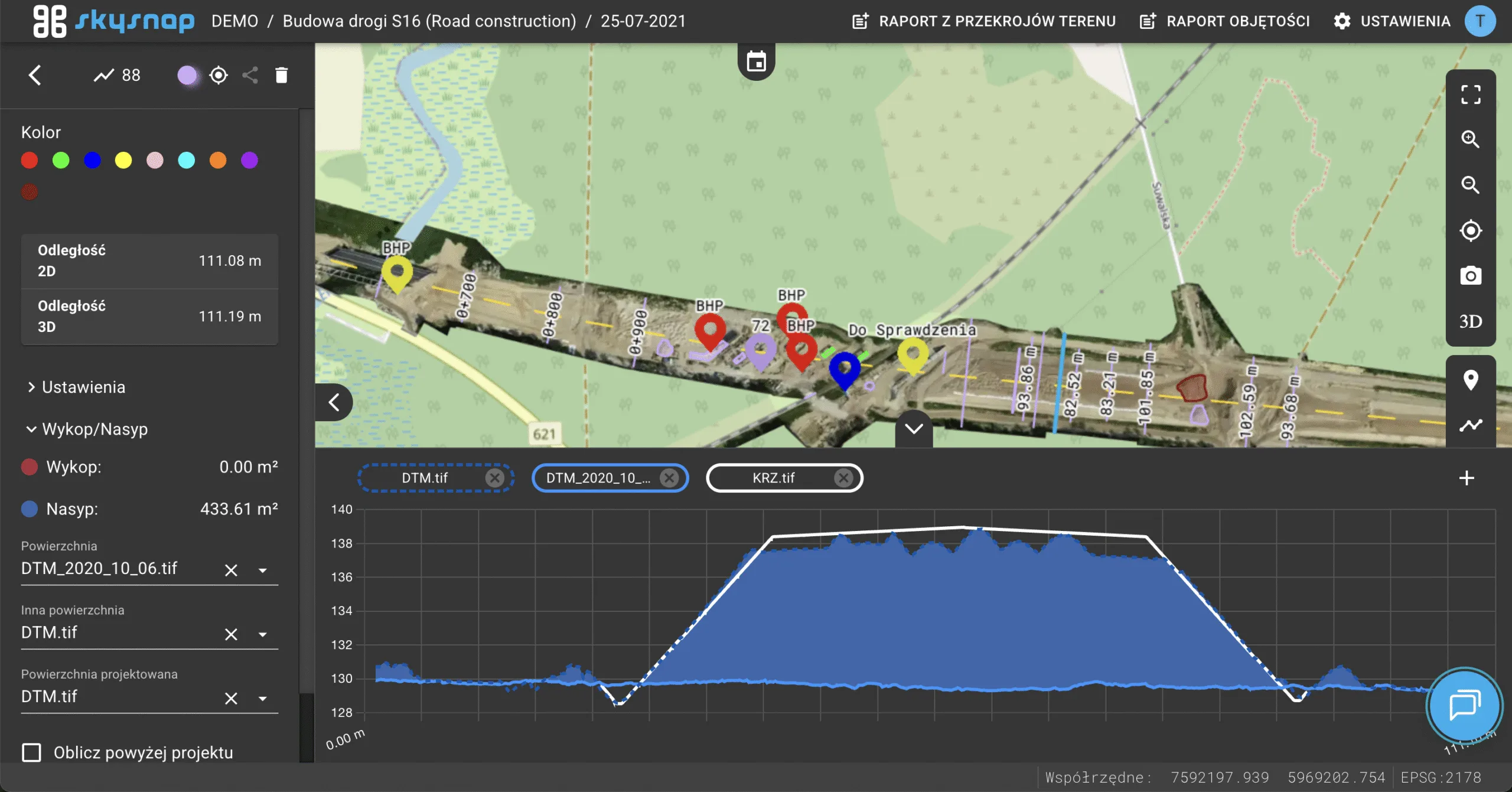
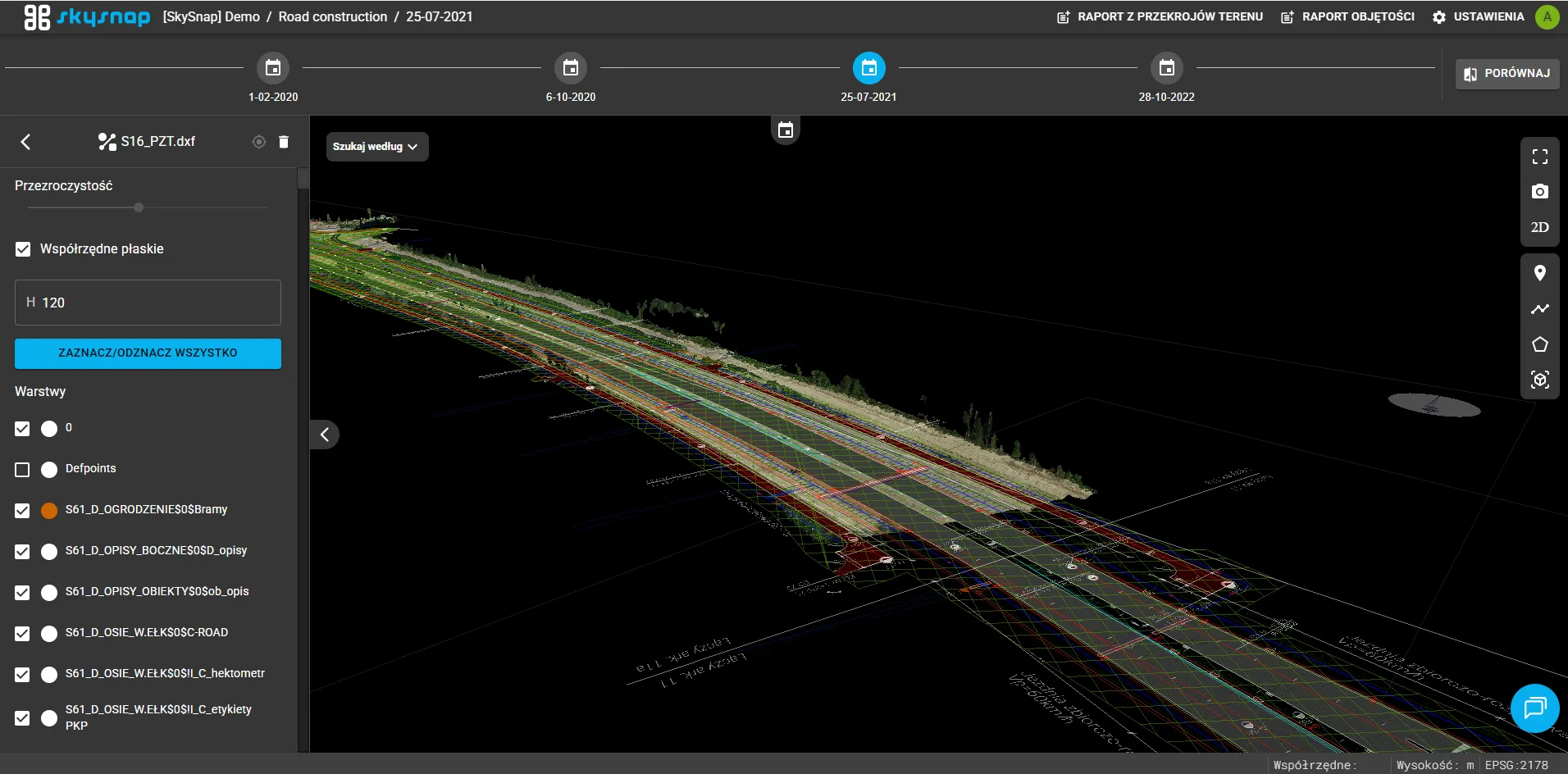
- For example, in road construction projects, drones allow for quick and accurate mapping of areas before work begins.
- In residential construction, drones can help plan and monitor progress on a construction site.
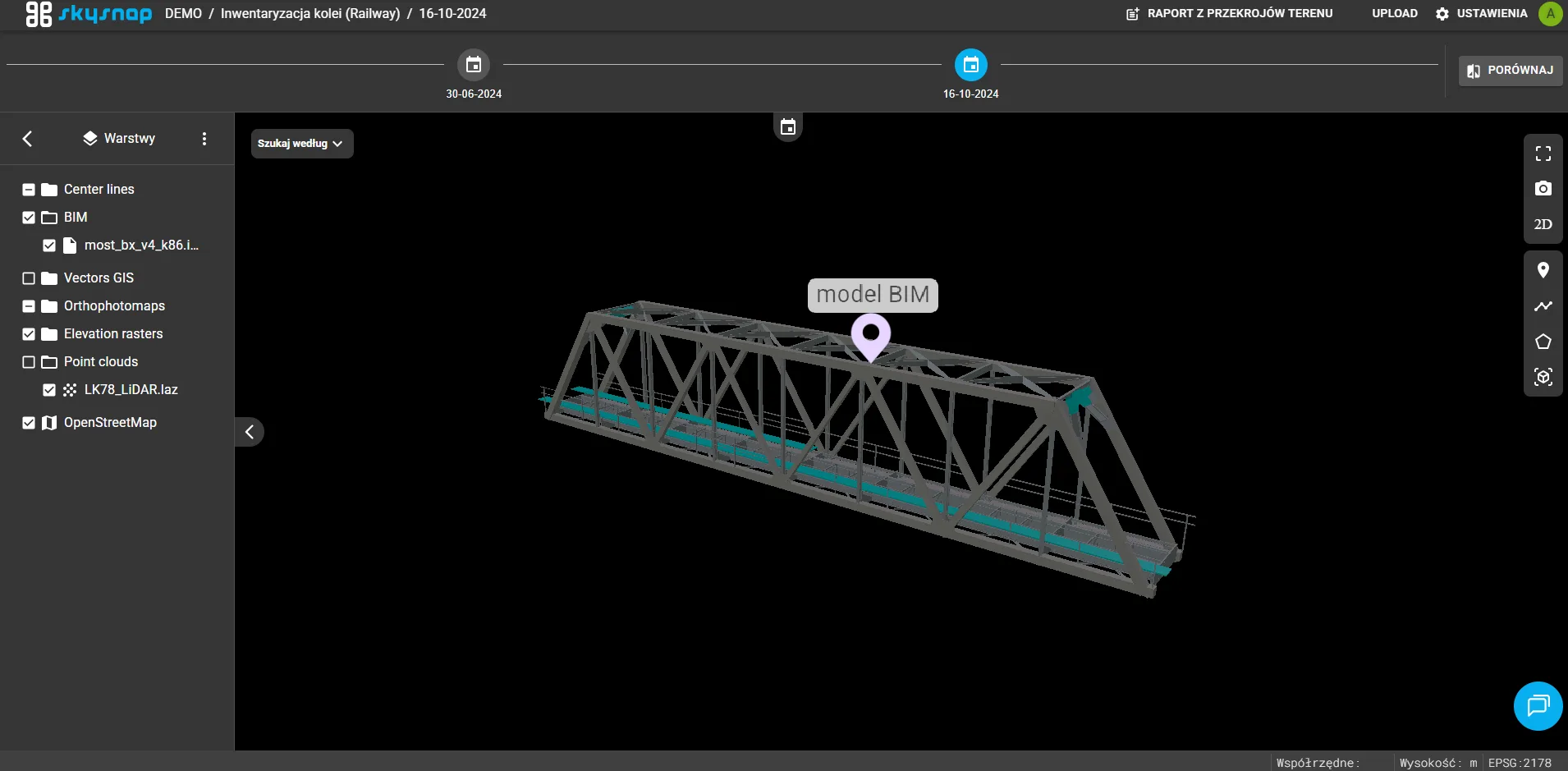
- In infrastructure projects such as bridges and tunnels, drones enable inspections and structural condition assessments without interrupting traffic.
Thanks to their versatility, drones are gaining popularity among construction companies looking to increase the efficiency and profitability of their projects.
Benefits of using drones in the construction industry
The use of drones in the construction industry has many benefits, including significant time and cost savings and improved site safety. In this section, we will discuss these benefits in more detail.
Time and cost savings
Drones contribute to significant time and cost savings in construction projects. They make the process of surveying and collecting field data faster and more efficient. For example:
- Speed of measurements – drones can collect data from large areas in a matter of hours, which previously took days.
- Reduced labor costs – fewer workers needed to perform field measurements.
- Reduce material costs – precise data helps optimize the use of construction materials.
With these savings, the project becomes more cost-effective and can be completed in less time.
Improving safety at the construction site
One of the main benefits of drones is improved safety on construction sites. Drones reduce the need for humans to perform dangerous tasks, which reduces the risk of accidents.
- Remote inspections – drones can perform inspections at heights or in hard-to-reach areas.
- Early threat detection – the ability to quickly identify potential threats, such as unstable structures.
- Monitoring compliance – drones can be used to monitor compliance with health and safety regulations on a construction site.
Thanks to drones, construction sites are becoming safer, and the number of accidents is significantly reduced.
Challenges and future of drones in the construction industry
Despite its many advantages, the use of drones in construction also comes with some challenges. In this section, we take a look at the barriers that need to be overcome and the future directions of the technology.
Technological and regulatory barriers
Despite technological advances, drones face some barriers that must be overcome. The technological barriers relate to issues of flight autonomy, integration with other systems and limited battery performance.
Regulatory barriers, on the other hand, are related to regulations on drone use, which vary from country to country and can limit their use on construction sites. It is necessary to develop more flexible regulations that take into account the dynamic development of drone technology.
Addressing these issues is key to fully realizing the potential of drones in the construction industry.
Future directions of drone technology development
The future of drone technology in the construction industry looks promising. As the technology evolves, new features and capabilities can be expected to be introduced.
- Autonomous flight – development of autonomous drones that can perform tasks without an operator.
- Advanced data analysis – integration of drones with artificial intelligence systems will enable better analysis of field data.
- Improved battery performance – longer flight time and longer operating range.
These innovations could revolutionize the way drones are used in construction.
Summary of the impact of drones on the construction industry
In conclusion, drones are having a significant impact on the construction industry, bringing many benefits, but also posing some challenges. Let’s conclude this discussion with key conclusions and predictions.
Key findings and forecasts
Topographic survey drones have revolutionized the construction industry, bringing new standards of efficiency and safety. The key lessons from this revolution are:
- Increased efficiency – drones significantly speed up measurement processes.
- Greater safety – reducing accidents on construction sites.
- Cost savings – optimization of material consumption and labor costs.
The future looks bright, with further development and innovation on the horizon.
How to prepare for changes in the industry
For construction companies, preparing for drone-related changes is key. Here are some practical tips on how to do so:
- Invest in employee training – provide your teams with the necessary drone skills.
- Follow regulations – stay up to date with regulations on drone use.
- Implement new technologies – invest in modern drones and data analytics technologies.
Preparing for these changes will allow construction companies to fully exploit the potential of drones and gain a competitive advantage.

Free E-book
Learn what services to offer, who to sell them to, and how to write an effective offer email. Ready-made templates, tips and examples of campaigns that really work.
Table of Contents:
Do you like the article? Share it with others!
Do you like the article? Share it with others!
Tips, news, insights
Related articles
Check out our articles and get the latest industry news.