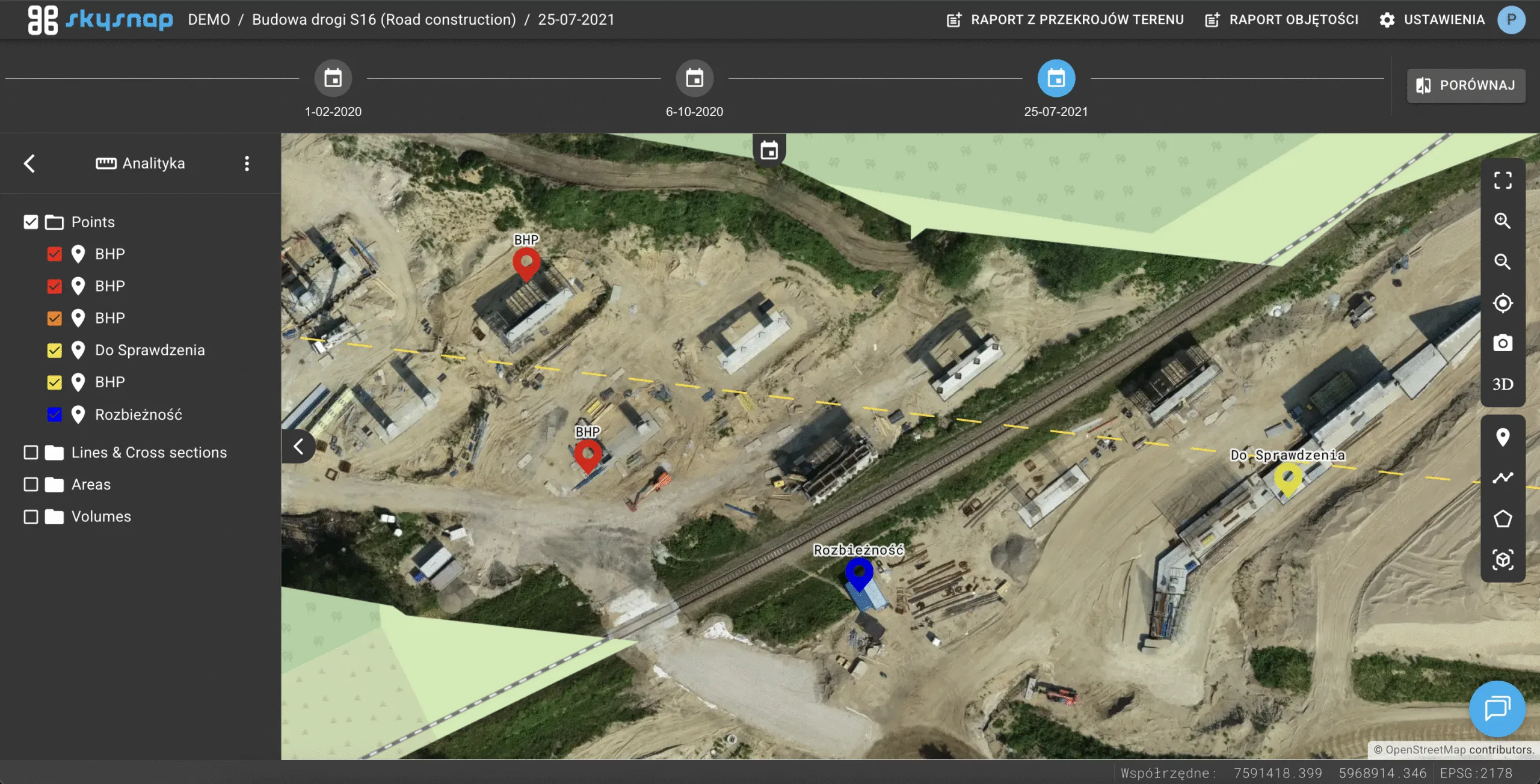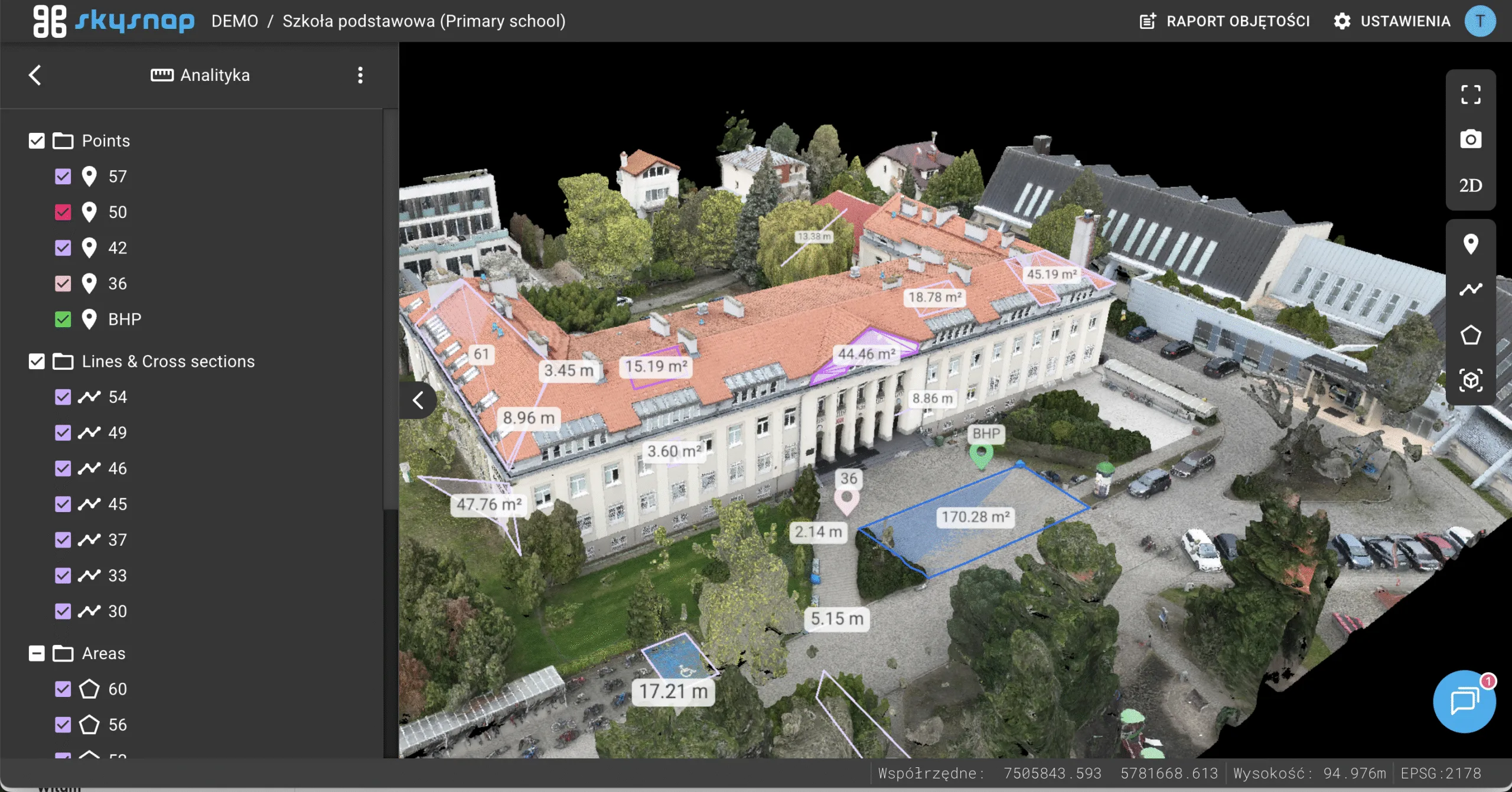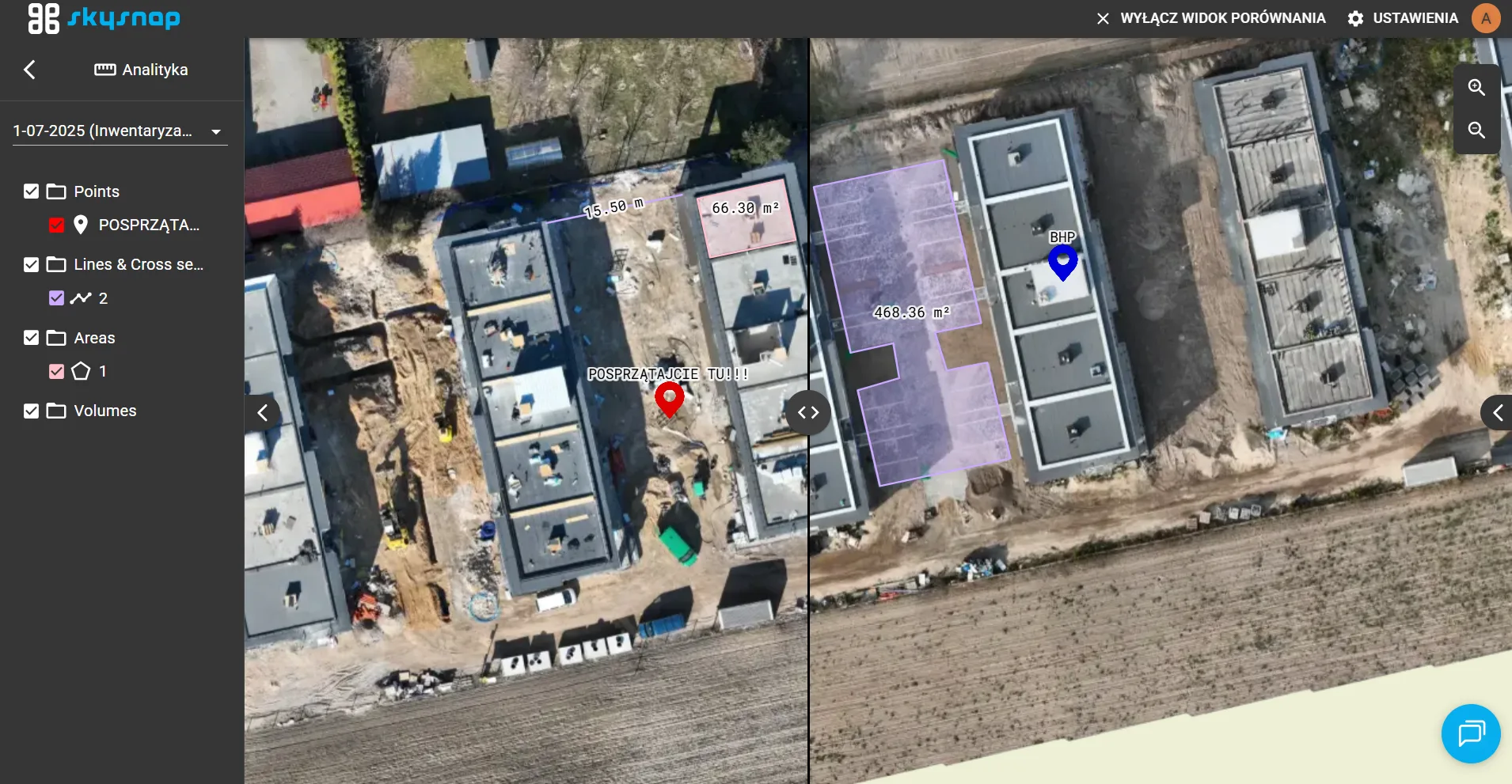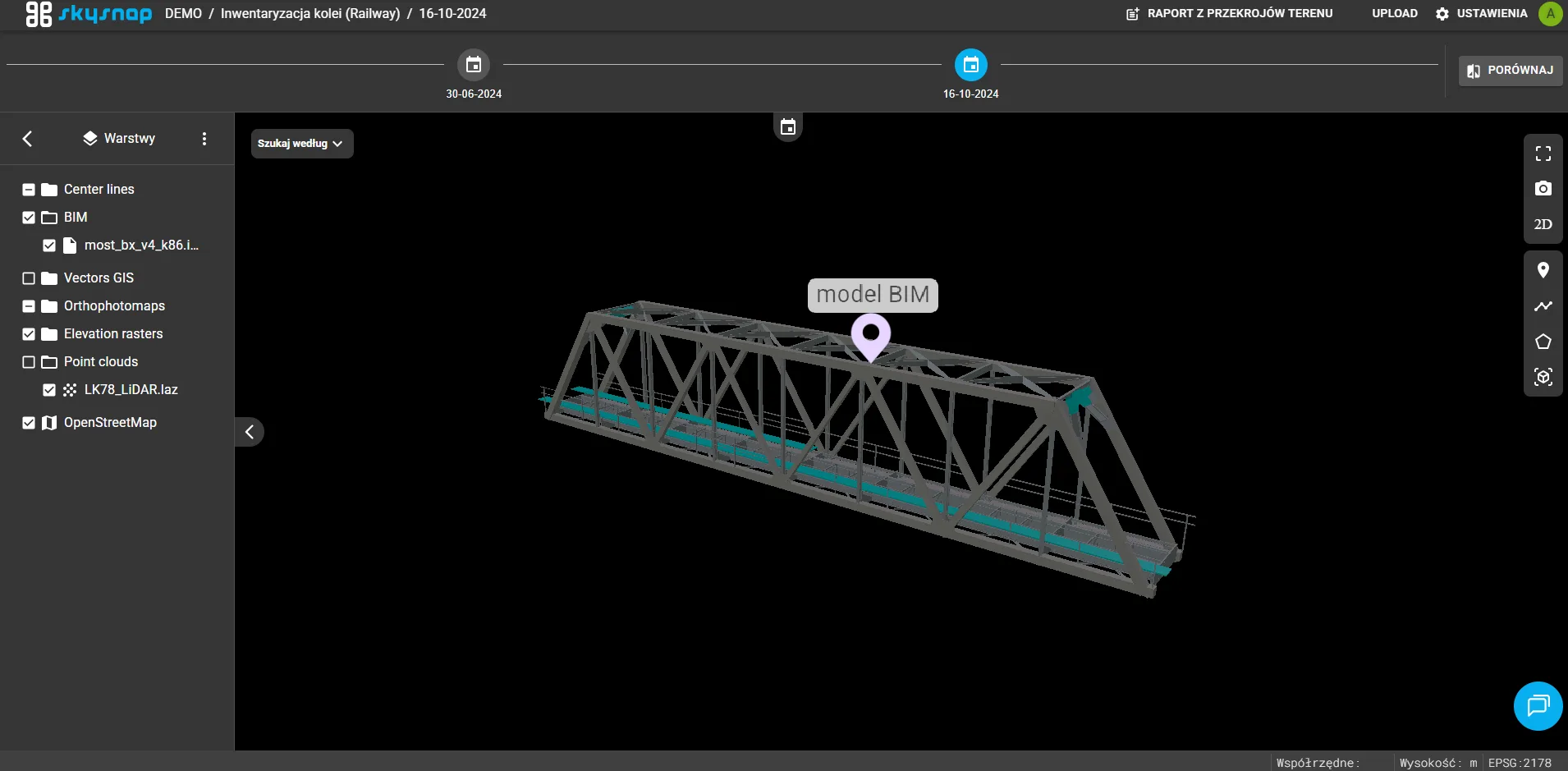
Introduction to orthophotos
Orthophotomap is a concept that is gaining popularity, especially in the context of digital maps and geographic information systems. It is a special type of map that combines the features of an aerial photo and a traditional geographic map. Thanks to the orthorectification process, the photos acquire the correct scale and can be used for precise measurements. Orthophotos are extremely useful in urban planning, agriculture, urban planning and many other fields where accuracy and detail are crucial. In the following text we will take a closer look at how exactly orthophotos are created and what technologies are used in the process.
Definition of orthophotos
An orthophoto is a type of map that combines the accuracy of aerial photographs with spatial geographic representation. Unlike standard aerial photographs, orthophotos undergo an orthorectification process. This eliminates perspective distortion and the influence of terrain, resulting in a uniform scale across the map.
In practice, this means that orthophotos can be used for precise measurements and spatial analysis, just like traditional maps. This is particularly important in the context of urban planning, where high accuracy is required for spatial planning and resource management. Orthophotos are a key component of geographic information systems (GIS), enabling the visualization of spatial data with high precision and detail.
History and development of technology
The origins of orthophotos date back to the 1920s, when aerial photographs were first used to create maps. At the time, technology was limited and the orthorectification process required significant manual labor.
The 1960s and 1970s brought the development of computerized photogrammetry, which significantly improved and accelerated the process of creating an orthophoto. Over time, with the advancement of computer technology and the development of satellite techniques, orthophotos have become even more precise and accessible.
Modern orthophotos use advanced digital algorithms and data from various sources, such as satellite imagery and drones. This makes it possible to create very high-resolution maps that are used in a wide range of fields, from geographic sciences to emergency management. They are evolving all the time, adapting to the growing needs of users.
The process of creating an orthophoto
Aerial data collection
Aerial data collection is the first and key step in creating an orthophoto. The process begins with the planning of an aerial mission, during which flight routes and technical parameters of the images, such as flight altitude and camera angle, are determined. Most often, aircraft equipped with specialized photogrammetric cameras are used, which take images with high accuracy.
In recent years, drones have become increasingly popular and can be used to photograph hard-to-reach areas. Aerial photos must be taken under suitable atmospheric conditions to ensure maximum quality and precision. Once the mission is completed, the photos are processed and preliminarily analyzed to detect any errors or data gaps. The collected materials form the basis for further processing steps, leading to the creation of an accurate orthophoto.
Image correction and processing
Image correction and processing is a key step that affects the final quality of an orthophoto. The process begins with orthorectification, which is the removal of geometric distortions caused by perspective and slope. This is done using digital terrain model (DTM) data, which allows the images to match the actual terrain of the land surface. Advanced photogrammetric software automatically analyzes and corrects the photos to create a consistent and accurate map.
The next step is to combine the individual images into a single whole, which requires precise matching and removal of any inaccuracies. In this process, it is crucial to maintain a uniform scale and resolution of the entire map. Once the correction and processing is complete, the orthophoto is ready for further analysis and use in various applications, such as spatial design or analysis of environmental changes.
Orthophotos applications
Spatial planning and urban planning
Orthophotos play an important role in land use planning and urban planning, providing detailed and precise data necessary for decision-making. Thanks to their high resolution and accuracy, they allow analysis of existing land use and planning of new infrastructure investments. They facilitate the identification of areas with potentially high development risk, such as floodplains or protected areas. A city planner can use orthophotos to assess the impact of planned projects on the environment and the local community.
In addition, orthophotos support the process of creating local development plans, enabling visualization of various scenarios of urban and settlement development. They are also a valuable tool for monitoring the progress of construction work and assessing its compliance with design assumptions. With these advantages, orthophotos have become an indispensable element in modern urban planning.
Agriculture and environmental management
Orthophotos are an indispensable tool in agriculture and environmental management, offering precise data for assessing and monitoring the condition of farmland and the environment.
In precision agriculture, orthophotos help identify areas in need of improvement, such as fields with uneven productivity or sensitive to erosion. By analyzing images in different light spectra.
In terms of environmental management, orthophotos help monitor landscape changes such as deforestation or urbanization. They are crucial in assessing the effects of natural disasters, such as floods or fires, enabling rapid identification of the most affected areas.
In addition, they support conservation projects such as the creation of protection zones for endangered species. Through these applications, orthophotos support sustainable management of land and natural resources.
Advantages and limitations of orthophotos
Accuracy and precision
One of the greatest advantages of orthophotos is their high accuracy and precision, which makes them an invaluable tool in many fields. Thanks to the orthorectification process, orthophotos are free of geometric distortions, which allows for a uniform scale across the map. In practice, this means that they can be used for precise measurements of distance, area or height, which is crucial in urban planning and engineering. However, the accuracy of orthophotos depends on the quality of the aerial photos and the terrain models used, which can be challenging in areas with difficult terrain. High-quality orthophotos require sophisticated hardware and software, which can come at a higher cost. Nevertheless, for many users, the benefits of precise and detailed data outweigh the potential limitations, making orthophotos a key component of modern spatial analysis.
Technological challenges
The creation of orthophotos involves many technological challenges that can affect their quality and usability.
One of the main challenges is the need for advanced hardware and software to process large amounts of aerial data. The orthorectification process requires precise terrain models, which is sometimes difficult to achieve in areas with complex terrain.
In addition, there are challenges in reconciling the high resolution of the images with the need for fast data processing, which can require significant computer resources.
Another aspect is the synchronization of data from different sources, such as satellite images and GPS data, which can lead to errors if not done with due accuracy.
All of these factors mean that creating orthophotos can be costly and time-consuming, but technological advances are constantly bringing new solutions to help overcome these challenges.
The future of orthophotos
Innovation and new technologies
The future of orthophotos is inextricably linked to the rapid development of innovations and new technologies that are revolutionizing the way we create and use these maps.
- One of the key trends is the growing use of drones, which enable data collection in hard-to-reach areas at lower costs.
- Also, developments in satellite technology, offering increasingly higher resolution images, are contributing to more detailed maps.
- In addition, advanced artificial intelligence algorithms support the process of automatic analysis and correction of images, which increases accuracy and reduces the time needed to create orthophotos.
- Cloud technologies enable easier access to and real-time processing of large data sets.
As technology advances, orthophotos will become even more precise and accessible, opening up new opportunities for their application in fields ranging from urban planning to natural resource management.
Potential future applications
Orthophotos, thanks to the continuous development of technology, have the potential to find even wider application in the future.
- One area where they can play a key role is in monitoring climate change. Thanks to their high resolution and precision, orthophotos can help track changes in ice cover, tropical forests or water levels.
- Another potential application is agriculture of the future, where orthophotos can support the development of autonomous agricultural machinery and precise resource management.
- In cities, orthophotos can contribute to the development of smart infrastructure management systems, such as power grids and transportation systems.
- By integrating with augmented reality (AR) technologies, they can become the basis for modern navigation and spatial data visualization systems.
As technologies evolve, the potential applications of orthophotos will expand, bringing new opportunities for many sectors.
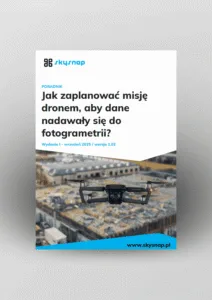
Free E-book
Learn how to prepare a mission step-by-step, avoid raid mistakes and create accurate orthophotos and 3D models. The perfect guide before your first commercial assignments.
Table of Contents:
Do you like the article? Share it with others!
Do you like the article? Share it with others!
Tips, news, insights
Related articles
Check out our articles and get the latest industry news.