1. drone – the foundation of data quality
The equipment you use to make the raid is critical.
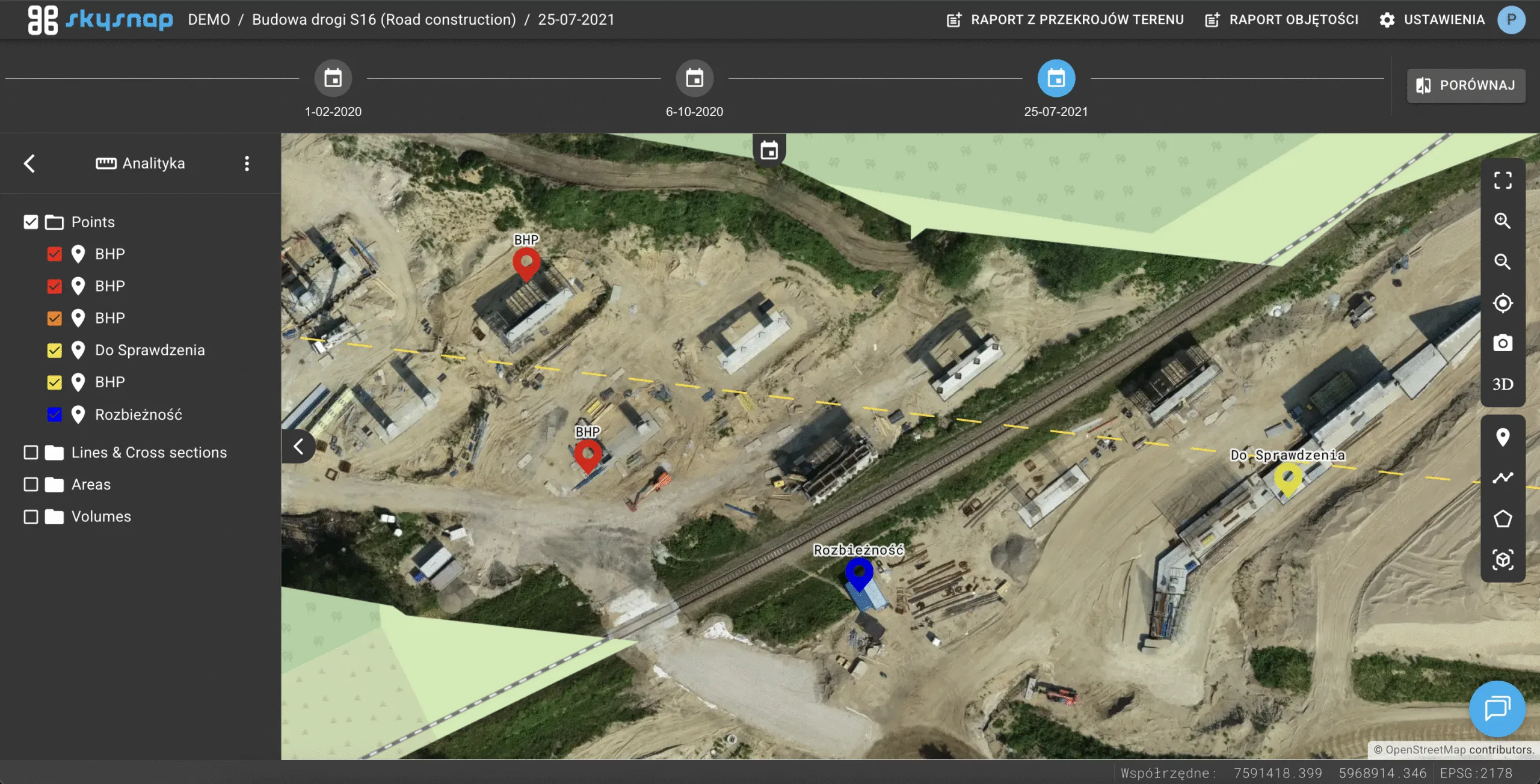
The SkySnap Presentation shows that it takes less than 100 images over a 2-hectare area with 80% coverage to produce a high-quality orthophoto.
Here’s what influences the result:
- Camera quality – the larger the sensor and better the optics, the higher the field resolution (GSD).
- GPS accuracy – the use of RTK or PPK technology can achieve sub-centimeter precision.
- Flight stabilization and control – good drones (e.g., DJI M350 RTK with P1 camera) provide smooth flight and sharp images even in windy conditions.
- Automatic mission planning – drone apps make it easy to maintain optimal flight parameters.
💡 Recommendation: if you want the highest accuracy, choose drones with an RTK module and automatic mission planning capabilities.
2. mission – planning and flight conditions
Even the best drone won’t help if the mission is poorly planned.
According to SkySnap materials, the most important factors are:
- Raid height – the lower it is, the higher the resolution, but also the higher the number of images to process.
- Image coverage (overlap) – minimum 75-80%; too little coverage causes reconstruction errors.
- Lighting conditions – avoid harsh shadows and flying in low sunlight.
- Consistent speed and stability of the drone – ensure even shooting and consistency of data.
📏 Practical tip: Check exposure and white balance before starting – changing settings between shots can reduce the quality of an orthophoto by up to 30%.
3. processing – software and quality control
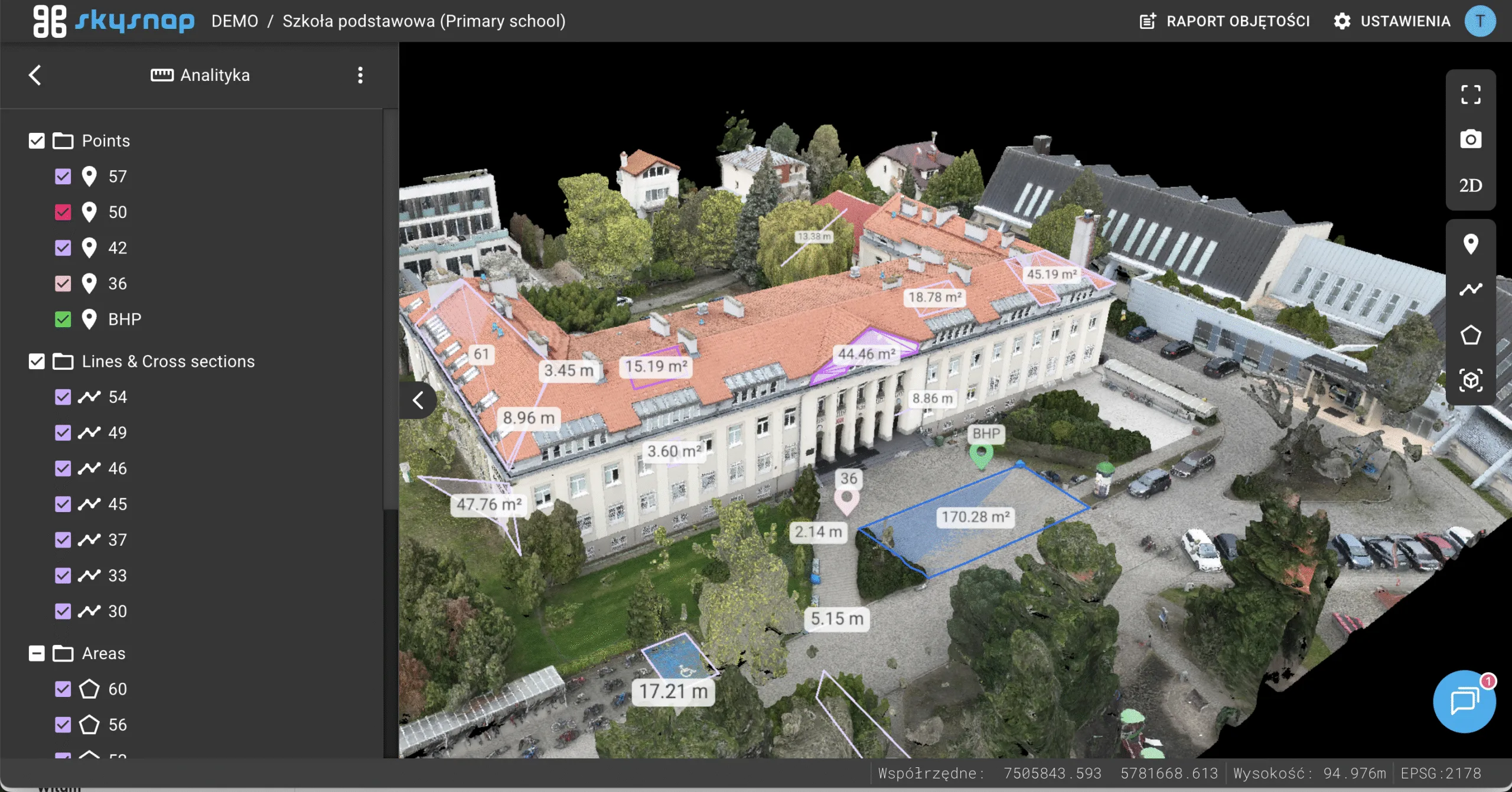
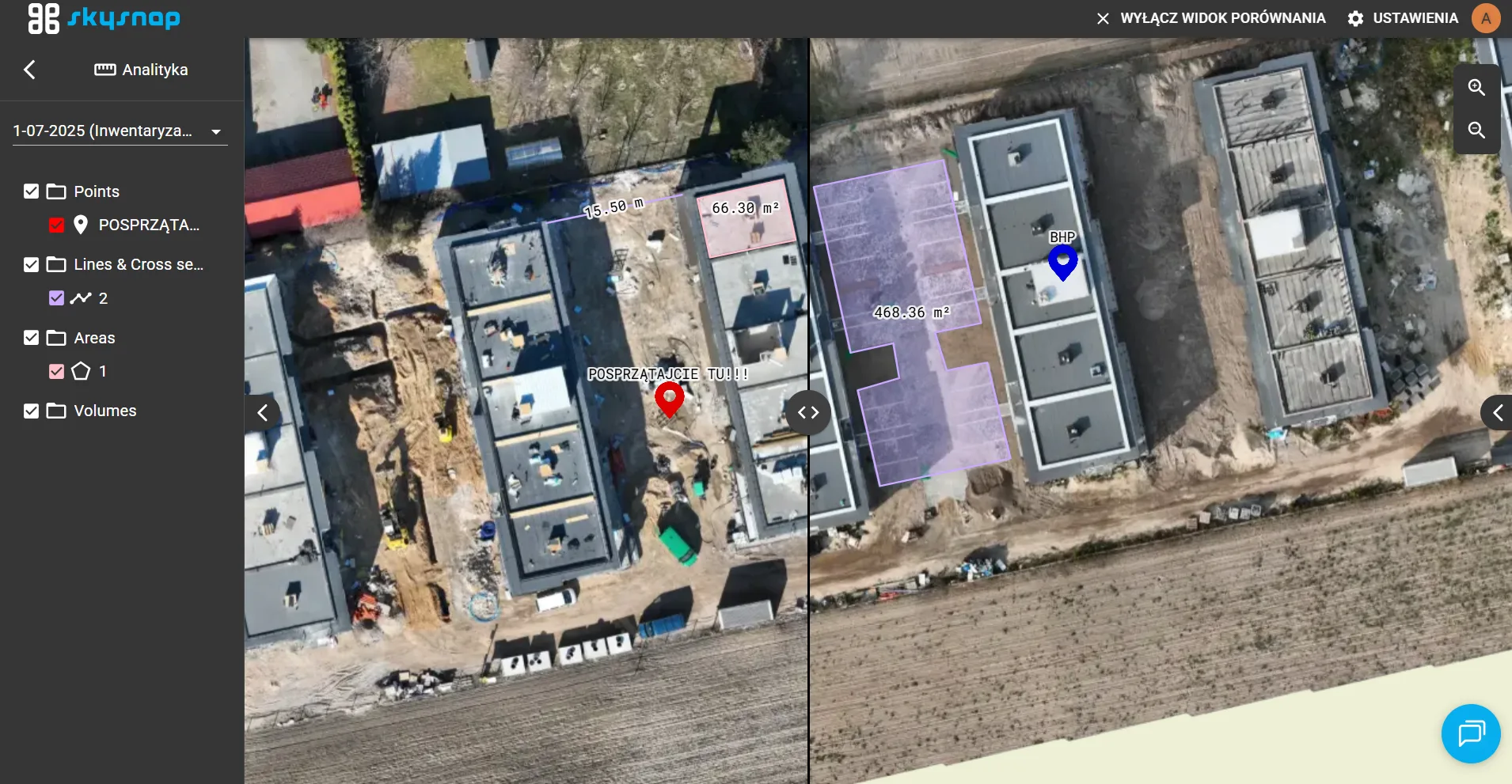
The final stage is data processing – that is, the moment when SkySnap or other software creates a single coherent image of the area from thousands of images.
This is the stage where the quality of the input data is verified and optimized.
The report “SkySnap Blog Articles 11-20” shows that the system automatically audits:
- EXIF data (time, GPS, altitude, focus),
- GSD resolution and spatial coherence,
- The completeness of coverage and the absence of offsets,
- Sharpness and uniformity of illumination.
In addition, users can:
- attach photopoints (GCPs) that improve mapping accuracy,
- Use automatic quality alerts,
- Have SkySnap expert audit manually for PRO or official projects.
📈 Conclusion: even a cheaper drone, but a well-planned mission and processing in SkySnap, can produce results comparable to professional surveying kits.
Summary
The quality of an orthophoto does not depend solely on the equipment. It is the result of the interaction of three elements:
| Factor | Key importance |
|---|---|
| Drone | Camera, RTK/PPK, flight stability |
| Mission | Height, overlap, light |
| Processing | Software, orthorectification, GCP |
With modern tools such as SkySnap, drone operators can generate orthophotos with 1-2 cm/pixel resolution and 1-2 cm measurement precision, without the need for complex desktop software.
Worth remembering:
Better a well-planned flight with a cheap drone than a chaotic raid with £80k equipment.
In photogrammetry, quality does not come from the price of the drone, but from the precision and consistency of the whole process.
Want to learn more about the quality of orthophotos and working with drone data?
👉 Test SkySnap
and see how easy you can generate professional maps and 3D models.

Free E-book
Learn how to prepare a mission step-by-step, avoid raid mistakes and create accurate orthophotos and 3D models. The perfect guide before your first commercial assignments.
Table of Contents
Tips, news, insights
Related articles
Check out our articles and get the latest industry news.