Introduction to drone technology
Drones have become an integral part of modern technology. Their development and use have transformed many areas of life, from recreation to professional use in surveying. Below we take a look at how drones have evolved and the applications they have found.
History and development of drones
The history of drones dates back to World War II, when the first unmanned aerial vehicles were used for military purposes. Initially used mainly for warfare, drones have come a long way, becoming a tool with a wide range of applications.
As technology has evolved, drones have become more advanced, lightweight and accessible. We can now find them in many sectors, including surveying, where their use is changing traditional work methods.
This evolution has been made possible by technological advances, including the miniaturization of electronic components and the development of navigation systems that enable precise control of the drone.
Application of drones in various fields
Drones have revolutionized many industries. In agriculture, they are used to monitor crops, allowing for more efficient management of resources. In surveying, drones enable the rapid and accurate collection of field data.
Other applications include aerial photography, infrastructure inspection and rescue operations. In each of these fields, drones bring new quality and functionality, enabling tasks that were previously difficult or impossible to accomplish.
Thanks to the capabilities they offer, drones are becoming an integral part of modern technology, supporting various fields to achieve better results.
Basics of laser scanning
Laser scanning is a technology that is revolutionizing the way we collect spatial data. It makes it possible to obtain accurate 3D models, which is extremely useful in surveying and other spatial applications.
How laser scanning works
Laser scanning involves the emission of a laser beam that reflects off a surface and returns to the measuring device. The return time of the beam is measured, allowing the distance to the object to be calculated. With this method, it is possible to obtain accurate data on the shape and surface of the area.
- Emission of a laser beam in the direction of an object.
- Reflection of the beam from the ground surface.
- Measuring the time for the beam to return to the device.
- Processing the data into a point cloud.
The result is a detailed point cloud that can be used to create 3D models.
Advantages of laser scanning in surveying
Laser scanning brings many benefits to surveying. First of all, it makes it possible to quickly and accurately collect field data over large areas, which speeds up surveying processes.
The advantages of this technology also include the accuracy of measurements and the ability to work in difficult terrain where traditional methods can fail. Laser scanning also makes it possible to create detailed 3D models, which are used in engineering or architecture.
Thanks to its characteristics, laser scanning is becoming an indispensable tool in the work of surveyors.
Integration of drones with laser scanning
The combination of drones and laser scanning is opening up new possibilities in surveying. With this integration, even more precise and efficient field data can be obtained.
LiDAR technology in drones
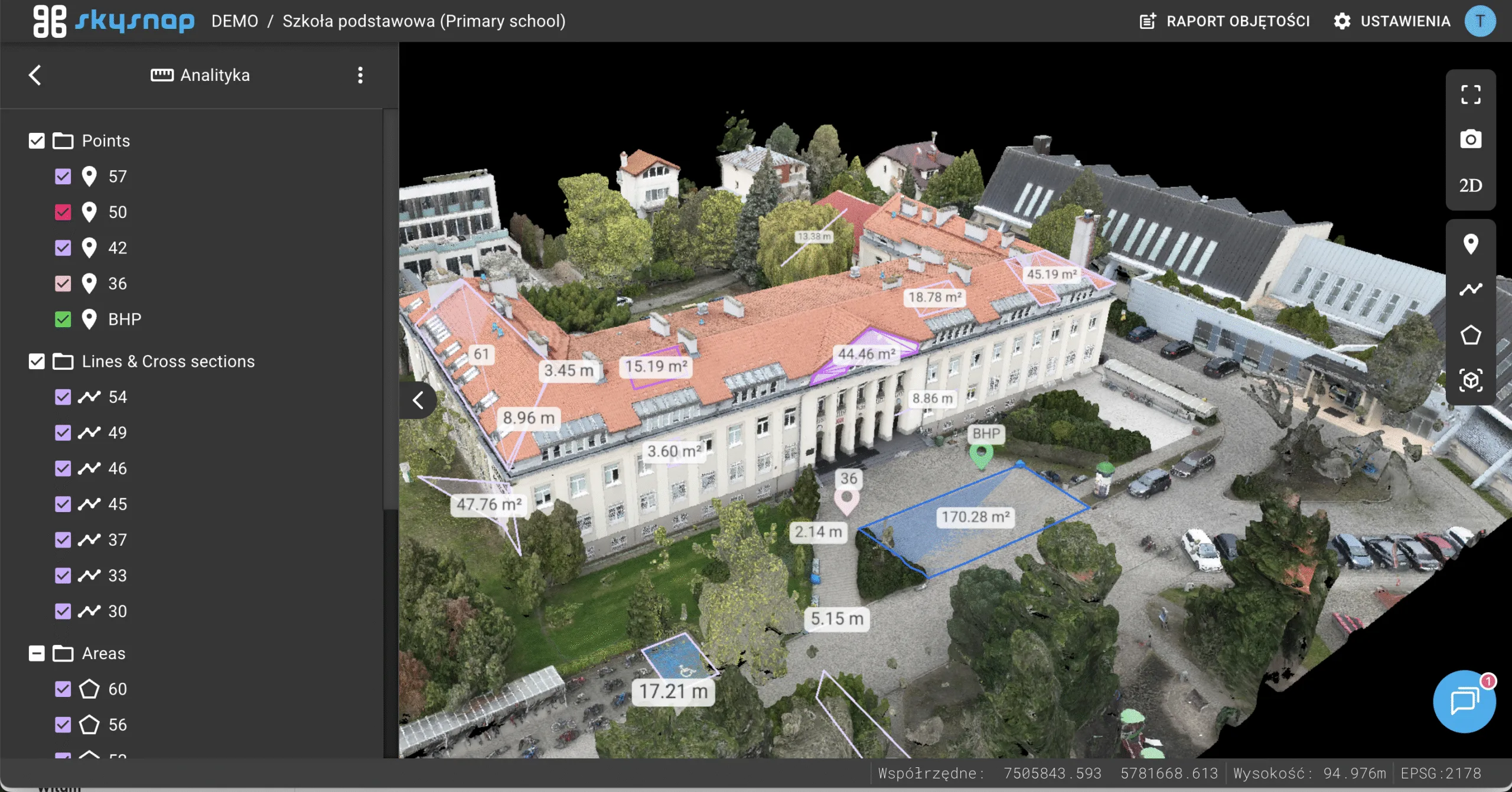
LiDAR (Light Detection and Ranging) is an advanced laser scanning technology that can be integrated with drones. With it, drones can take detailed spatial measurements from the air.
- Mounting a LiDAR module on a drone.
- Flying a drone over an area of interest.
- Emitting and receiving laser beams to measure distance.
- Point cloud creation and data processing.
LiDAR technology in drones enables precise mapping of large areas in a short period of time.
Benefits of using drones
Drones integrated with laser scanning technology offer numerous benefits. First and foremost, they allow for fast and accurate data collection from hard-to-reach locations.
- Efficiency: Reduce the time required for measurements.
- Safety: Eliminates the need for dangerous manual measurements.
- Precision: The accuracy and detail of the data collected.
These advantages make drones a valuable piece of modern surveying equipment.
Practical applications in surveying
Drones have become a tool that significantly supports the work of surveyors. Their use allows for more efficient mapping and monitoring of the environment.
Terrain mapping with drones
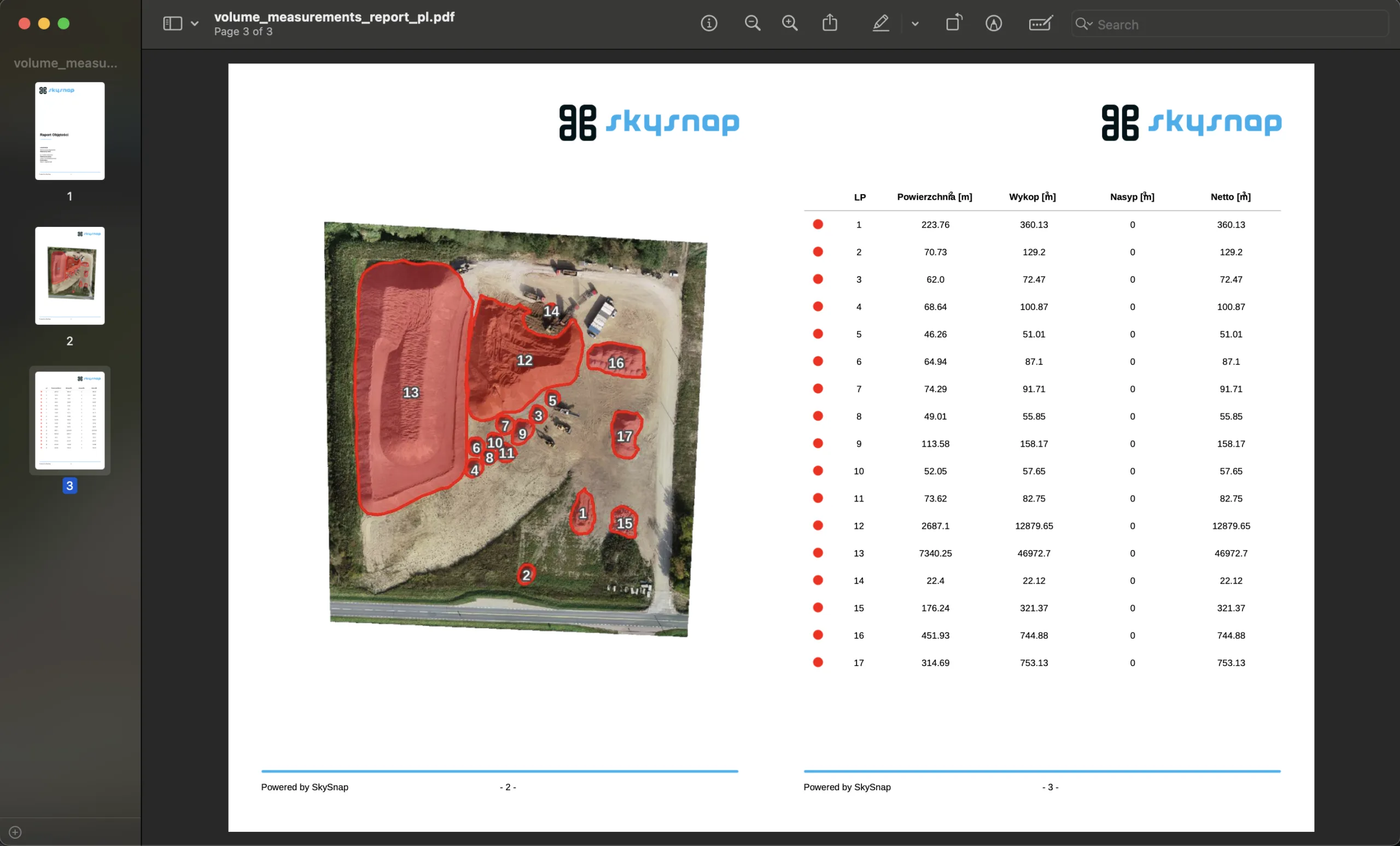
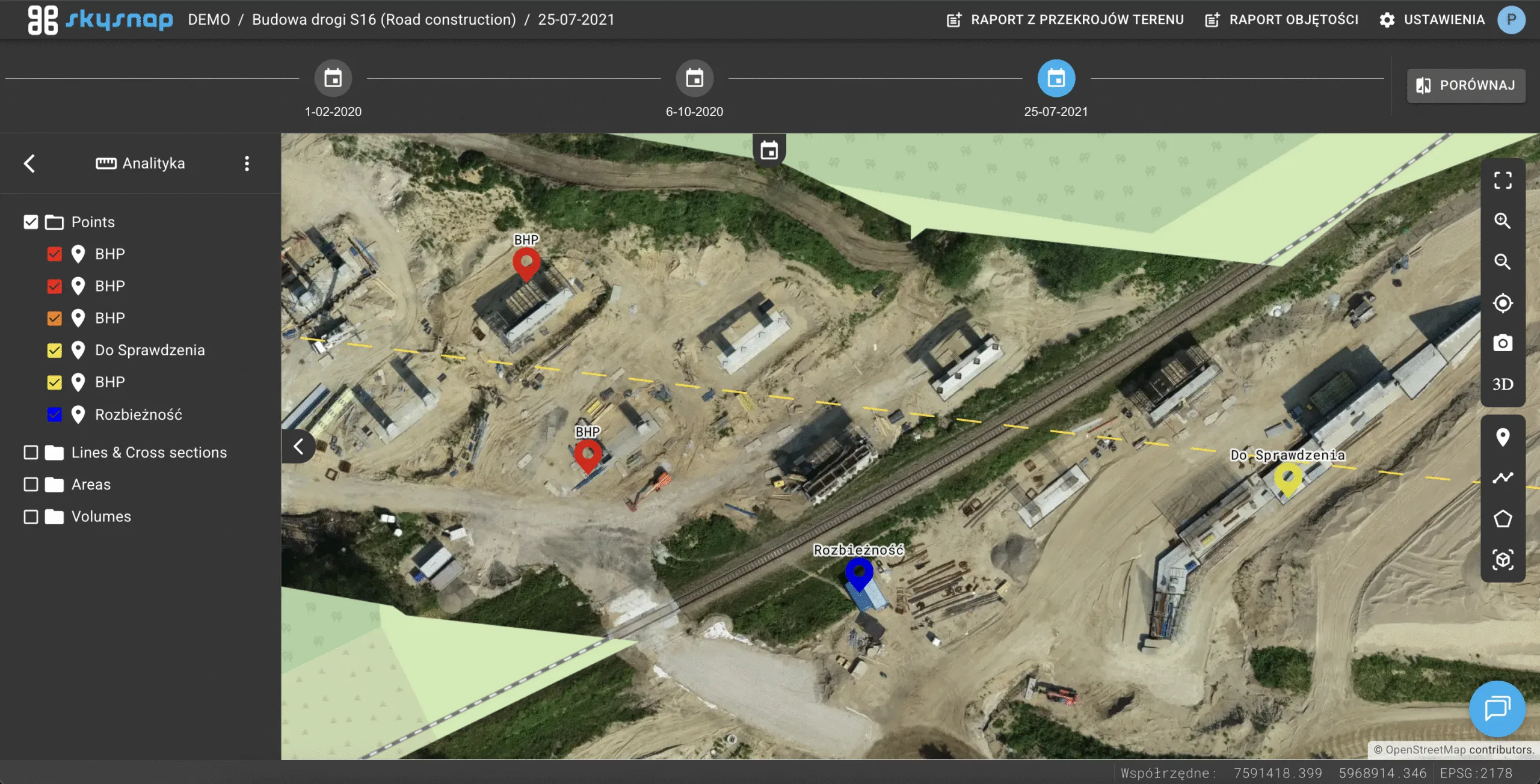
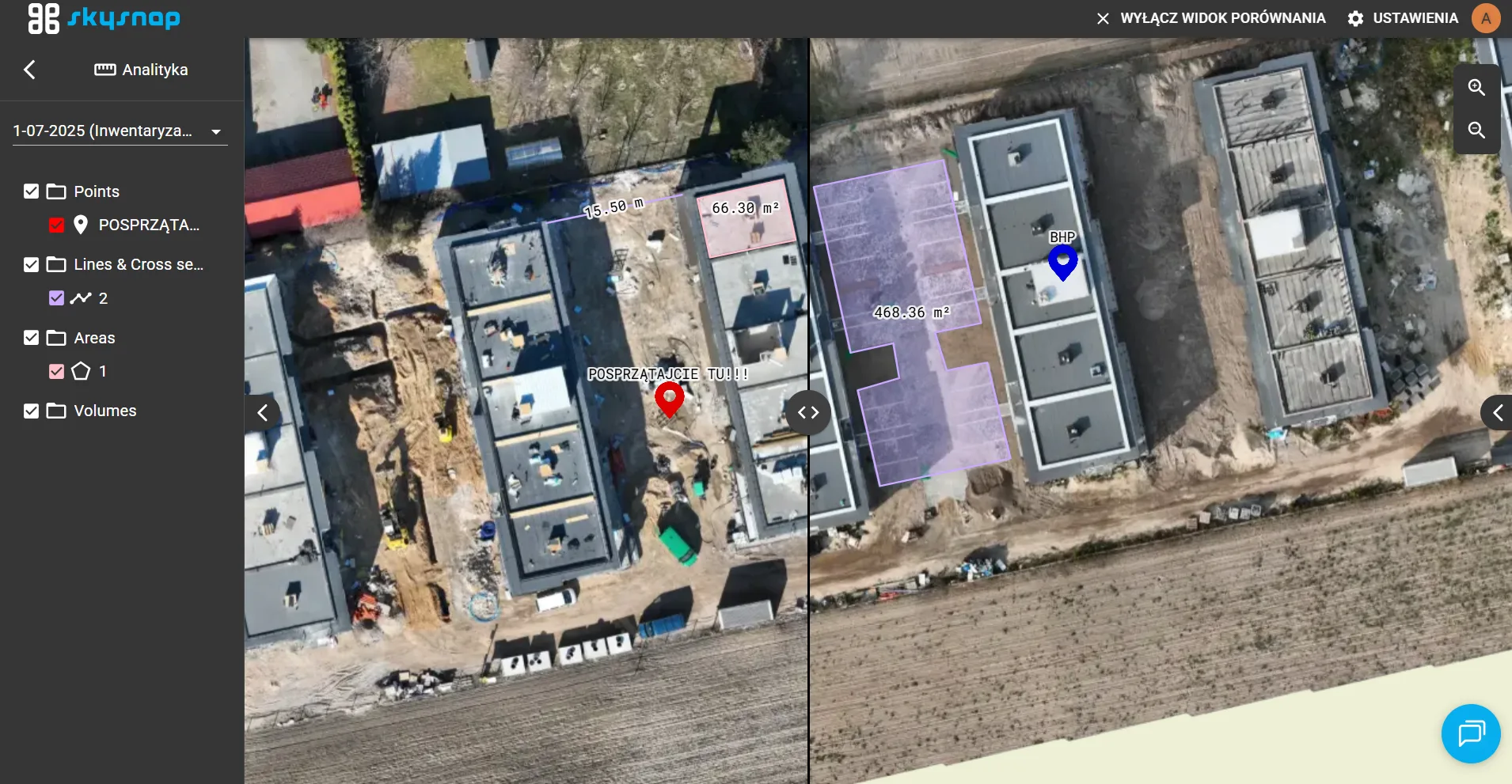
Land mapping with drones is one of the most important applications in surveying. Drones equipped with cameras and scanning technologies can map large areas quickly and accurately.
- Speed: Significantly reduces the time it takes to map large areas.
- Accuracy: High precision thanks to advanced sensors.
- Accessibility: ability to map hard-to-reach areas.
These features make drones an invaluable tool in the work of surveyors.
Monitoring environmental changes
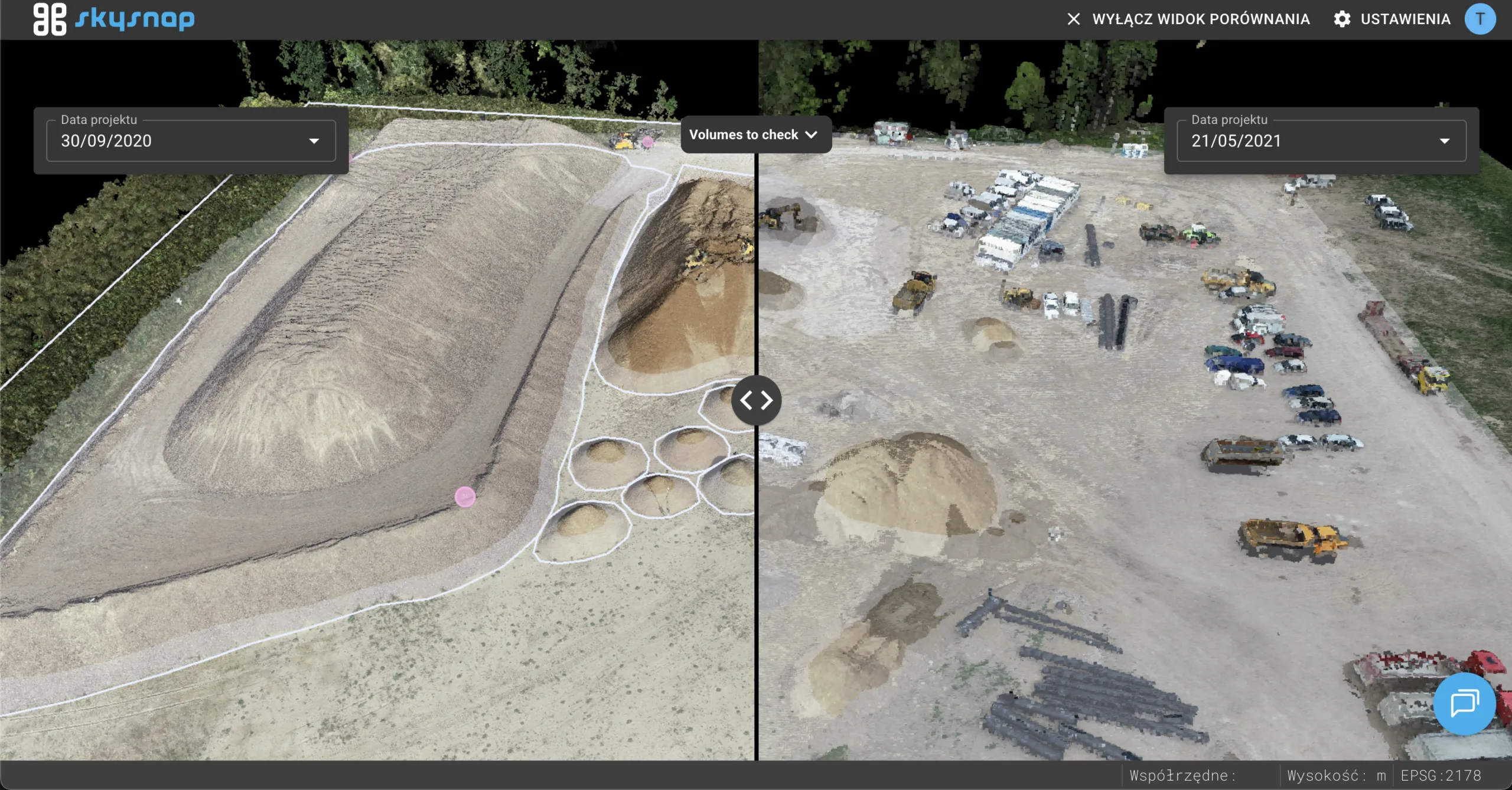
Drones are also being used to monitor environmental changes. With regular flights, changes in the landscape can be analyzed, which is especially useful for areas prone to erosion or flooding.
Benefits of environmental monitoring with drones:
- Continuity: Regular data collection makes it possible to track changes over time.
- Savings: cost reduction compared to traditional methods.
- Speed of response: Rapid detection of alarming changes.
With these applications, drones are becoming a key component of environmental monitoring.
Challenges and the future of technology
Drone technology brings with it many opportunities, but also challenges that need to be solved to realize its full potential in surveying.
Limitations and technical problems
Technical limitations of drones are one of the main challenges in their application. They mainly concern flight time, range and weather conditions, which can affect the quality of data collected.
- Flight time: Short battery life limits range and operation time.
- Weather conditions: Wind and precipitation can affect flight stability.
- Safety: Risk of collisions and technical failures.
These challenges require further research and innovation to realize the full potential of drones.
Future directions of drone development in surveying
The future of drones in surveying is promising. Developments in technology are expected to bring further innovations that will make them even more effective and versatile tools.
Development directions:
- Advanced sensors: New measurement technologies will improve accuracy.
- Autonomy: Autonomous drones will minimize the need for human intervention.
- Data integration: Improved data analysis systems will improve efficiency.
These changes could revolutionize surveying, making it more modern and attuned to the needs of the modern world.

Free E-book
Learn what services to offer, who to sell them to, and how to write an effective offer email. Ready-made templates, tips and examples of campaigns that really work.
Table of Contents:
Do you like the article? Share it with others!
Do you like the article? Share it with others!
Tips, news, insights
Related articles
Check out our articles and get the latest industry news.