Why are drones the future of surveillance? Key benefits and applications
Drones are rapidly gaining popularity as the tool of the future in surveillance. Thanks to their versatility, they can be used in many sectors – from agriculture to environmental protection to public safety. Compared to traditional methods, drones are cheaper to operate, reach hard-to-reach places and allow real-time data collection.
In this article, you will see why drones are seen as an integral part of the future of surveillance and how they can change our approach to observing our surroundings.
Introduction to drone technology
Drone technology is developing extremely rapidly. Unmanned aerial vehicles have become an important part of modern monitoring systems. It is worth understanding their history, operation and available types.
History of drone development
The history of drones dates back to the early 20th century. Already during World War I, prototypes of unmanned aerial vehicles were experimented with for military purposes.
In the 1960s, drones began to be more widely used in the military, which accelerated their miniaturization and technological development. Over time, they also found their way into civilian applications – including. In aerial photography and surveillance.
Today, drones are widely available, and their development continues to accelerate, bringing more advanced and specialized models.
Basics of drone operation
Drones operate by remote control, using radio signals to communicate with the operator. The key components of a drone are:
- Motors – drive the propellers and enable maneuvering,
- Battery – powers onboard systems,
- Flight controller – is responsible for stabilization and control,
- Navigation systems – provide orientation in space (e.g. GPS).
Thanks to advanced sensors, drones can perform precise and complex tasks, and GPS systems allow for accurate route planning and position tracking.
Various types and models
Drones can be divided into several main categories:
- Recreational drones – for fun and amateur photography,
- Commercial drones – for professional filming and surveillance,
- Industrial drones – for inspection, mapping, surveying.
Industrial models often have specialized cameras and sensors, allowing advanced analysis and measurements.
The choice of the right model always depends on the application and user needs.
Key benefits of drone use
Drones offer a number of benefits that make them an ideal tool for monitoring: reduced costs, greater efficiency and improved security.
Reduction of operating costs
One of the biggest advantages of drones is the reduction in operating costs.
- fewer employees needed for supervision,
- No need for expensive vehicles or heavy equipment,
- Shorter task completion time.
Drones perform tasks faster, cheaper and often more accurately than traditional methods, which translates into real financial savings.
Increased monitoring efficiency
Drones significantly increase the efficiency and range of monitoring.
- quickly cover large areas,
- reach hard-to-reach places,
- thanks to cameras and sensors provide detailed data in real time.
This allows us to keep abreast of the situation and respond to changes – whether in agriculture, conservation or industry.
Improving safety and security
Drones have a huge impact on security.
- In emergency situations, they allow for quick reconnaissance of the area,
- provide up-to-date information in natural disasters,
- with thermal imaging cameras support the search for missing persons.
Importantly, they allow monitoring of dangerous areas without endangering people.
Drone applications in surveillance
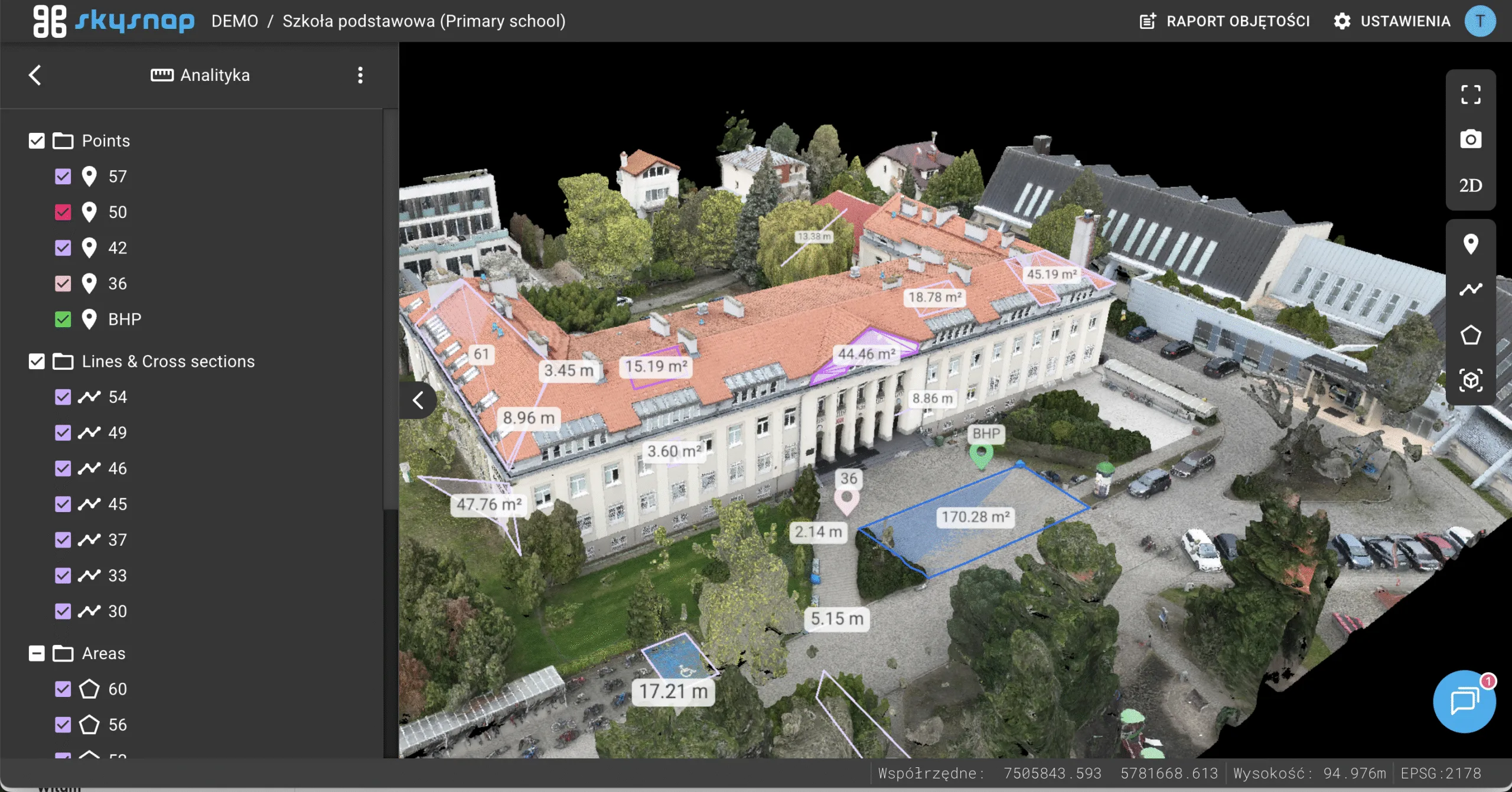
Applications range from agricultural fields to forests to cities and industrial zones.
Monitoring of agricultural areas
In agriculture, drones are becoming an essential tool for precision crop monitoring.
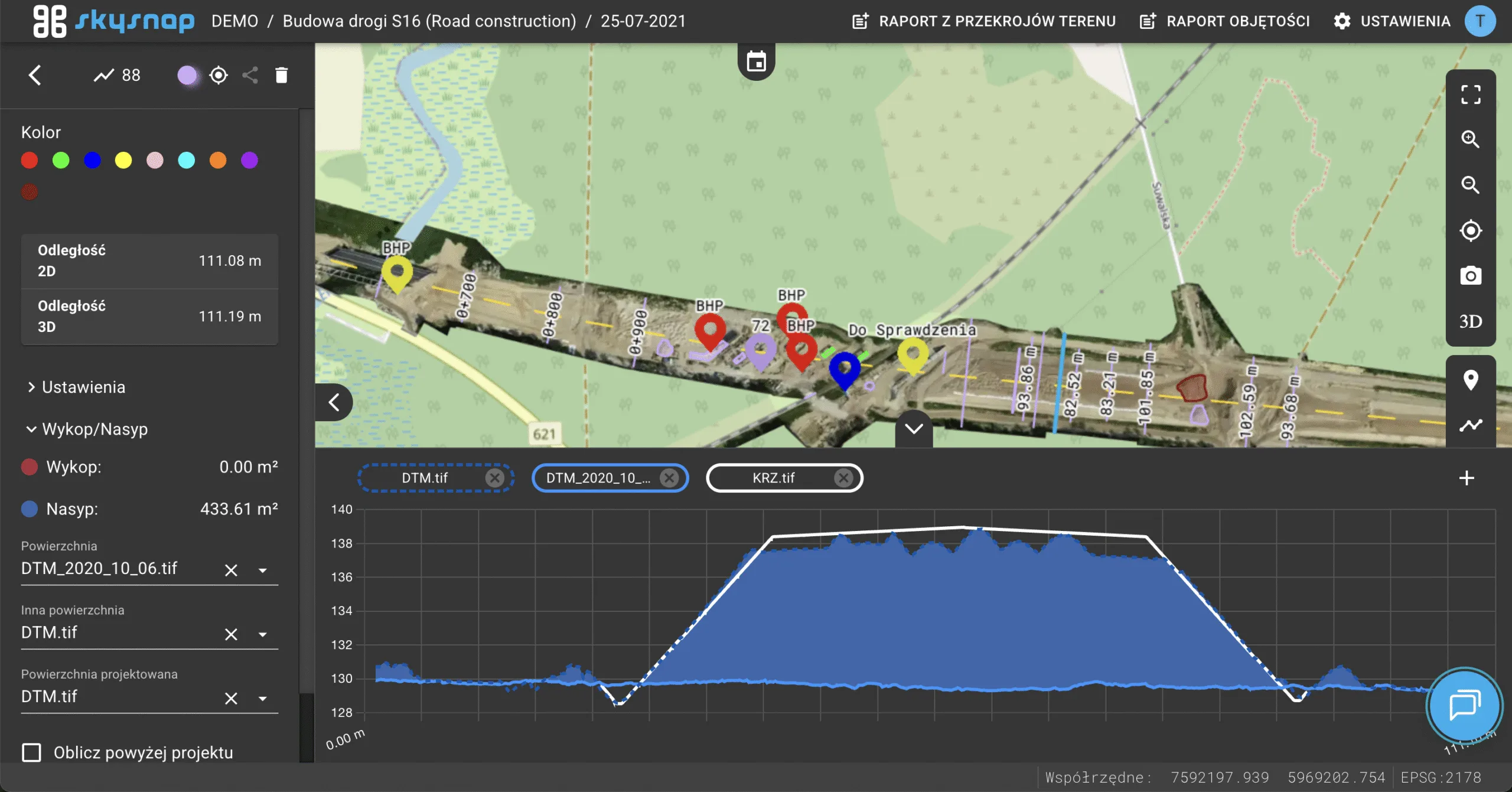
- Detection of plant diseases, water shortages, pests,
- Planning conservation and fertilization treatments,
- Field mapping and resource management.
This allows farmers to increase yields and reduce costs.
Applications in environmental protection
Drones are increasingly supporting environmental protection:
- Monitoring changes in ecosystems,
- wildlife observation,
- Assessment of pollution, water quality, forest condition.
They reach where it would be difficult, expensive or dangerous for humans to reach: mountains, swamps, remote areas.
Public safety and rescue
In the area of public security, drones are becoming an invaluable service support:
- rapid recognition of the crisis situation,
- Supporting rescue operations,
- Searching for the missing with thermal imaging cameras,
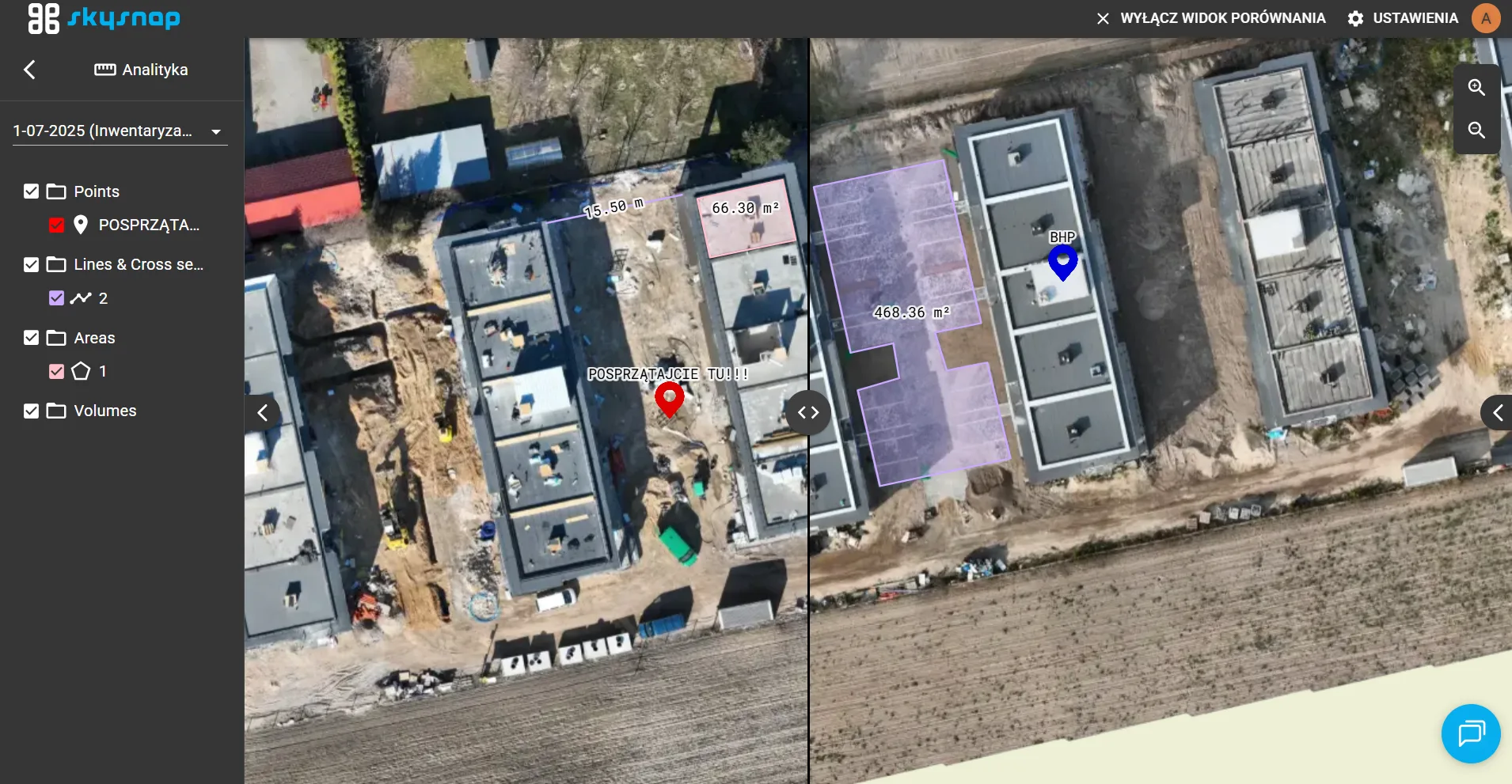
- Monitoring crowds during mass events.
This significantly increases the efficiency and speed of rescue and prevention efforts.
Challenges and the future of drones
While the possibilities are vast, drones also face challenges – especially legal and technological ones.
Legal and regulatory obstacles
Drone regulations are dynamically changing to keep up with the technology.
- Licensing, registration, certification requirements,
- Differences in regulation between countries,
- restrictions on commercial drone use.
Operators must keep abreast of the law to operate legally and safely. Cooperation between regulators and business is key here.
Technology development and innovation
Drone development is driven by:
- advanced navigation systems,
- New sensors and cameras,
- Artificial intelligence and machine learning.
As a result, the drones are learning to make autonomous decisions, better analyze data and adapt to conditions. In time, they will become even more autonomous and precise.
The future of surveillance with drones
The future looks very promising.
Technologies such as 5G and the Internet of Things (IoT) will allow drones:
- Communicate with other systems in real time,
- Create integrated monitoring networks,
- to support security, the environment and business even more effectively.
Drones have the potential to play a key role in solving global challenges – from climate change to public safety. All indications are that they are the future of monitoring.

Free E-book
Learn how to use drones in BRD analysis, environmental monitoring or resource distribution. Check out proven deployment models and key digital tools for local government.
Table of Contents:
Do you like the article? Share it with others!
Do you like the article? Share it with others!
Tips, news, insights
Related articles
Check out our articles and get the latest industry news.