How high can a drone fly? A practical guide for everyone
Drones are gaining popularity, fascinating both amateurs and professionals. With their help you can take breathtaking bird’s-eye shots, explore hard-to-reach areas and even deliver packages. One of the common questions that arise for newcomers is “how high can a drone fly?” The answer to this question is not clear-cut, as a lot depends on the type of drone, its design and applicable regulations. In this guide, we will discuss the most important factors affecting the maximum flight altitude of drones, helping you realize their full potential while ensuring safety and regulatory compliance.
Drone height rules and regulations
Understanding drone flight regulations is crucial for any operator. These regulations vary from country to country and region to region, which can affect how we can use drones.
Regulations in Poland
In Poland, the rules on drone flight are regulated in detail. The Ministry of Infrastructure has issued guidelines that impose restrictions on flights above 120 meters. Compliance with these regulations is not only a legal necessity, but also an important part of ensuring safety in the airspace.
- The flight altitude must not exceed 120 meters above the terrain.
- Flights in controlled zones require special permits.
- Drone operators must be certified and licensed.
International law
International law on drones is diverse. The International Civil Aviation Organization (ICAO) develops recommendations that help standardize the rules. However, many countries have their own regulations, which may differ from these recommendations.
- ICAO recommends keeping drones in sight.
- Some countries require special permits for drones above a certain weight.
- Regulations may change according to technological advances.
Regional differences
Differences in drone regulations can be significant in different regions. For example, in the United States, the Federal Aviation Administration (FAA) has different requirements than those in the European Union.
- In the US, commercial drones must be registered.
- There are different categories of drone certification in the EU.
- Local regulations may affect the ability to fly in certain locations.
Technical limitations of drones
In addition to regulations, a drone’s flight altitude is also affected by its technical capabilities. Battery endurance, signal range and drone design are key factors.
Battery life
The battery is the heart of any drone. Its endurance determines how long a drone can stay in the air. Battery performance depends on several factors, such as ambient temperature and intensity of use.
- In winter, batteries can drain faster.
- Shorter flight times require more frequent landings.
- Higher-end drones have more powerful batteries.
Signal range
Signal coverage is another key technical aspect. Operating a drone safely requires maintaining a constant connection with the controller. Loss of signal can lead to unforeseen situations.
- Range may be limited by terrain obstacles.
- Strong winds can interfere with the signal.
- Modern drones have automatic return functions in case of signal loss.
Drone design and material
The design and material of a drone affect its ability to fly at high altitudes. Lightweight materials promote longer flight time and greater stability.
- Drones made of carbon fiber are more durable.
- Lightweight designs allow for greater maneuverability.
- The choice of material affects weather resistance.
Factors affecting drone flight
The flight of a drone is also dependent on external conditions. Weather, altitude and load are all factors that must be taken into account.
Weather conditions
Weather can significantly affect drone flight. Wind, rain and temperature are elements that operators must take into account before every launch.
- Strong winds can carry a drone off course.
- Rain can damage the drone’s electronics.
- Low temperatures affect battery performance.
Effect of altitude on stability
At high altitudes, a drone can encounter various challenges. Rarer air changes the dynamics of flight, which can affect stability and control.
- At higher altitudes, the drone may be less stable.
- Height affects energy consumption.
- Drones with advanced stabilization systems perform better at high altitudes.
Burden and its effects
The load on the drone affects its ability to fly. Additional equipment or cargo reduces flight time and efficiency.
- A heavier load reduces flight time.
- Drones with more powerful engines can handle larger payloads better.
- Even load distribution increases stability.
Practical applications of flight altitude
The use of drone flight altitude has applications in many fields, from photography to rescue. Each of these applications requires a different approach and preparation.
Photography and filming
Drones have revolutionized the world of photography. Drone photography offers unique perspectives that were previously unavailable to most photographers.
- High-quality cameras enable professional shots.
- Image stabilization is crucial for filming.
- Photographers can change viewpoints quickly.
Inspections and monitoring
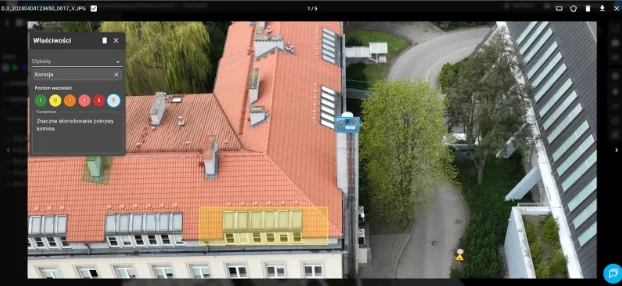
Drones are invaluable for infrastructure inspections. Monitoring bridges, power lines or telecommunications towers is becoming simpler and safer thanks to drones.
- Drones reach hard-to-reach places.
- Inspections are faster and cheaper than traditional methods.
- High-resolution cameras enable accurate analysis.
Rescue applications
In rescue, drones play a key role. Their quick response and ability to reach places inaccessible to humans makes them a tool of great potential.
- Drones can deliver medical equipment to hard-to-reach places.
- Aerial search is more efficient.
- Thermal imaging makes it easier to locate people at night.
Safety and responsibility
Safety and responsibility are key for any drone operator. Understanding potential risks and responsibilities is the foundation for safe operation.
Threats to aviation
Drones can pose a threat to traditional aviation. Collisions with aircraft can have catastrophic consequences, so it is important to exercise caution.
- Flying near airports is prohibited.
- Operators must monitor the airspace.
- Detection and avoidance systems are becoming more common in drones.
Privacy protection
Privacy issues are important in the context of drone use. Recording images without permission may violate the rights of third parties.
- Operators must respect the privacy of others.
- Recordings in public places may require permission.
- Data protection law regulates many aspects of drone filming.
User responsibility
Drone users have a duty to follow regulations and ensure safety in flight. Improper drone use can lead to serious legal consequences.
- Operators must be certified.
- Every flight should be carefully planned.
- Insurance can protect against financial consequences in the event of an accident.
Free E-book
Learn how to use drones in BRD analysis, environmental monitoring or resource distribution. Check out proven deployment models and key digital tools for local government.
Table of Contents:
Do you like the article? Share it with others!
Do you like the article? Share it with others!
Tips, news, insights
Related articles
Check out our articles and get the latest industry news.