How drones are changing the future of surveillance: Practical applications and benefits
In today’s fast-paced world, drone technology is playing an increasingly important role in the field of surveillance and monitoring. With the ability to move quickly and collect data from hard-to-reach locations, drones are becoming an invaluable tool in both urban and rural spaces.
Their versatility allows them to be used in situations where traditional surveillance methods would be costly, time-consuming or ineffective.
In this article, we look at how drones are revolutionizing the future of surveillance, presenting their practical applications and key benefits for organizations and societies.
Development of drone technology
Drone technology has taken a giant leap forward – from simple military designs to advanced tools capable of autonomous operation and real-time data analysis.
History and evolution of drones
The history of drones dates back to the beginning of the 20th century, when the first unmanned aerial vehicles appeared for military purposes.
Over time, the technology has become increasingly accessible and precise.
In the 1980s and 1990s, the development of GPS, the miniaturization of electronics and falling manufacturing costs made it possible to use drones outside the military.
Today, drones are present in film, agriculture, logistics, surveying, surveillance and public safety.
Modern technological capabilities
Today’s drones offer technologies that were unattainable a decade ago:
- high definition cameras,
- multispectral sensors,
- advanced navigation systems,
- AI and autonomous flight algorithms,
- obstacle avoidance technologies,
- constant real-time data transmission.
This allows drones to recognize objects, analyze their surroundings, build maps and automate entire missions.
The future of drone development
The future of drones looks even more impressive:
- Swarms of drones working together,
- blockchain technologies to secure the collected data,
- Longer flight time thanks to new energy sources,
- Full integration with smart city systems.
Such innovations will open up new opportunities in monitoring, science, environmental protection and security.
Drone applications in surveillance
Drones are used in many areas of surveillance, providing an advantage that traditional methods cannot.
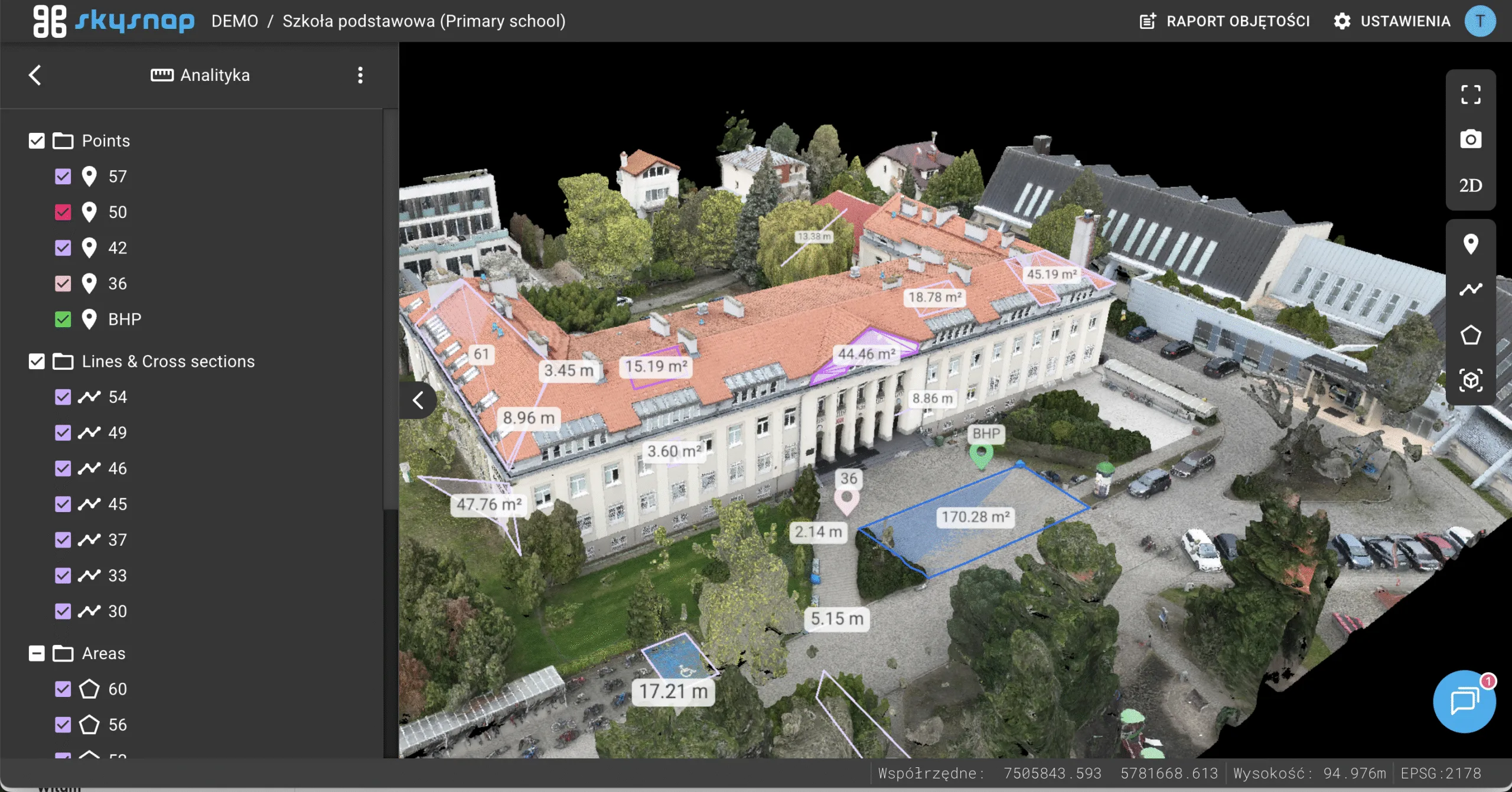
Monitoring of public spaces
Drones are an excellent tool for monitoring:
- large cities,
- parks,
- recreational spaces,
- public events.
In cities, they are used for:
- traffic observation,
- crowd control,
- rapid threat detection,
- Support from city services and the police.
In national parks, drones enable wildlife monitoring, helping to protect species and combat poaching.
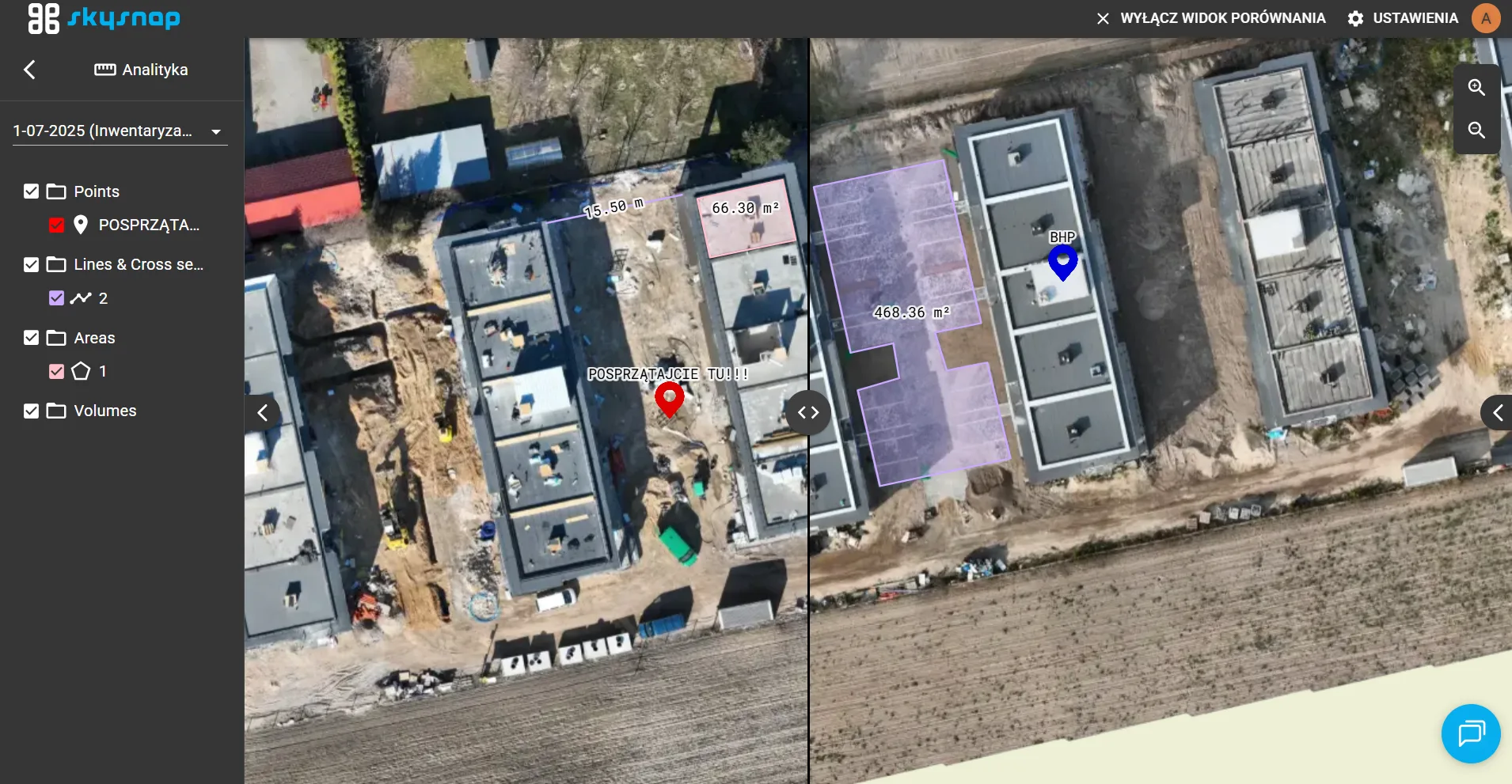
Safety and security of facilities
Drones are key in securing industrial and public facilities:
- detect intruders in real time,
- transmit images without delay,
- analyze traffic and potential threats,
- enable rapid security response.
During fires, chemical spills or natural disasters, drones provide immediate data, facilitating rescue workers’ efforts.
Use in agriculture
Drones are revolutionizing agriculture by:
- plant health monitoring,
- multispectral analysis,
- identification of areas requiring irrigation,
- Precise crop and fertilizer planning,
- field mapping.
This allows farmers to optimize costs, reduce losses and increase yields.
Benefits of using drones
The use of drones in surveillance brings a number of benefits that far outweigh traditional methods.
Efficiency and cost savings
Drones reduce costs by:
- fewer field personnel,
- No need to rent heavy equipment,
- Faster completion of tasks,
- Automation of repetitive activities.
They can perform operations in difficult, dangerous or inaccessible terrain.
Enhancing security
Drones protect workers by eliminating the need for labor:
- At heights,
- In contaminated areas,
- In disaster-prone areas.
With thermal imaging cameras and motion sensors, they identify threats faster than a human.
Real-time data collection
This is one of the biggest advantages of drones.
Drones can:
- transmit live video,
- Analyze data in real time,
- create sitemaps,
- make immediate decisions.
These functions are invaluable in rescue, agriculture, military and emergency management.
Challenges and limitations
Despite their immense capabilities, drones also have limitations that require the right approach.
Legal aspects and regulations
The biggest challenges are:
- flight altitude regulations,
- licensing and registration requirements,
- Ban on flights in controlled zones,
- The need to obtain approvals.
The law often fails to keep up with the technology, making it difficult to realize the full potential of drones.
Technical and logistical problems
The main problems include:
- Weather conditions (wind, fog, rain),
- battery range,
- signal interference,
- The need for drone transportation and service.
These are factors that need to be taken into account when planning the operation.
Ethics and privacy
Most vulnerable areas:
- Recording without consent,
- data protection,
- monitoring in public places,
- surveillance concerns.
Clear regulations and education of the public are key.
The future of drone surveillance
The future of drone surveillance promises to be impressive.
Innovation and new technologies
The most important upcoming solutions are:
- AI and full autonomization,
- IoT – connecting drones with smart devices,
- New materials to increase range and durability,
- swarming systems (drone swarms).
Integration with other systems
The drones will be part of a larger ecosystem:
- city cameras,
- IoT sensors,
- AI systems,
- urban command centers.
This will create next-generation integrated security systems.
The role of drones in the society of the future
Drones can become part of:
- smart cities,
- transportation systems,
- environmental monitoring,
- infrastructure management.
Their role will grow, affecting security, logistics and quality of life for residents.

Free E-book
Find out how UAV and AI support investment supervision, facilities management and the daily work of engineers. Learn about real-world applications of technology in construction and real estate.
Table of Contents:
Do you like the article? Share it with others!
Do you like the article? Share it with others!
Tips, news, insights
Related articles
Check out our articles and get the latest industry news.