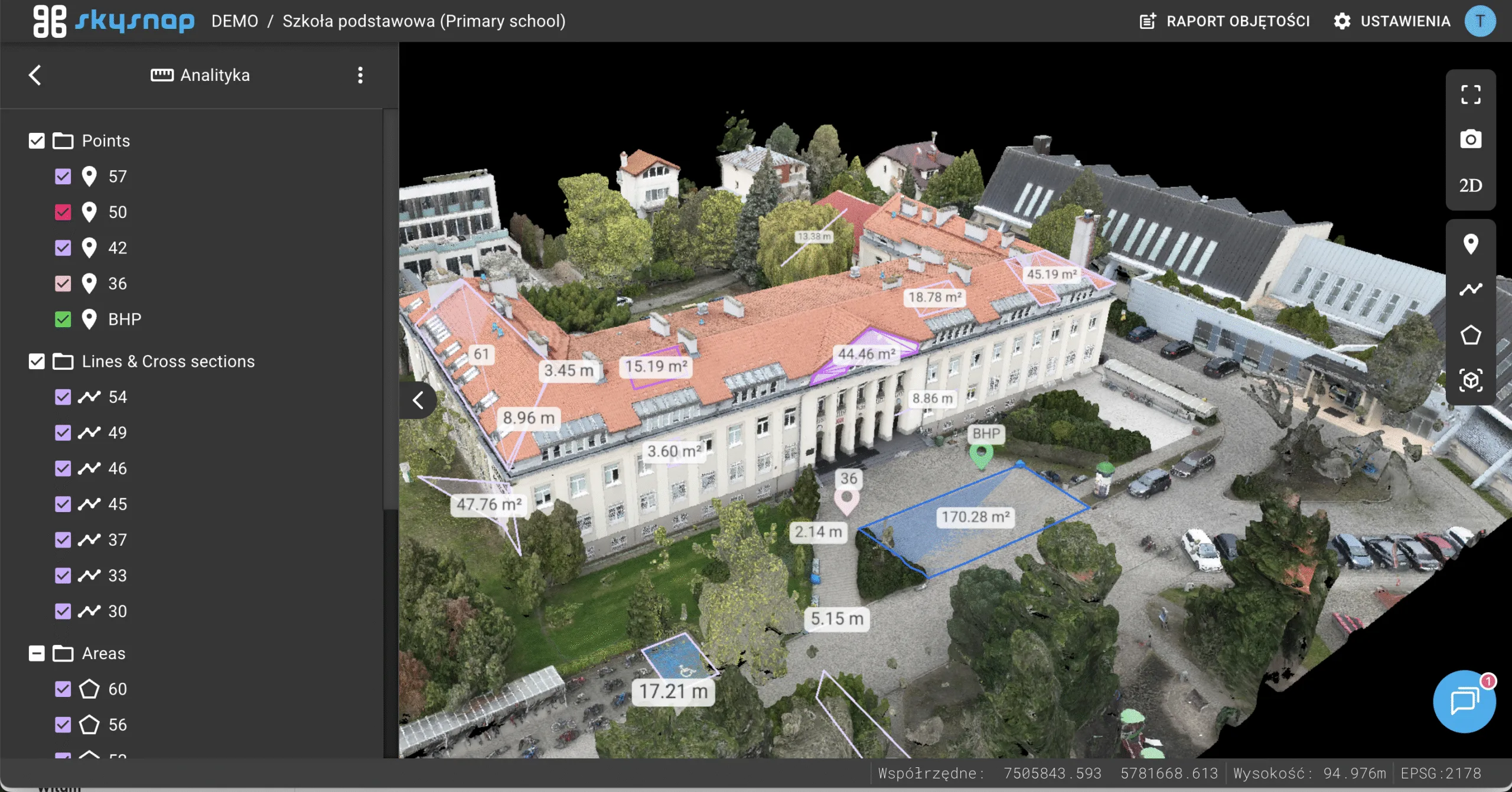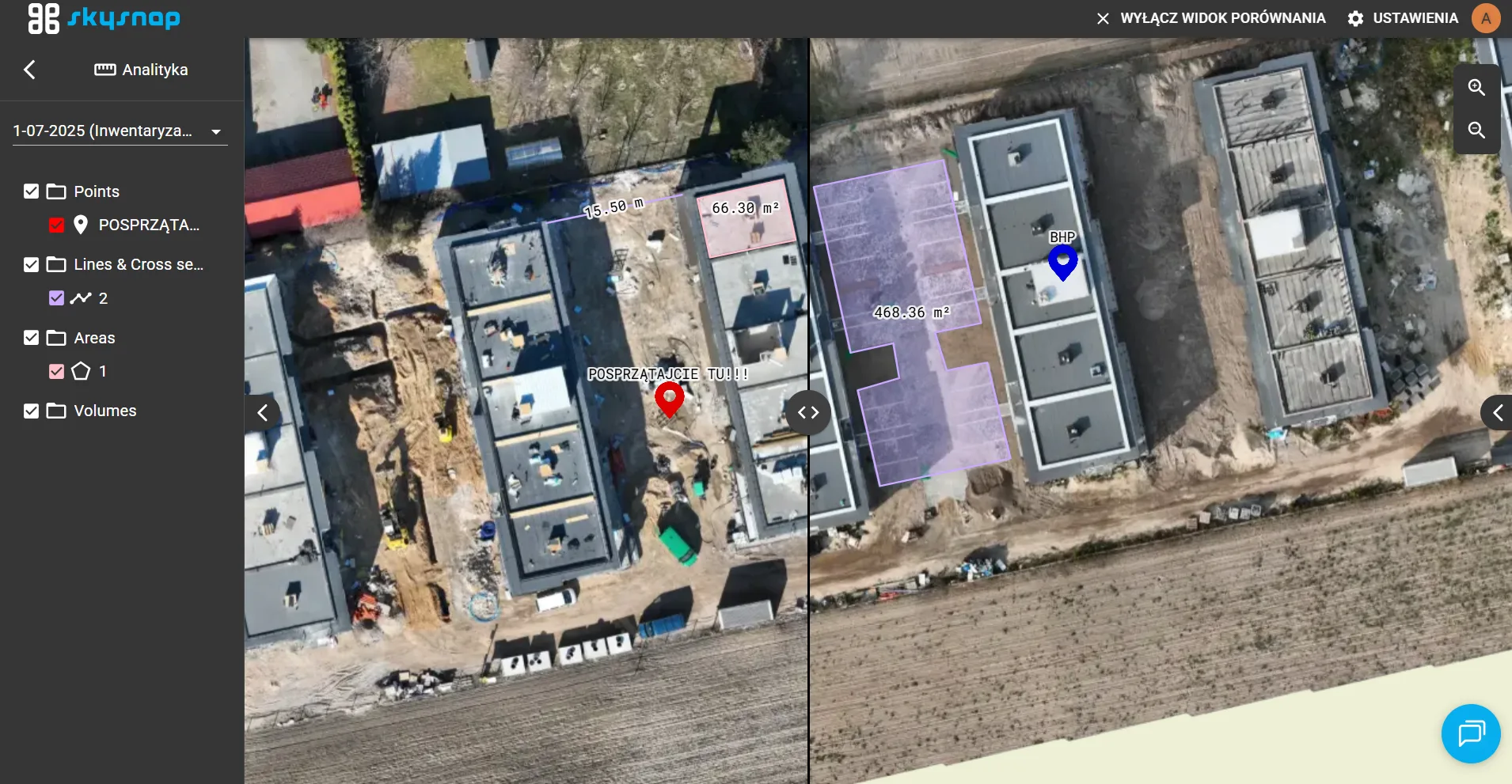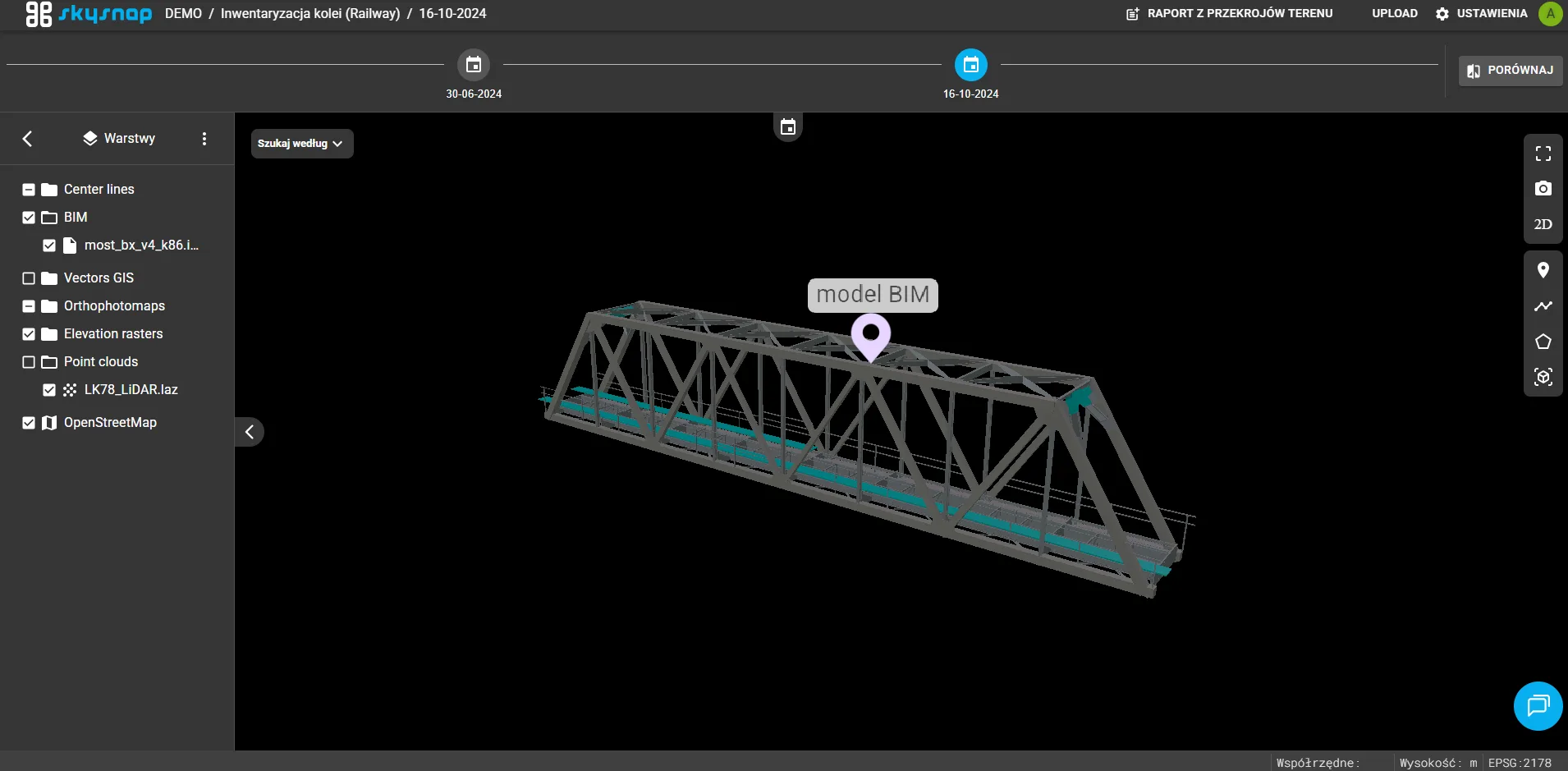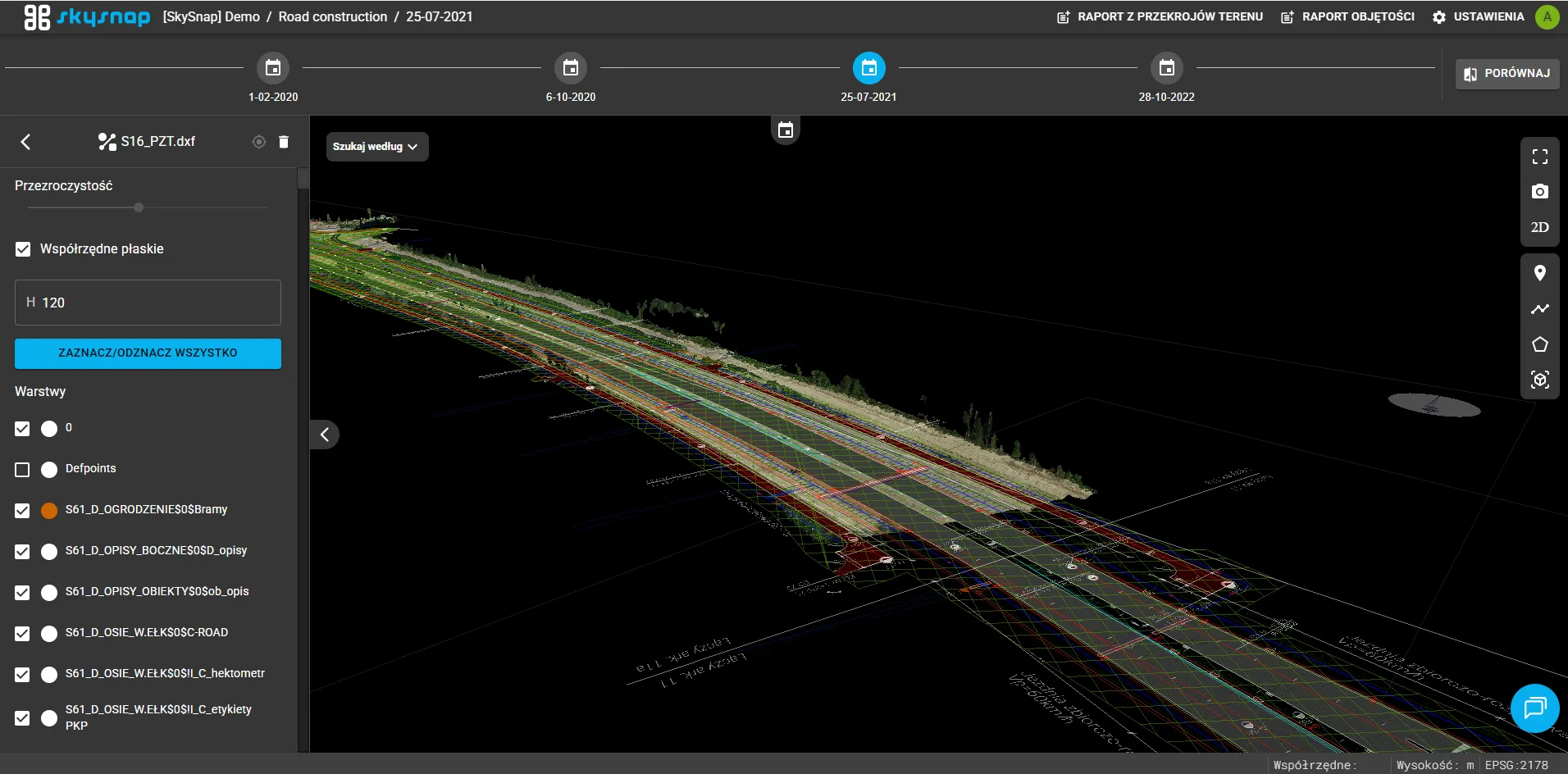
Surveying plays a key role in the modern world. Thanks to surveying, it is possible to precisely plan and implement many projects, from a single-family building, to large housing estates, to transportation networks, highway sections and airports. For some time now, alongside traditional surveying, land surveying by drone has become increasingly important. What is the difference between the two methods, and when is it worth using each?
Land surveying by drone vs traditional surveying – the differences
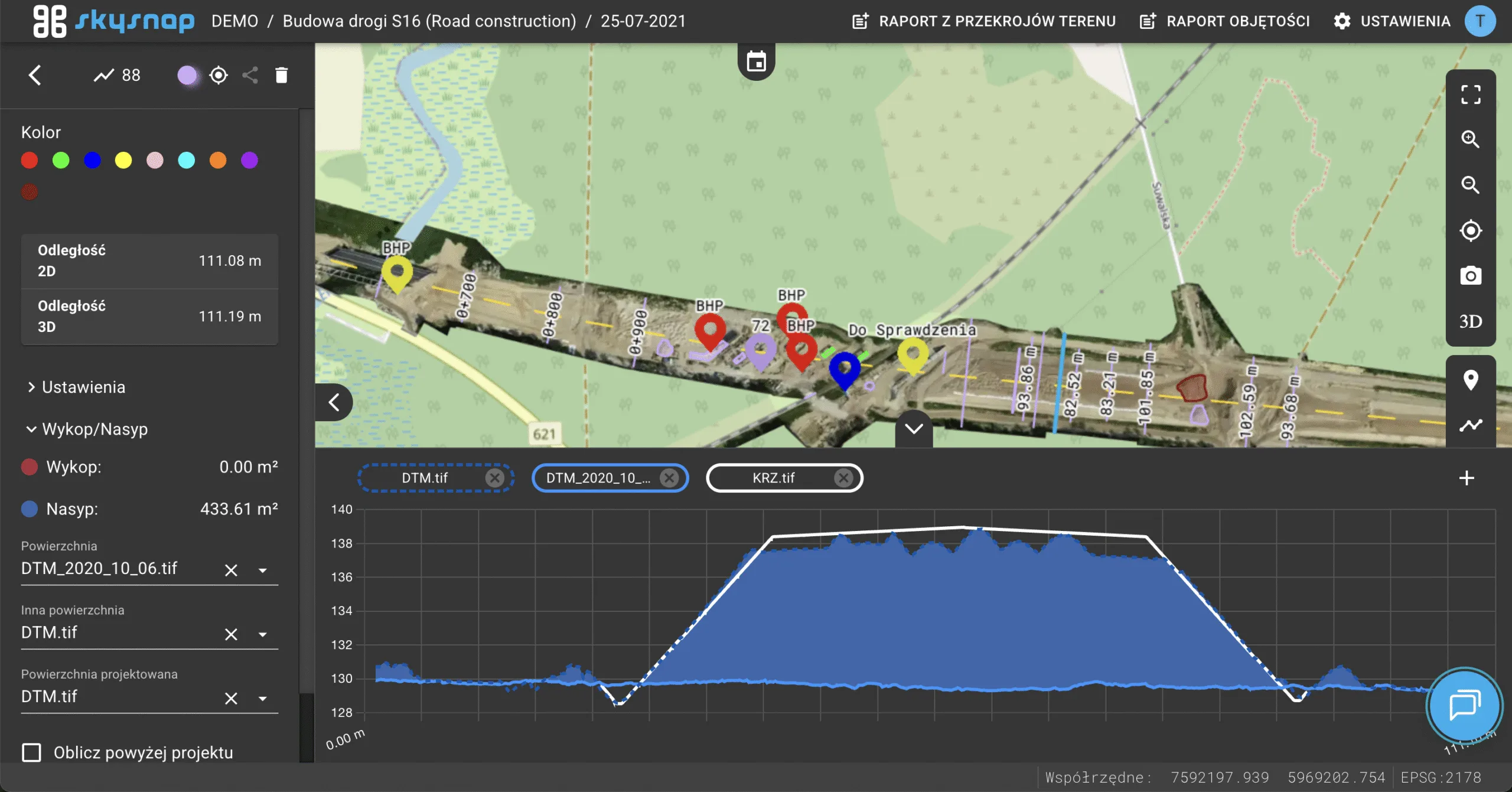
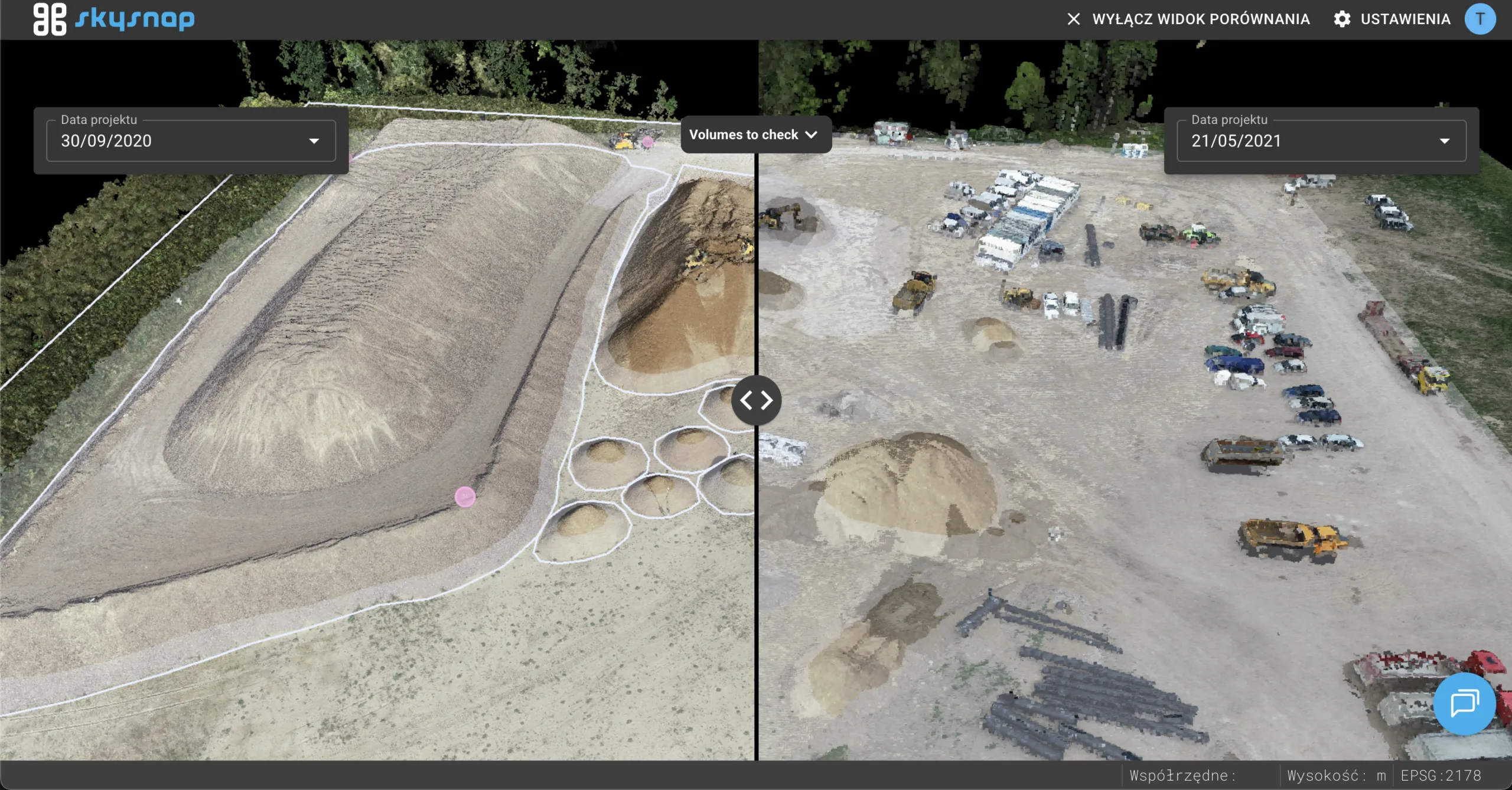
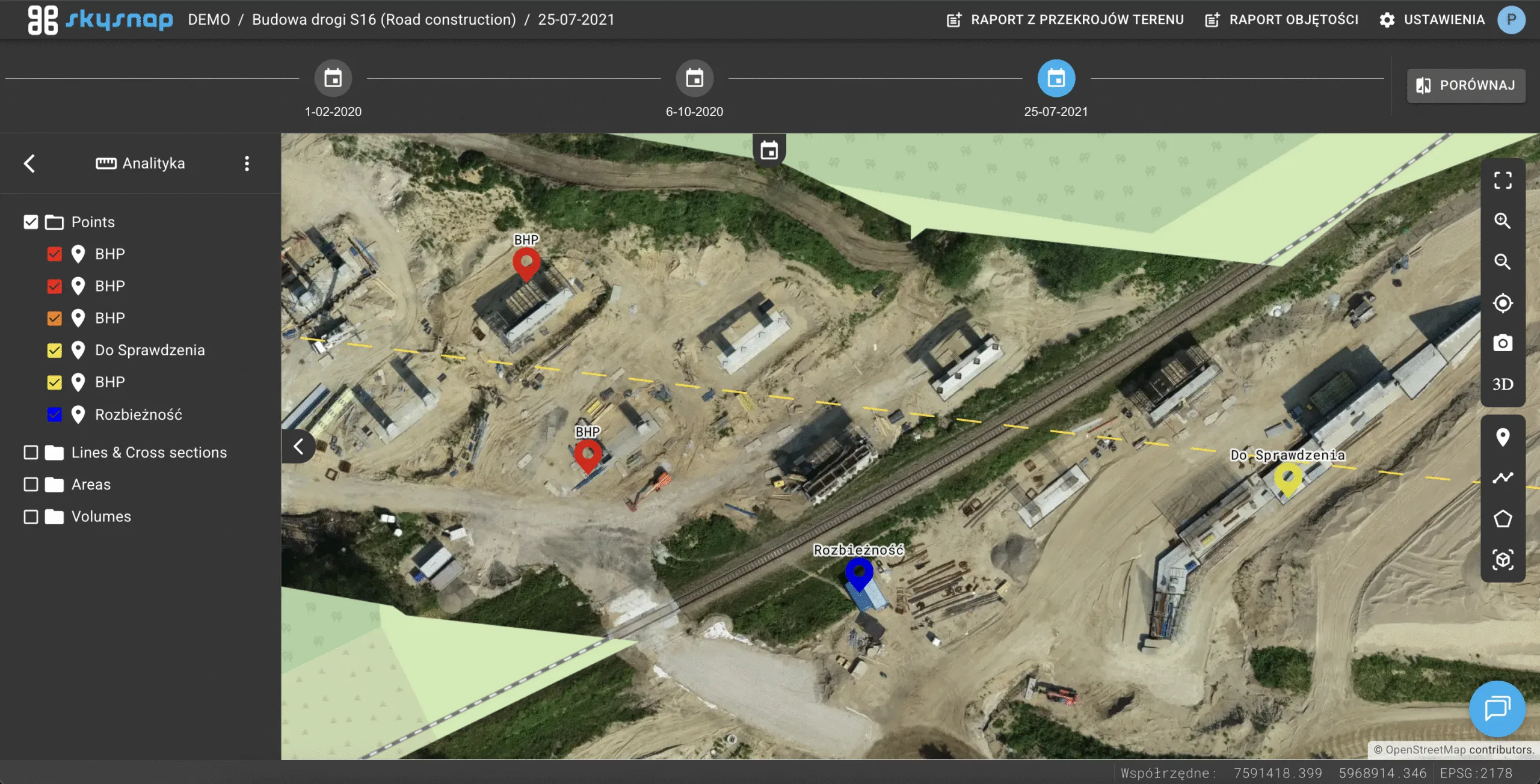
The main difference between drone land surveys and traditional surveying is the way they are carried out and the technology they use. Traditional surveying involves direct measurements in the field, using various types of surveying instruments. Drone surveying, on the other hand, takes place from a bird’s eye view, making it possible to obtain data from hard-to-reach or dangerous areas.
When to choose drone surveying?
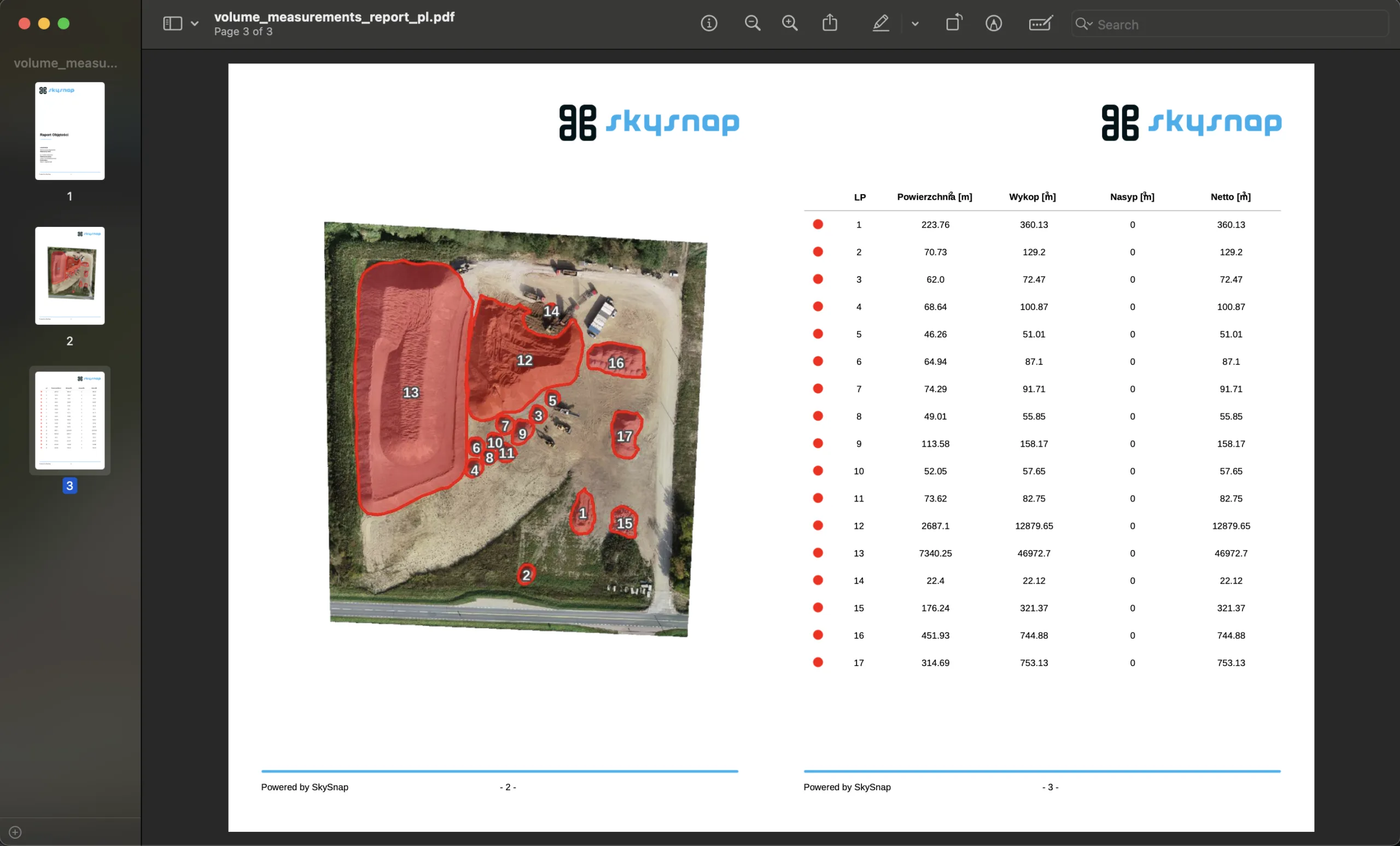
Drone land surveys are particularly beneficial for large areas of land that need to be measured in a short period of time. Examples include wind farms, power lines, highways or entire tracts of forest land. Additionally, it is an excellent solution for hard-to-reach areas such as mountains, swamps, wetlands or areas with a lot of vegetation or trees, where traditional methods may not be feasible.
Traditional surveying – when is it necessary?
On the other hand, traditional surveying still has its indispensable place. Basic surveying measurements are essential in cases such as the division of a plot of land, the creation of a site plan needed for the issuance of a building permit, or the change of a plot of land from agricultural to construction use. All these require extremely precise surveying measurements, which are usually carried out in the traditional way.
Land surveying by drone vs traditional surveying – summary
The choice between drone land surveying and traditional surveying depends on many factors, such as the area of land to be measured, its characteristics and accessibility. Drone surveying is an excellent solution that saves time and resources, especially when working with large areas. On the other hand, precision surveying requires a traditional approach that guarantees precision and accuracy. Ultimately, the decision between the two methods should depend on the specifics of the project being conducted.
Tips, news, insights
Related articles
Check out our articles and get the latest industry news.