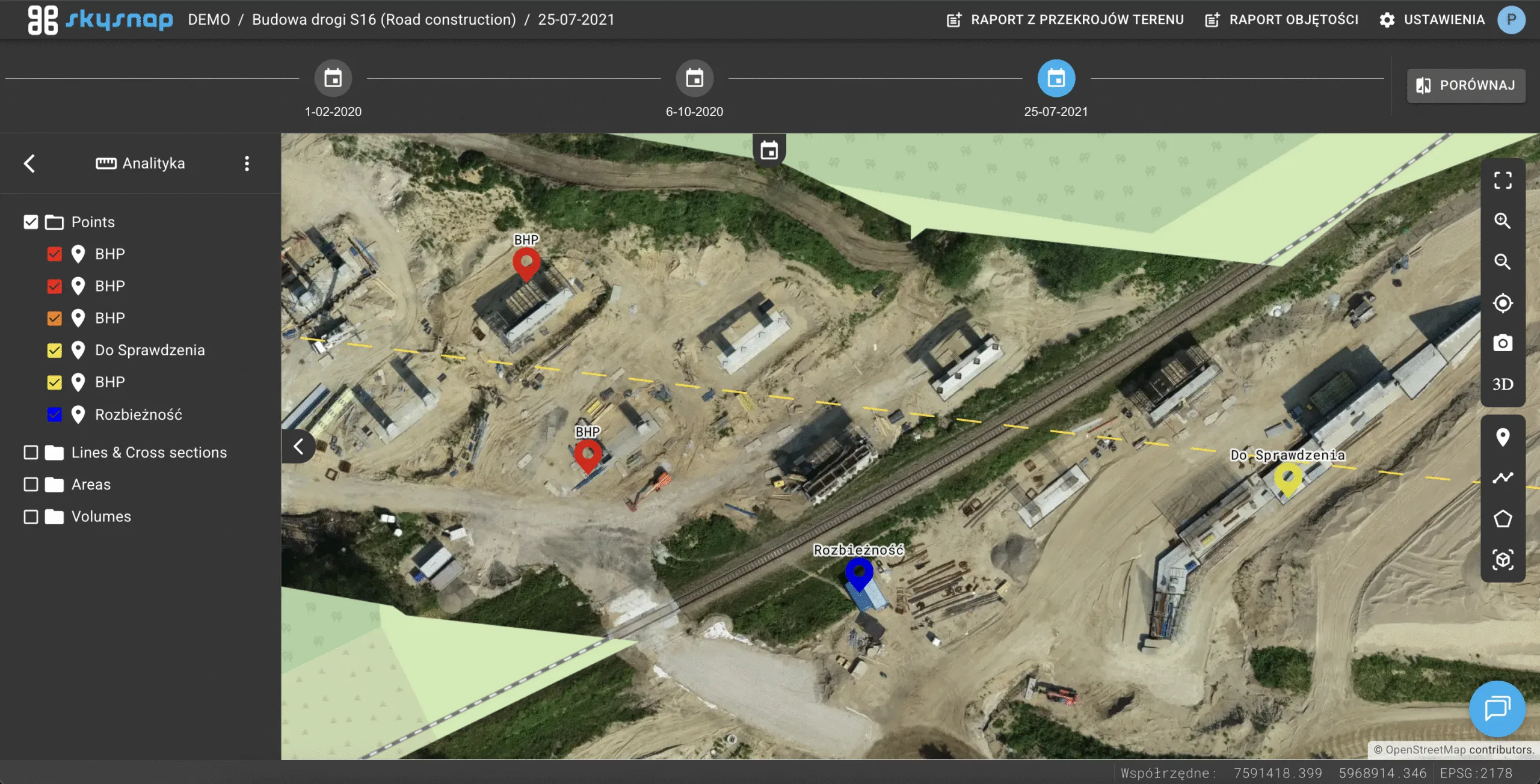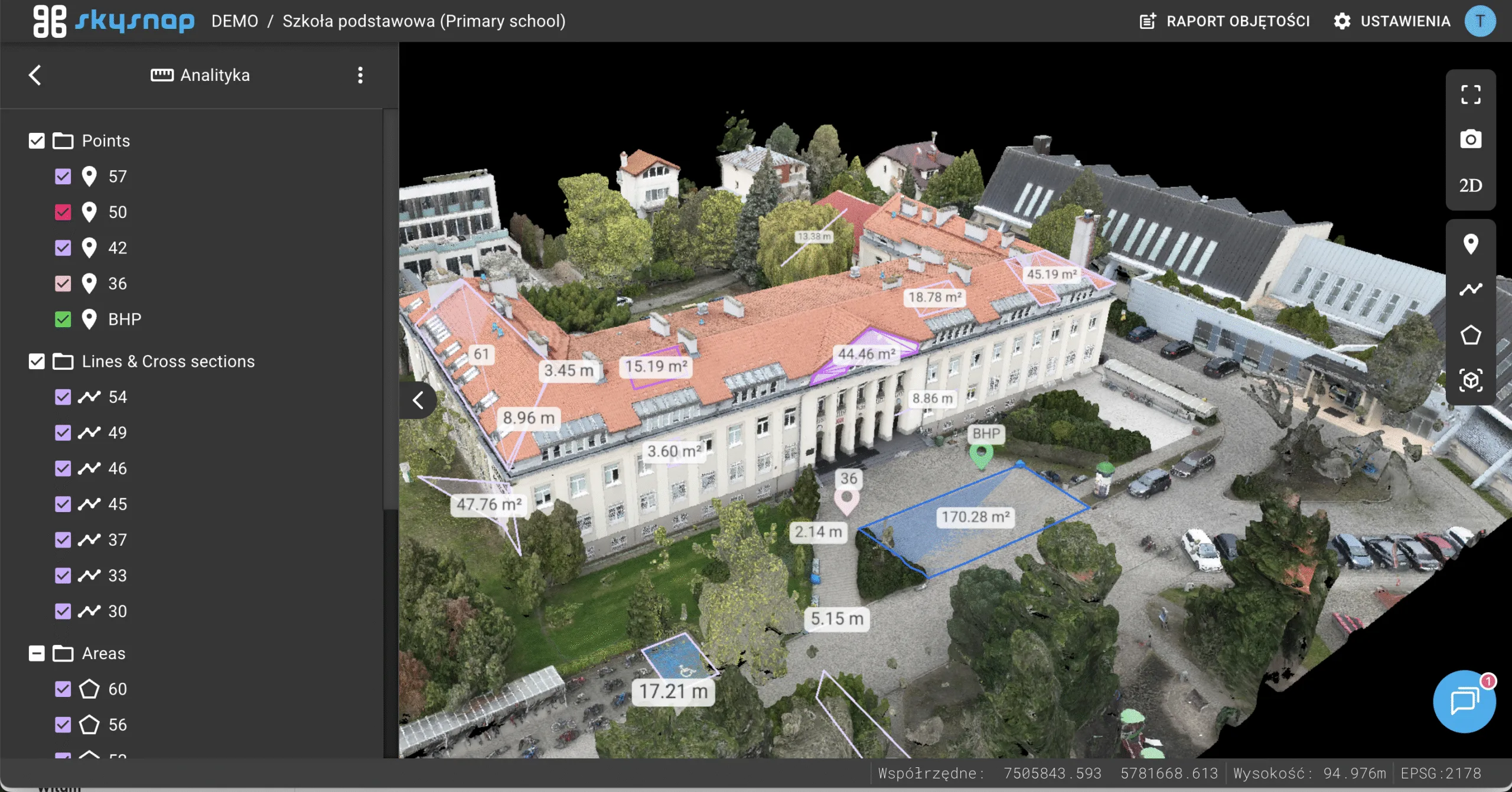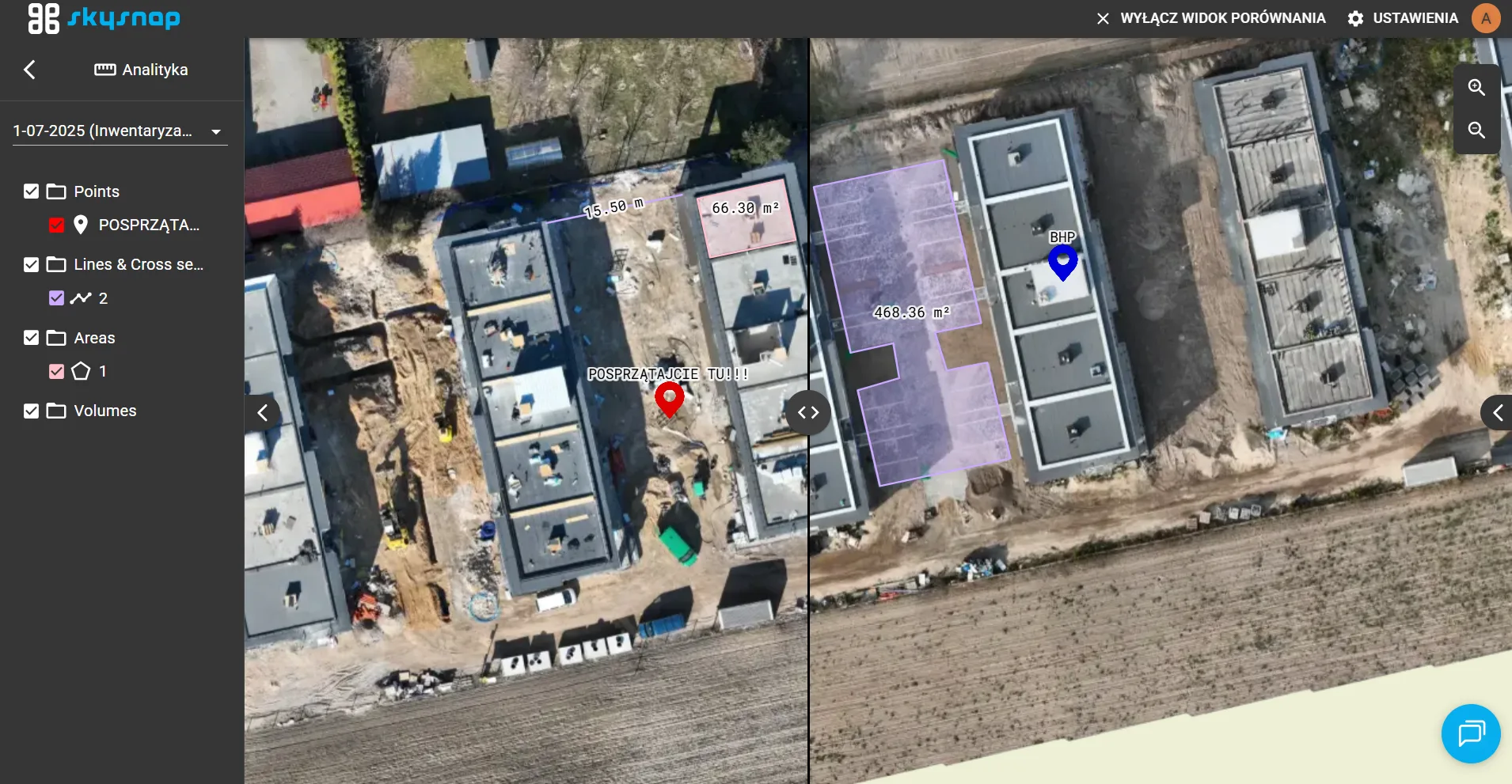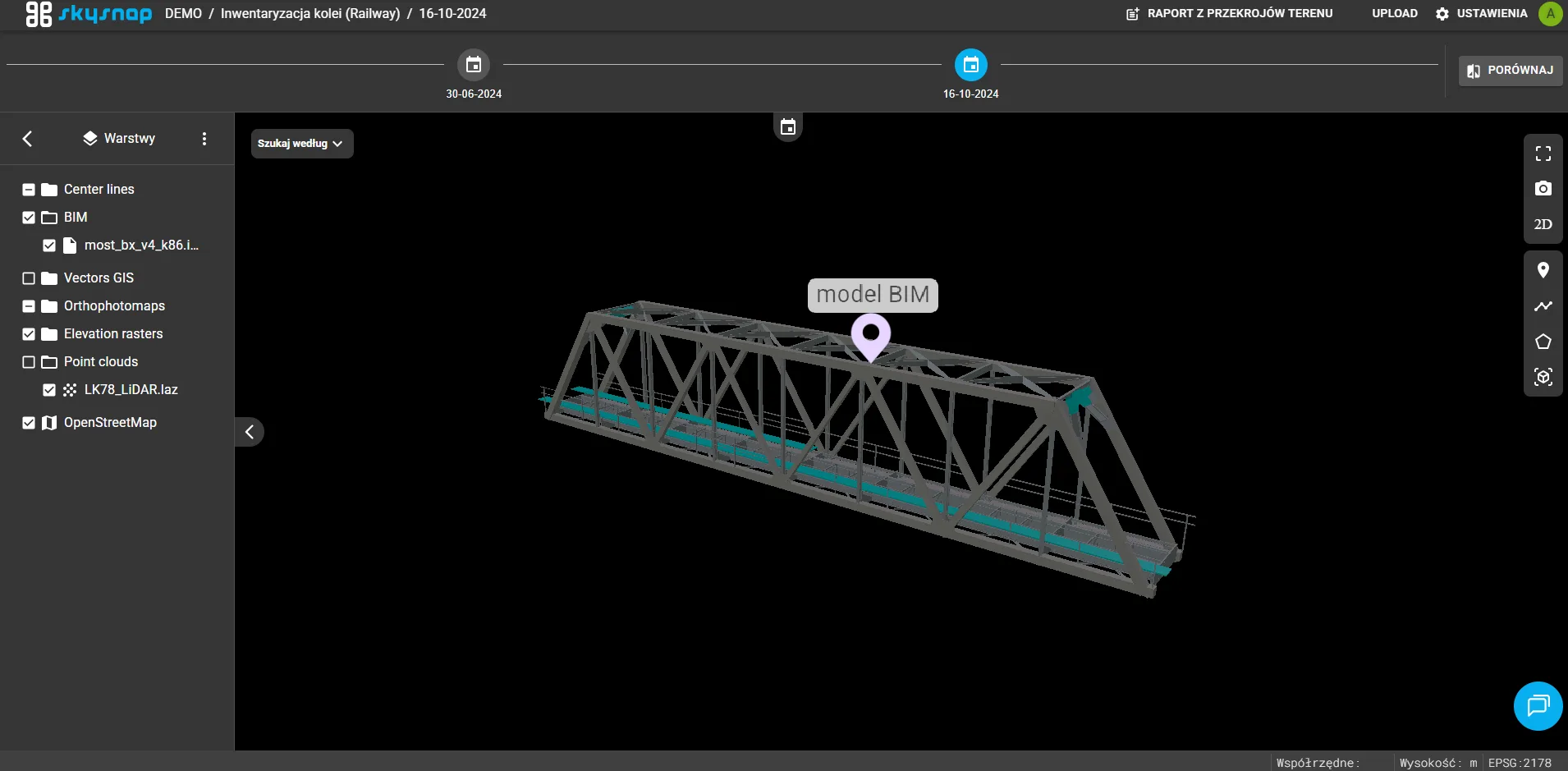
Traditional diagnosis of these sites has always been a road through an ordeal. Renting lifts, setting up scaffolding or engaging mountaineers generates huge costs and paralyzes the life of the facility. As a result, many technical decisions are made “by eye” or based on binocular observation. This is a straight road to financial disaster: either we miss the moment for a low-cost repair, or we order a blind repair, only to discover after the team enters the roof that the budget has to be doubled.
Drone inspection is a new paradigm. It’s a fast, non-invasive and safe “screening” of an object that turns guesses into hard data.
Three pillars of an effective inspection
For a drone report to be useful, it must focus on the three key areas that generate the most maintenance costs.
1. roof slopes – the heart of building protection
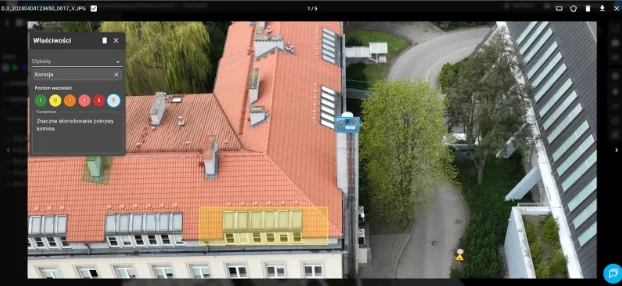
The roof is the most expensive element to maintain. From the drone, we evaluate not only the roofing itself, but also the details: chimneys, skylights, attics and drainage systems.
For example, detecting a blister under the roofing felt and repairing it for £500 now, avoids replacing the soggy insulation for £50,000 a year. Dry insulation means lower heating bills and no mold in top floor apartments.
2. facades and insulation systems (ETICS)
Micro cracks in plaster are not just aesthetics. They are gaps through which water gets under the insulation, bursting it during frost. A drone can map these spots with millimeter precision, and the use of thermal imaging cameras instantly exposes thermal bridges and workmanship errors at windows.
3. balconies and loggias
These are the most inflammatory points in relations with tenants. White salt efflorescence or rust stains visible on the underside of the balcony slab is a clear signal to us: the insulation under the tiles no longer exists. This knowledge allows us to save the balcony structure from demolition.
A process that guarantees quality
A reliable inspection is not “flying a drone and taking a few pictures.” It’s a 5-step engineering process:
- Determining the purpose: Are we gathering evidence for court or preparing specifications for the work order and cost estimate?
- Shot plan: Every defect must have a general (context) and detail (detail) photo. Just a picture of a crack without knowing where it is on the wall is worthless.
- Data acquisition: Using high-resolution RGB sensors and thermal imaging, which “sees” moisture hidden under the roofing paper.
- Engineering analysis: this is where the magic happens. We turn raw pixels into a list of priorities – from critical defects (construction hazards) to cosmetic ones.
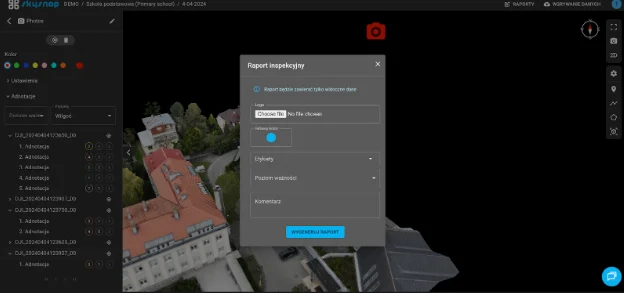
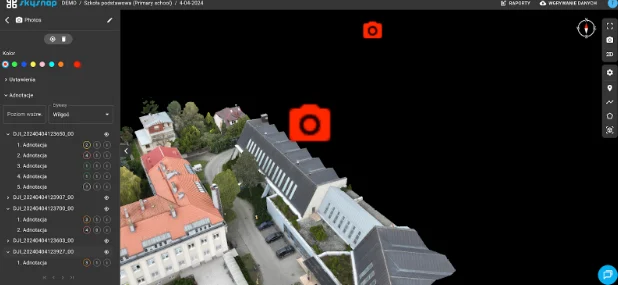
- Knowledge distribution: We provide the results in the form of an easy-to-read PDF and an interactive online portal where the building can be viewed as a 3D model.
Data vs. Opinion: What are you actually paying for?
You will encounter a huge price spread on the market. It is due to a simple dichotomy. The cheapest listings are usually the data itself – a ZIP folder with thousands of unscripted images that the administrator has to analyze himself. This is a waste of time.
A professional service is an expert opinion. You pay for the engineer to not only show you the red spot on the thermogram, but explain: “It’s not a leaking pipe, it’s progressive dampening of the mineral wool by an error in the attic treatment. We recommend a spot uncovering in the C-4 axis.”
Summary: Your next step
If your building is facing recurring failures, and successive repair teams are spreading their hands – it’s time for an aerial diagnostic. Choosing the right standard (from a simple inventory to a full structural opinion) will allow you to stop “putting out fires” and start consciously managing your property’s capital.
Free E-book
Learn what services to offer, who to sell them to, and how to write an effective offer email. Ready-made templates, tips and examples of campaigns that really work.
Table of Contents:
Do you like the article? Share it with others!
Do you like the article? Share it with others!
Tips, news, insights
Related articles
Check out our articles and get the latest industry news.