How does a drone with an infrared camera work – and what can you do with it?
Thermal imaging cameras on drones are more than a gadget – they’re a precise tool for detecting heat, locating defects and working where the eye can’t reach. In 2025, it’s already the standard in the engineering, construction and inspection industries.
How does it work?
Every object emits heat → IR camera captures it → data is converted to a thermal image.
Red = warmer areas. Blue = cooler ones. Simple.
| Type | Pros | When it’s worth it |
|---|---|---|
| Cooled | Ultra-precise, long range | Energy, technical research |
| Uncooled | Lighter, cheaper, sufficient for most tasks | Construction, agriculture, inspection |
3 specific applications
1. technical inspections
- Bridges, power lines, roofs – you can see overheating, leaks, short circuits
- No need to move from your seat – all from the air
2 Rescue
- Thermal imaging sees people in the dark and in the woods
- Reduces search time from hours to minutes
3. precision agriculture
- Early detection of disease and drought
- Optimize watering and fertilization
What do you need to know as an operator?
- Thermal imaging requires skillful interpretation – colors tell, but not everything
- Always plan missions in good weather – humidity and wind disrupt data
- Match the camera to the orders – don’t overpay for a refrigerated one if you don’t need it
A drone with thermal imaging is the new standard in technical assignments.
If you do inspections, reports for industry or rescue – it’s time for IR to be in your arsenal.
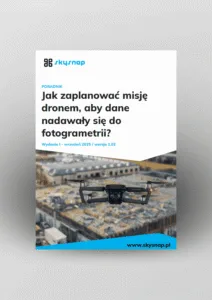
Free E-book
Learn how to prepare a mission step-by-step, avoid raid mistakes and create accurate orthophotos and 3D models. The perfect guide before your first commercial assignments.
Table of Contents:
Do you like the article? Share it with others!
Do you like the article? Share it with others!
Tips, news, insights
Related articles
Check out our articles and get the latest industry news.