Drone photogrammetry: What is it and how does it work?
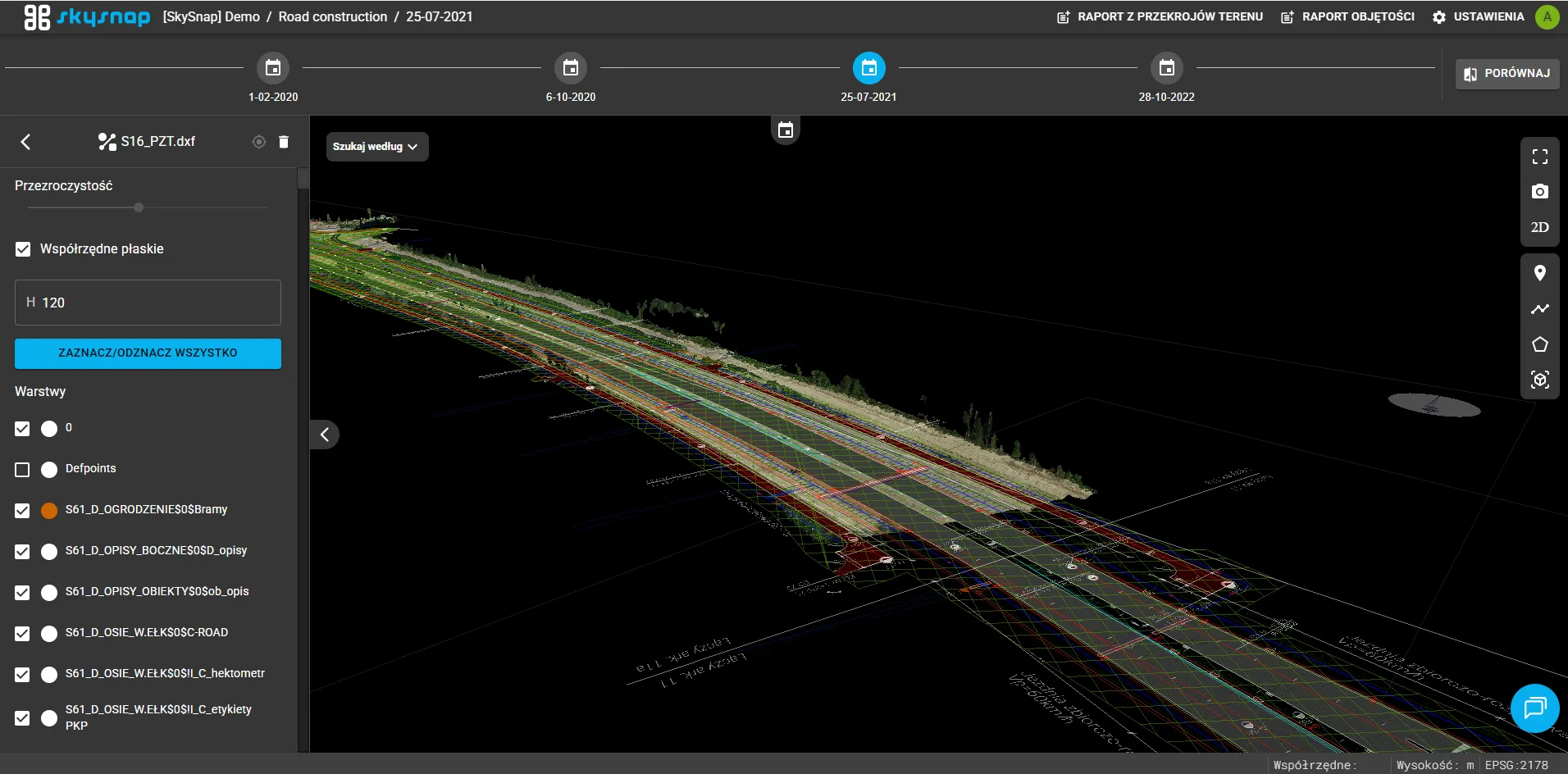
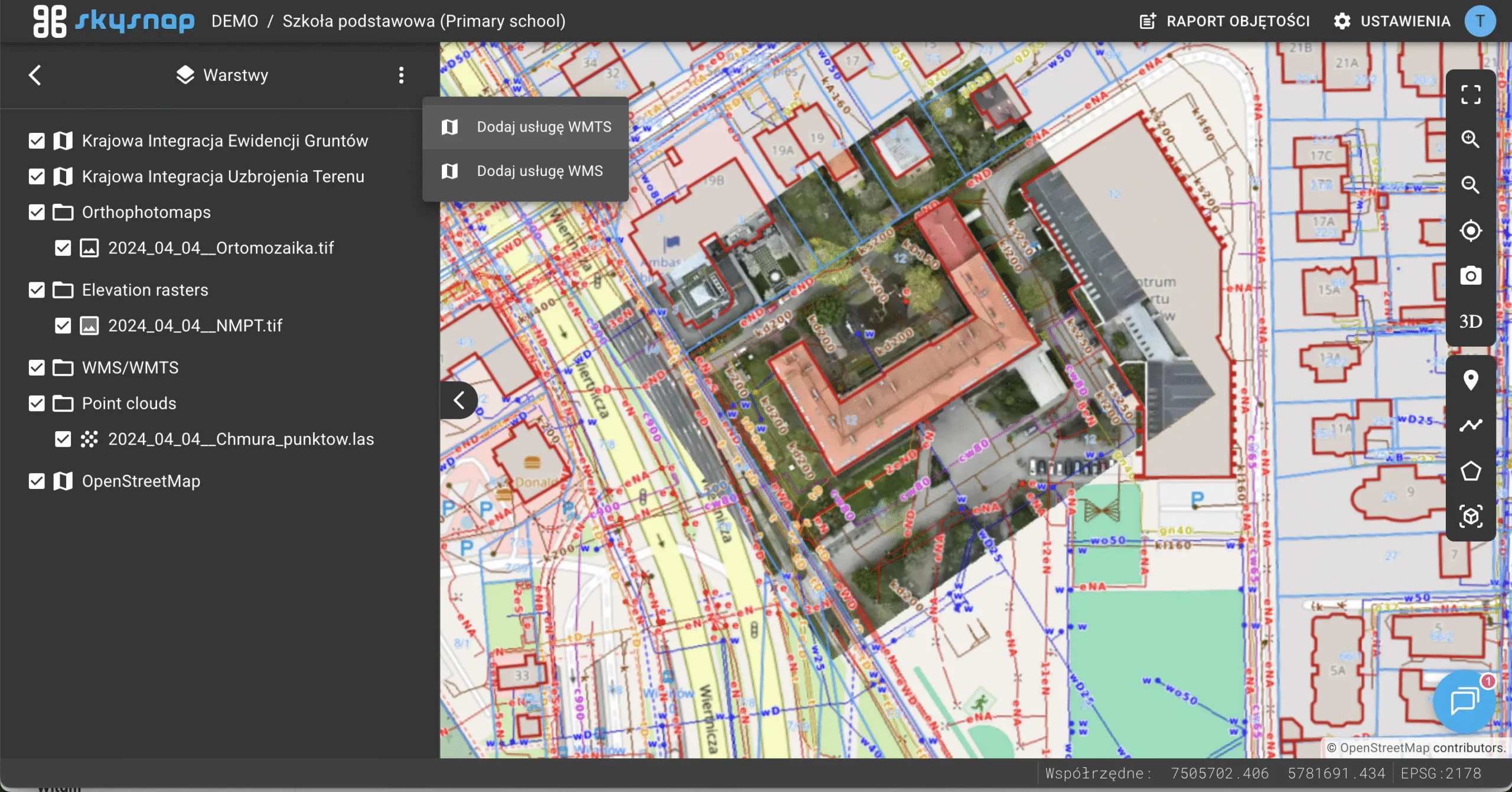
Drone photogrammetry is a modern technology that is gaining popularity in various fields such as architecture, agriculture and surveying. It involves the use of drones equipped with cameras to create accurate maps and 3D models of the area. This makes it possible to quickly and accurately collect data from hard-to-reach places, which previously required time-consuming and expensive methods. In this article, we’ll take a look at how drone photogrammetry works, its applications and the benefits of using it. We invite you to discover how this technology is revolutionizing the way we perceive and analyze the world around us.
Introduction to drone photogrammetry
Drone photogrammetry is a rapidly growing field that is gaining importance in many industries. Its basis is the collection of data from the air using drones to create detailed maps and 3D models. In this section, we take a closer look at the basics of the technology and its evolution over the years.
Definition and basics
Drone photogrammetry involves the use ofdrones equipped with cameras to collect visual data, which is then converted into 3D models. The main goal of this technology is to obtain accurate spatial representations that can be used in various applications. The technology combines both drone piloting skills and advanced photography techniques.
The basics of photogrammetry include the science of aerial photographs, which are processed using special software. This makes it possible to obtain high-resolution models. It also uses advanced computer algorithms that analyze images from different perspectives to create three-dimensional maps.
The key element here is the accuracy and precision of the collected data, which makes drone photogrammetry extremely valuable for applications requiring detailed spatial analysis.
History and development of technology
The history of photogrammetry dates back to the 19th century, when aerial photography began to be used to create maps. Initially, this was done with the help of balloons and kites, which made it possible to take pictures from altitude.
The development of technology accelerated significantly in the 20th century with the advent of aircraft and advanced cameras. Drones have brought a new quality to the field, enabling even more accurate and accessible data collection.
In recent years, drone photogrammetry has grown in popularity due to advances in technology, as well as falling hardware and software costs. Today, it is an integral part of many research and commercial projects, offering accuracy and flexibility previously unavailable
Application of drone photogrammetry
Drone photogrammetry is widely used in various economic sectors. From the construction industry to agriculture, the technology is changing the way we analyze and manage space. In this section, we take a closer look at the different areas of its application.
Construction industry and inspections
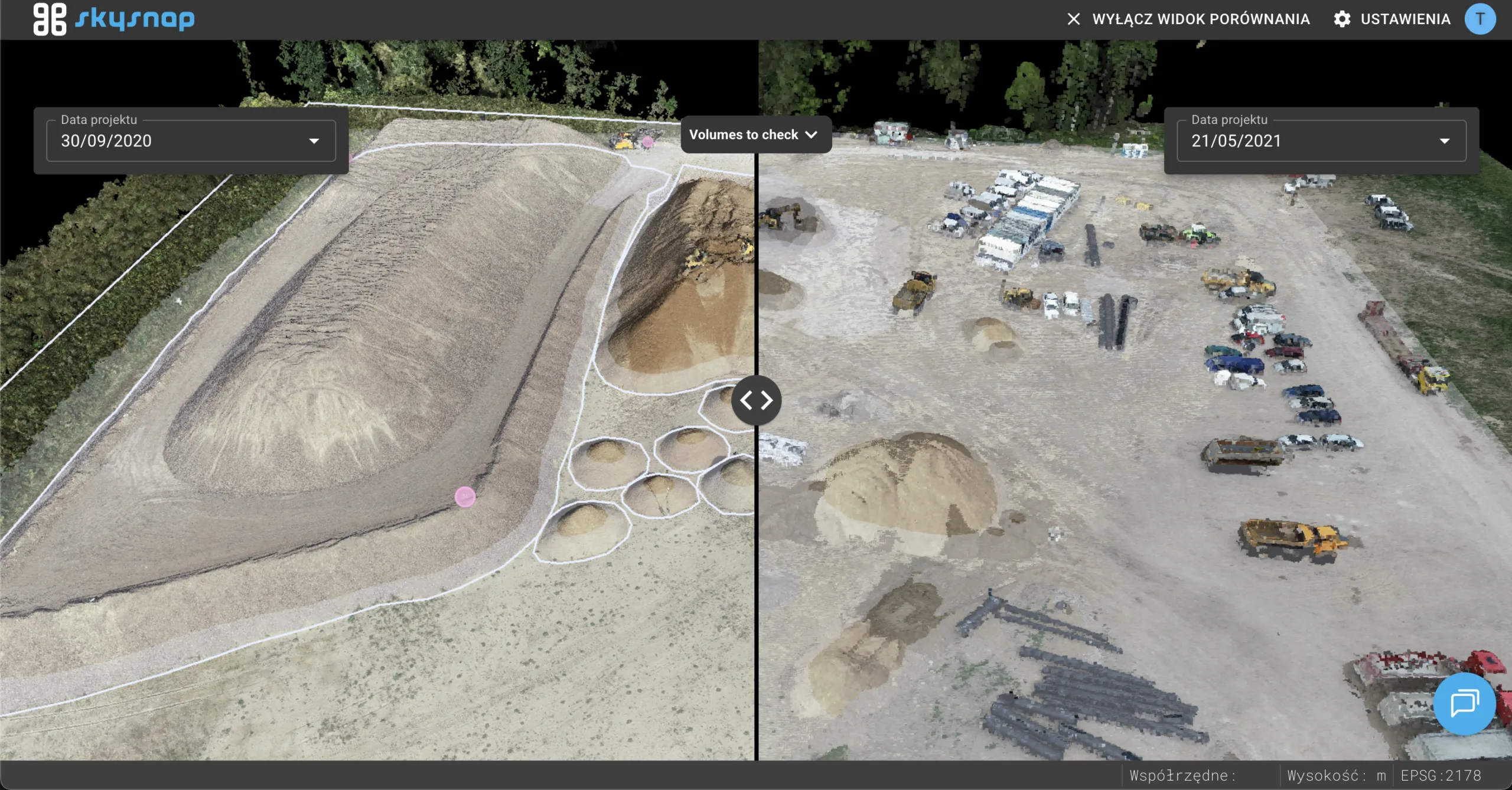
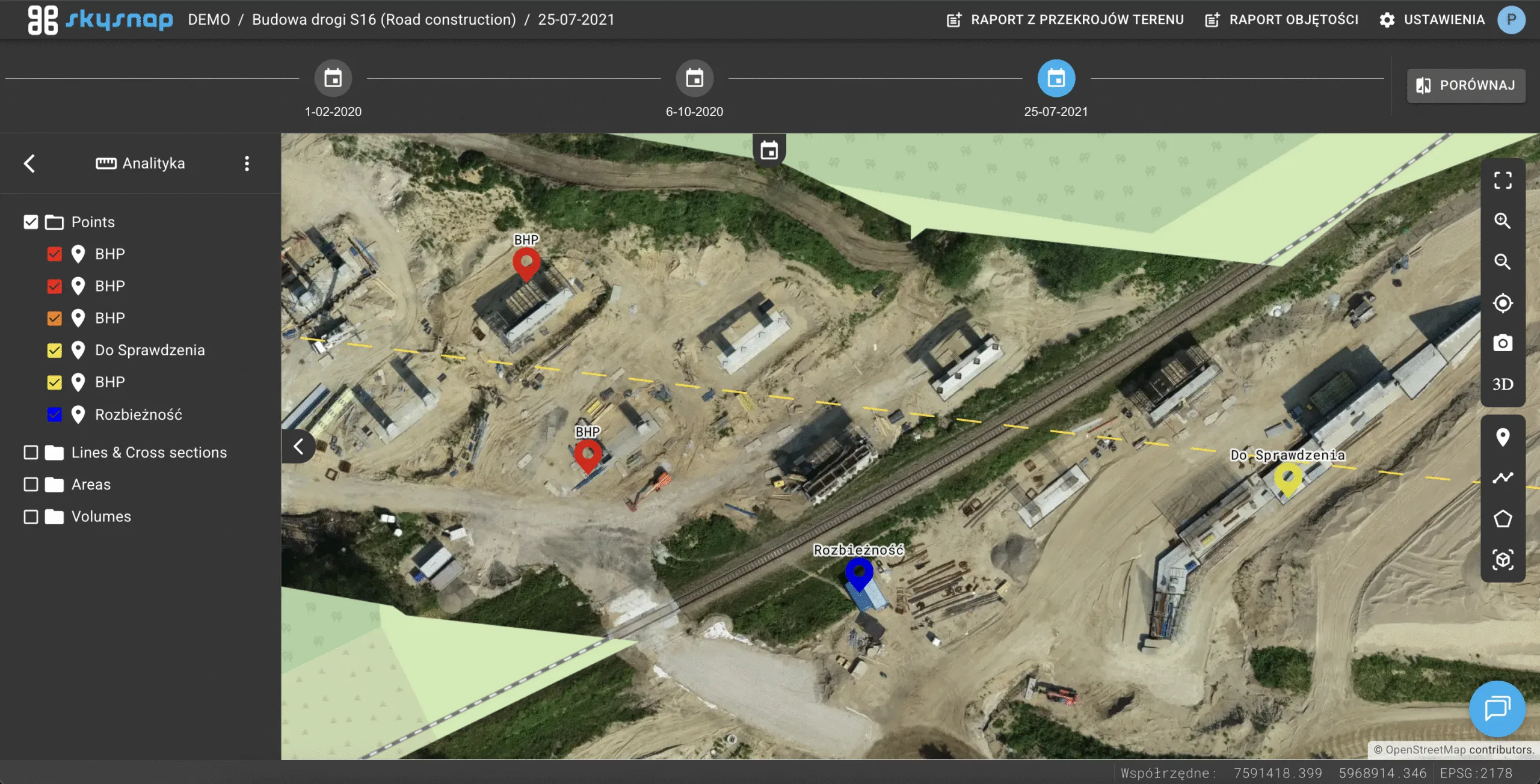
In the construction industry, drone photogrammetry plays a key role in monitoring the progress of work and inspecting the condition of buildings. With drones, it is possible to take pictures of a construction site from different perspectives, allowing for accurate tracking of progress.
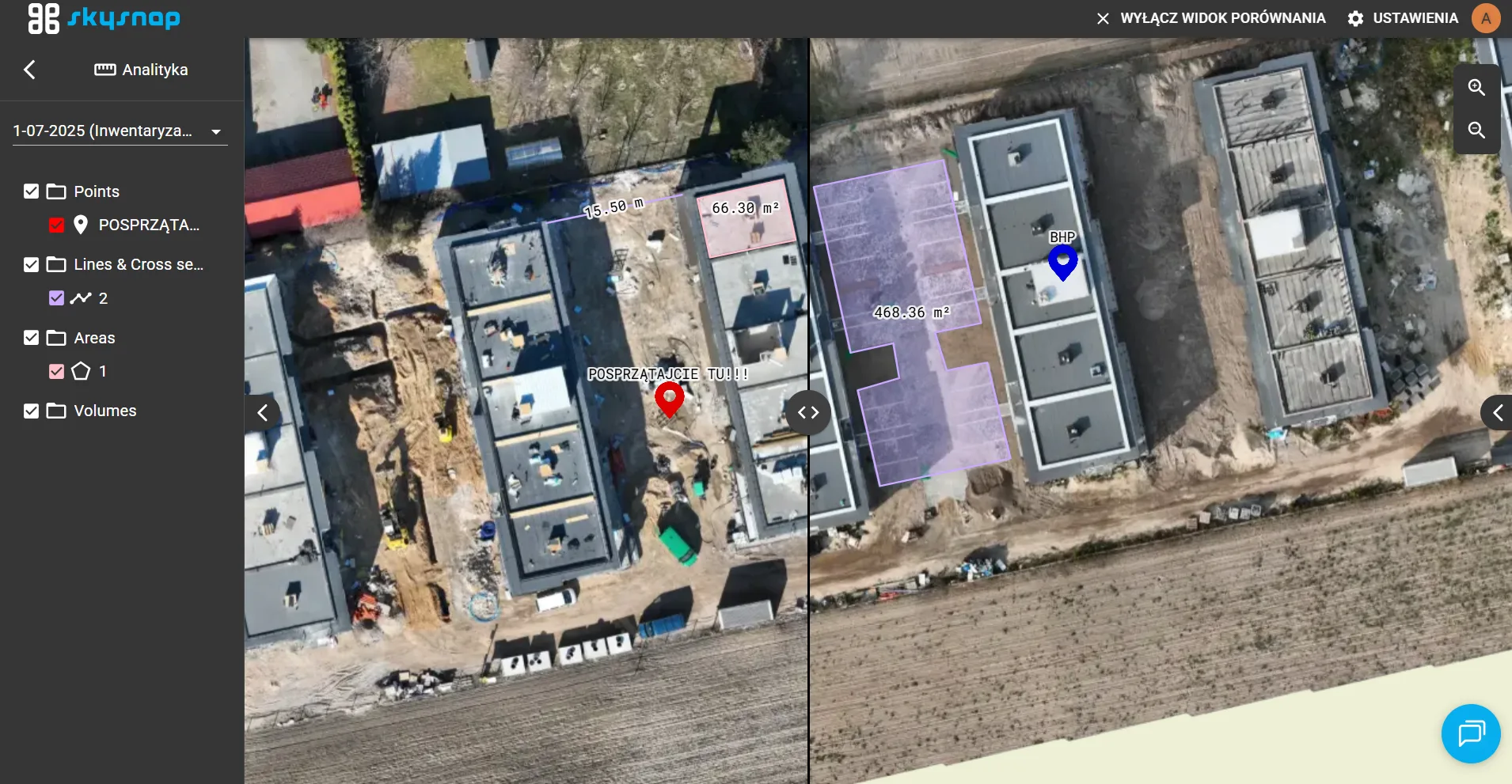
- Monitoring progress: Regular aerial surveys make it possible to accurately compare plans with the actual state of construction.
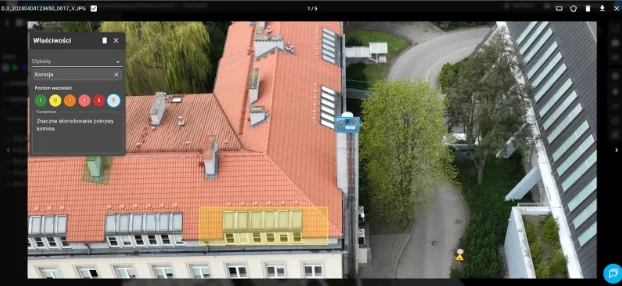
- Condition inspections: Drones can quickly and safely deliver images of hard-to-reach areas such as rooftops and tall structures.
- Safety: The use of drones minimizes risks for workers, who do not have to expose themselves to the dangers of working at heights.
Drone photogrammetry also enables precise planning of future construction phases, providing the necessary data for analysis.
Precision agriculture
In precision agriculture, drone photogrammetry is being used to optimize cultivation processes. With drones, farmers can monitor the condition of crops in real time and detect problems before they become serious.
- Monitoring plant health: Analyzing images from the drone can assess plant health and detect water stress or disease.
- Irrigation accuracy: Drones can provide data to accurately manage irrigation, which is crucial for crop efficiency.
- Fertilization efficiency: With detailed maps, fertilization can be better planned, resulting in better yields.
Precision agriculture using drones is the future of efficient and sustainable crop management.
The process of photogrammetry
The process of drone photogrammetry involves collecting data and processing and analyzing it. This makes it possible to obtain detailed terrain models and maps to support various projects and studies.
Data collection with drones
Flight planning: At the outset, the drone’s flight route is determined, taking into account the area to be surveyed and the required image parameters.
- Taking pictures: The drone flies a planned route, taking photos at a set frequency and angle.
- Quality control: After the mission is completed, the collected images are checked for quality and completeness.
- Data collection: Using drones is fast and efficient, making this method ideal for analyzing large areas.
Data processing and analysis
Data collection is followed by data processing, which involves several key steps:
- Image loading: Images are imported into specialized photogrammetric analysis software.
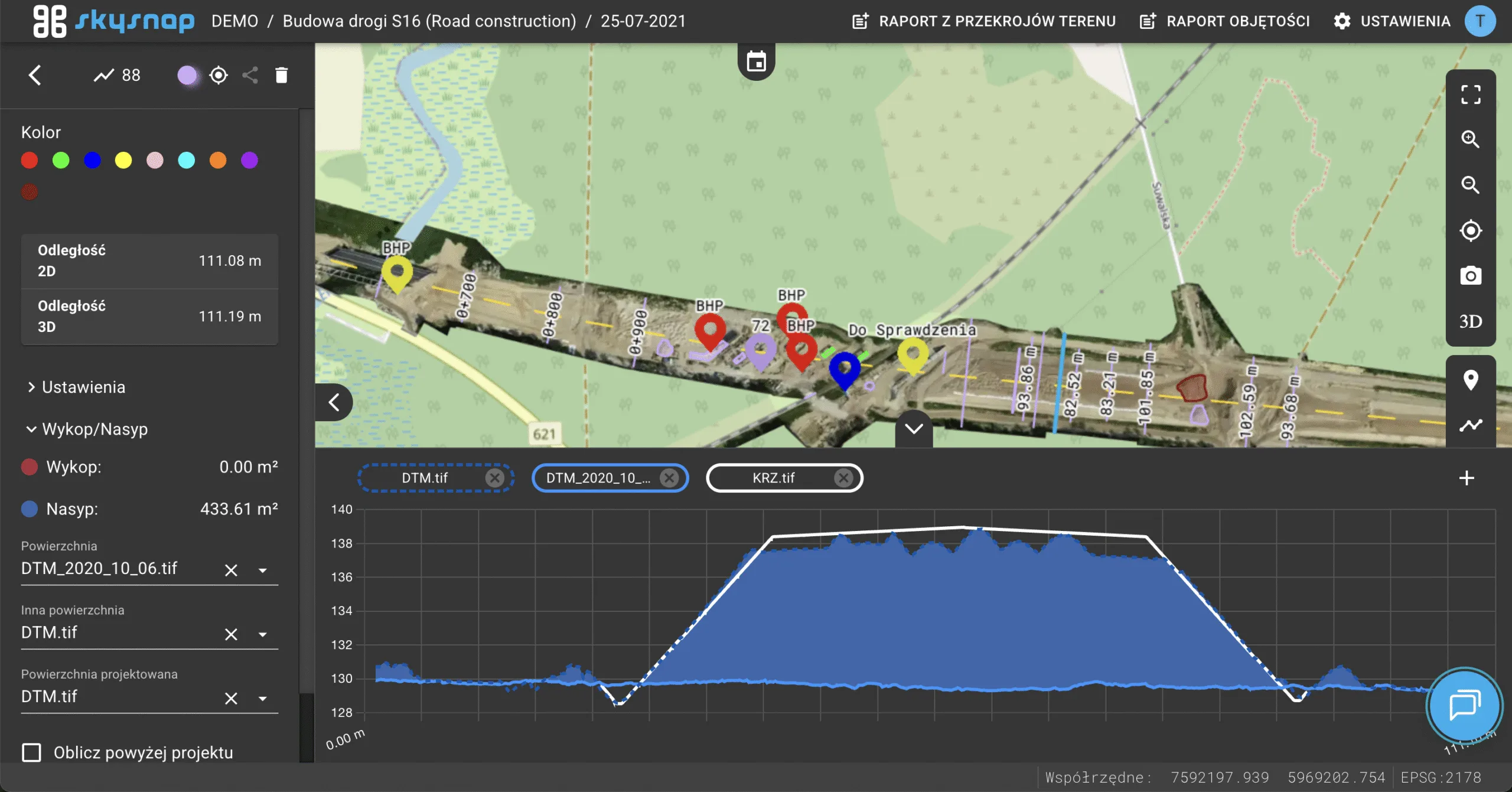
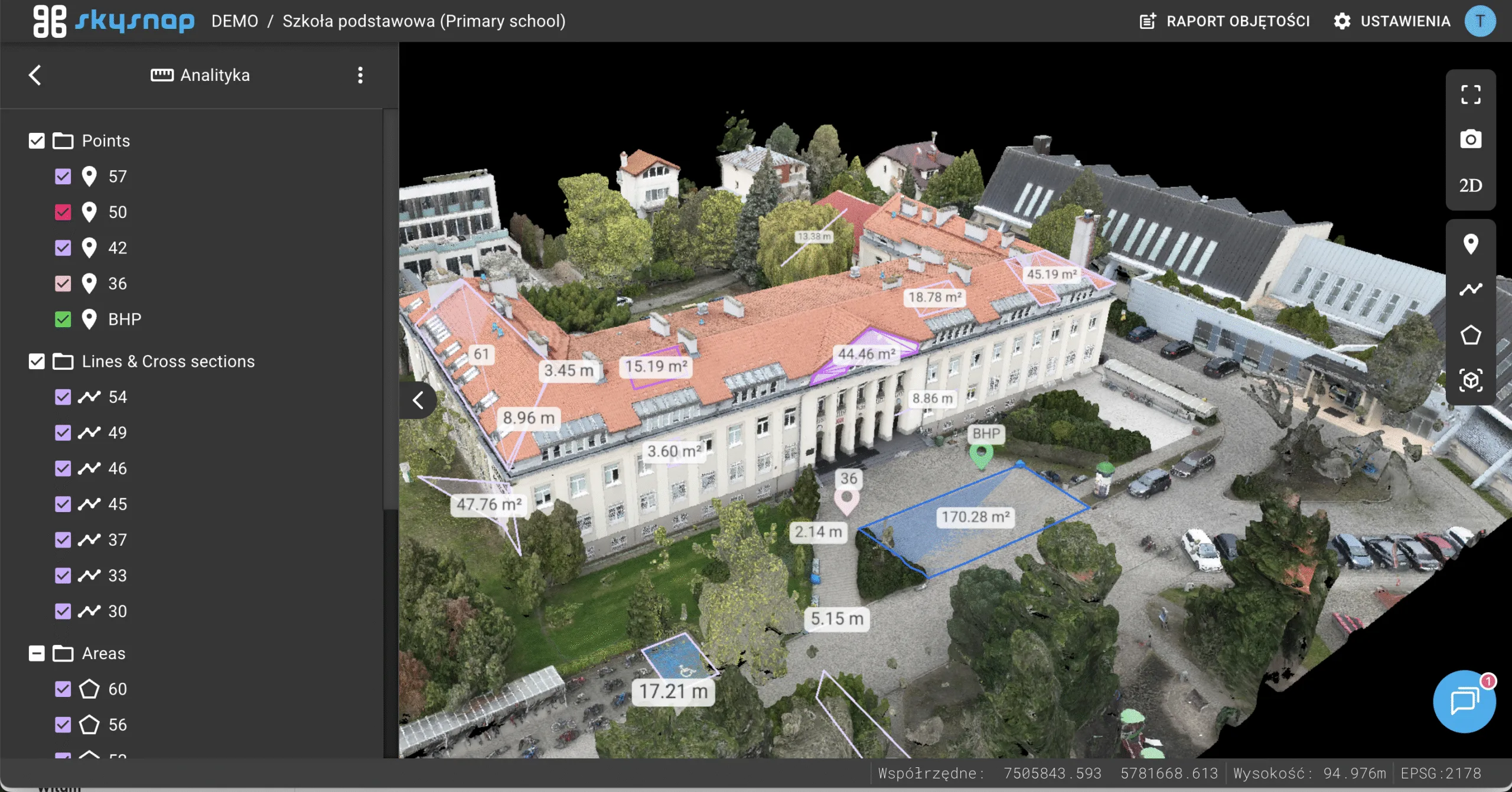
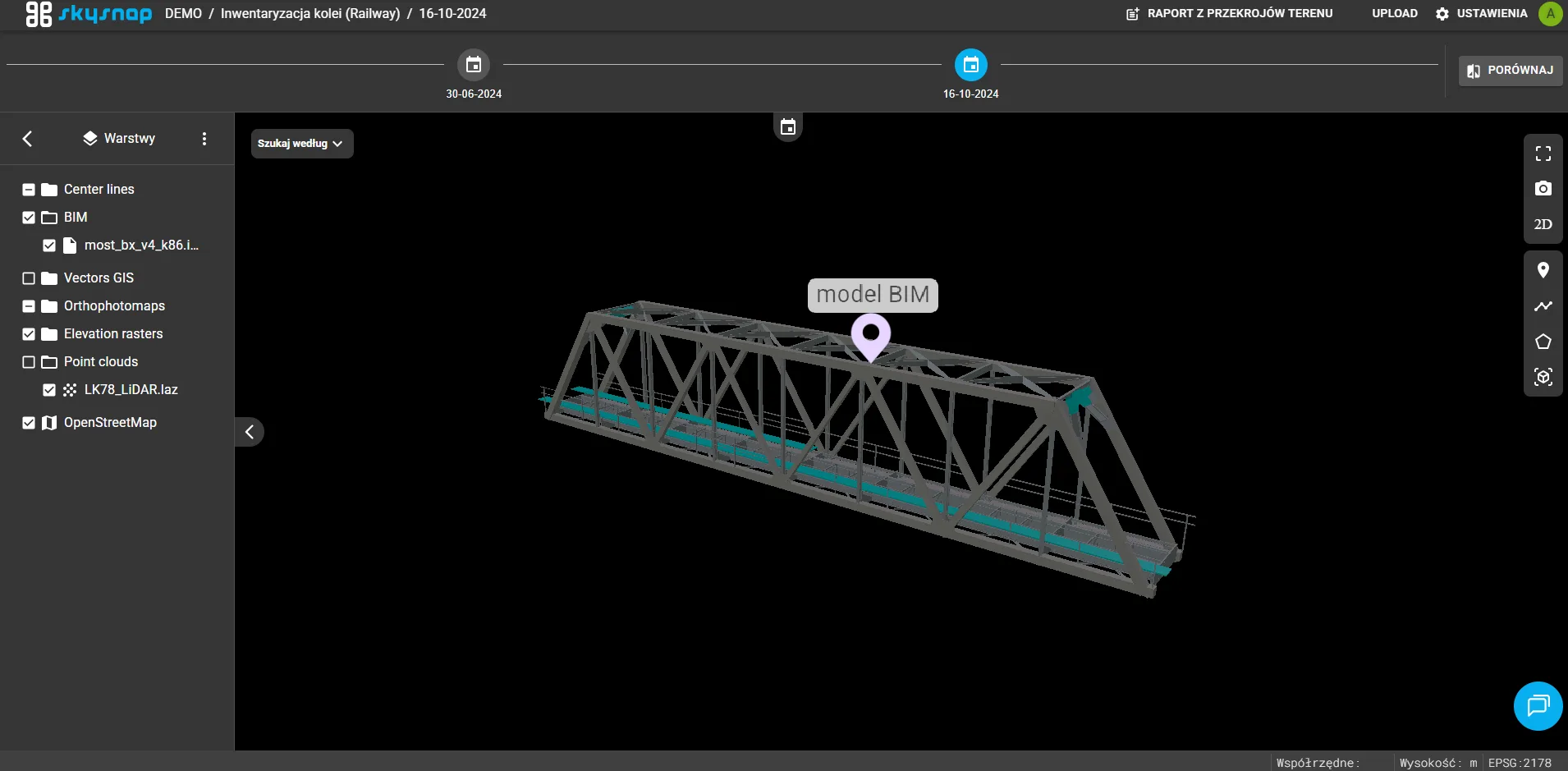
- 3D model creation: The software analyzes images to create a 3D terrain model based on the collected images.
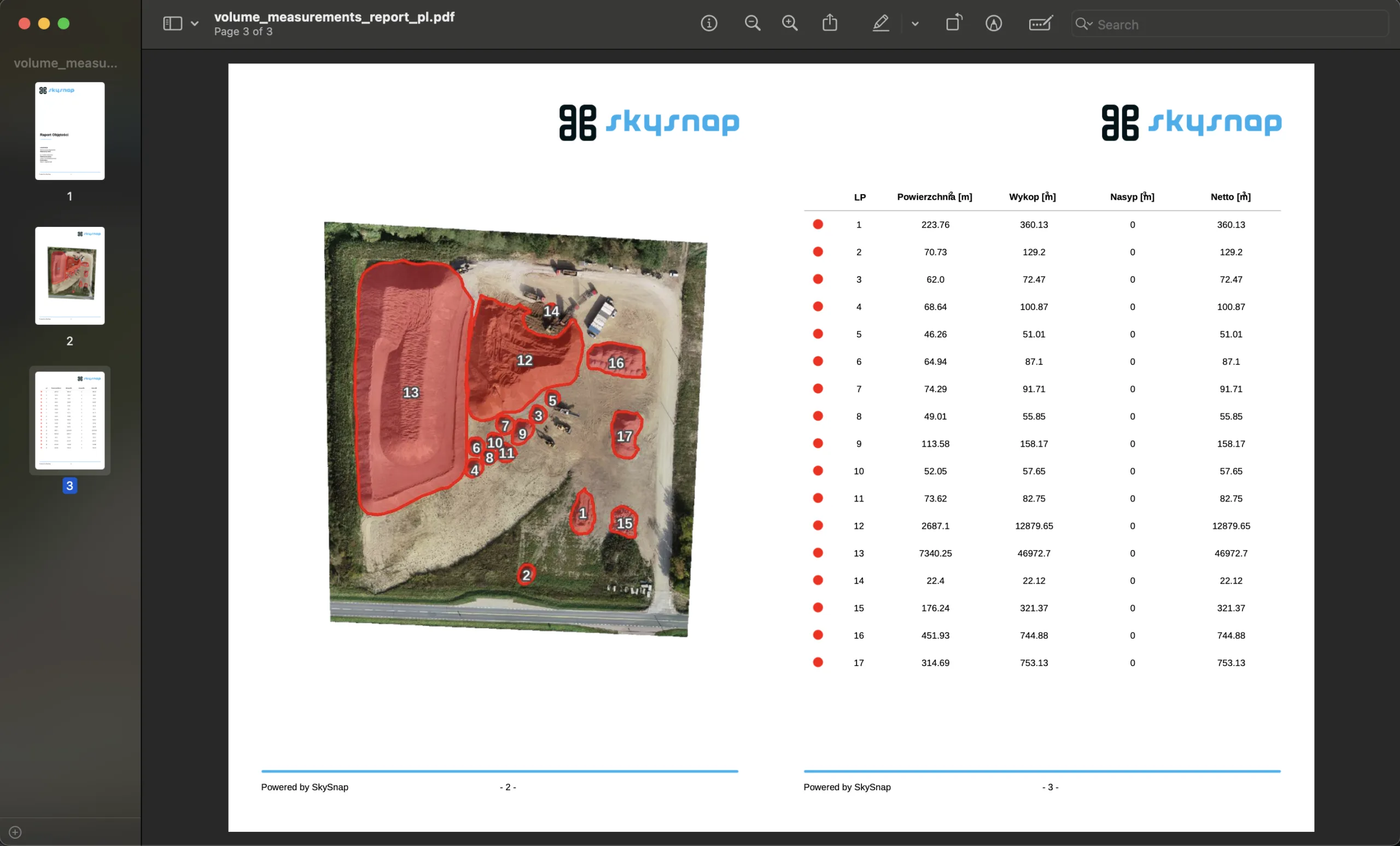
- Data analysis: Models are analyzed for various parameters, such as elevation, slope and terrain structure.
The process requires sophisticated tools, but produces extremely accurate results that can be used in many fields.
Benefits and challenges of technology
Drone photogrammetry offers many benefits, but it can also face some limitations and technical challenges. In this section, we will discuss both the advantages and problems associated with this technology.
Advantages of using drones
- Precision and accuracy: Drones provide accurate data, which is crucial for projects requiring detailed analysis.
- Speed and efficiency: The process of collecting and processing data is much faster than traditional methods.
- Access to hard-to-reach places: Drones can easily reach places that are inaccessible or dangerous to humans.
- Cost reduction: The use of drones significantly reduces the costs associated with traditional data collection methods.
These advantages make drone photogrammetry an attractive solution for many industries.
Limitations and technical problems
Despite its many advantages, drone photogrammetry also faces some limitations:
- Weather conditions: Rain, wind or fog can make drone flights difficult or impossible.
- Regulatory barriers: Many countries have restrictive laws on drone use, which can limit their use.
- Technical requirements: Photogrammetry requires advanced hardware and software, which can be a barrier for some users.
Despite these challenges, the technology continues to evolve and grow in popularity.
The future of drone photogrammetry
The future of drone photogrammetry seems promising, with many innovations and new opportunities on the horizon. In this section, we will discuss what changes may occur in the coming years.
Innovation and development
Drone technology is constantly evolving, introducing new capabilities:
- Advanced algorithms: New analytical algorithms allow even more accurate data processing.
- Autonomous flight: Drones are becoming increasingly autonomous, making them more efficient and safer.
- Integration with AI: The use of artificial intelligence enables even better analysis of collected data.
These innovations could significantly impact the development of drone photogrammetry in the future.
Market prospects and applications
Drone photogrammetry has broad market prospects:
- Development of the construction sector: Increased demand for accurate maps and models in the construction industry.
- Sustainable agriculture: the growing importance of technology in precision agriculture.
- Environmental protection: Increasing applications in environmental monitoring and protection.
These applications confirm how wide-ranging the possibilities of drone photogrammetry are in various economic sectors.

Free E-book
Learn what services to offer, who to sell them to, and how to write an effective offer email. Ready-made templates, tips and examples of campaigns that really work.
Table of Contents:
Do you like the article? Share it with others!
Do you like the article? Share it with others!
Tips, news, insights
Related articles
Check out our articles and get the latest industry news.